In the vast landscape of industrial automation and process control, the accurate and reliable measurement of liquid levels is paramount. Among the diverse array of technologies employed for this critical task, proximity level sensors stand out for their non-contact operation, robustness, and versatility. This article delves into the fundamental operating principles of these sensors, exploring the core technologies that enable them to detect the presence or absence of a liquid from a distance without physical contact.
At its core, a proximity level sensor is a device designed to detect the presence of a target—in this case, a liquid surface—within a specified sensing range without making direct mechanical contact. This non-invasive characteristic is a significant advantage, eliminating issues related to contamination, mechanical wear, and pressure on the vessel or container. The operation hinges on the interaction between an electromagnetic field or acoustic wave generated by the sensor and the target liquid. The primary technologies underpinning most industrial proximity level sensors are capacitive, inductive, and ultrasonic.
Capacitive Proximity Sensors operate based on the principle of capacitance change. The sensor, which acts as one plate of a capacitor, generates an electrostatic field. The tank wall or a reference electrode acts as the other plate. When no liquid is present, the dielectric constant of the medium between these "plates" (typically air or vapor) is low, resulting in a specific capacitance value. When the liquid rises to the sensing point, it displaces the air. Since most liquids have a significantly higher dielectric constant than air, the capacitance between the sensor electrode and the ground/reference increases dramatically. The sensor's internal oscillator circuit is tuned to detect this change in capacitance. Once the shift exceeds a predefined threshold, the sensor's output state switches, signaling the presence of the liquid. These sensors are highly effective for detecting both conductive and non-conductive liquids, including water, oils, fuels, and various chemicals, through non-metallic tank walls.
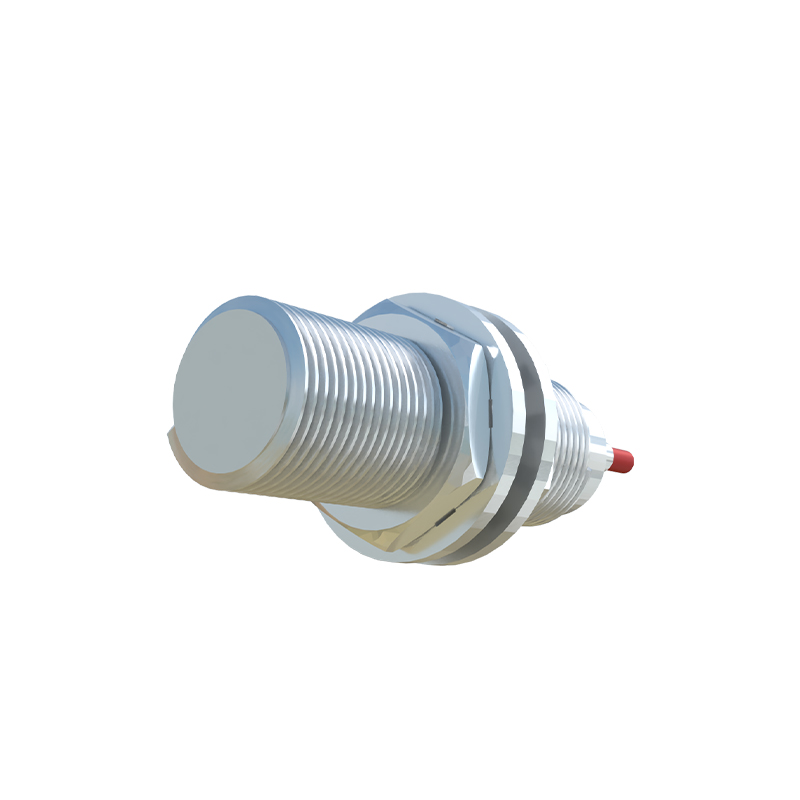
Inductive Proximity Sensors, while more commonly associated with metal detection, find application in liquid level sensing when used with a float containing a permanent magnet or when detecting conductive liquids. The sensor generates a high-frequency oscillating electromagnetic field via a coil. When a ferrous metal target (like a magnet inside a float) enters this field, eddy currents are induced on the target's surface. This causes a load on the oscillator, damping its amplitude. The sensor's detection circuit monitors this damping and triggers an output switch. For direct conductive liquid detection, the liquid itself can dampen the electromagnetic field, though this is less common. Inductive sensors are prized for their extreme durability, resistance to harsh environments, and insensitivity to non-metallic materials like dust or foam.
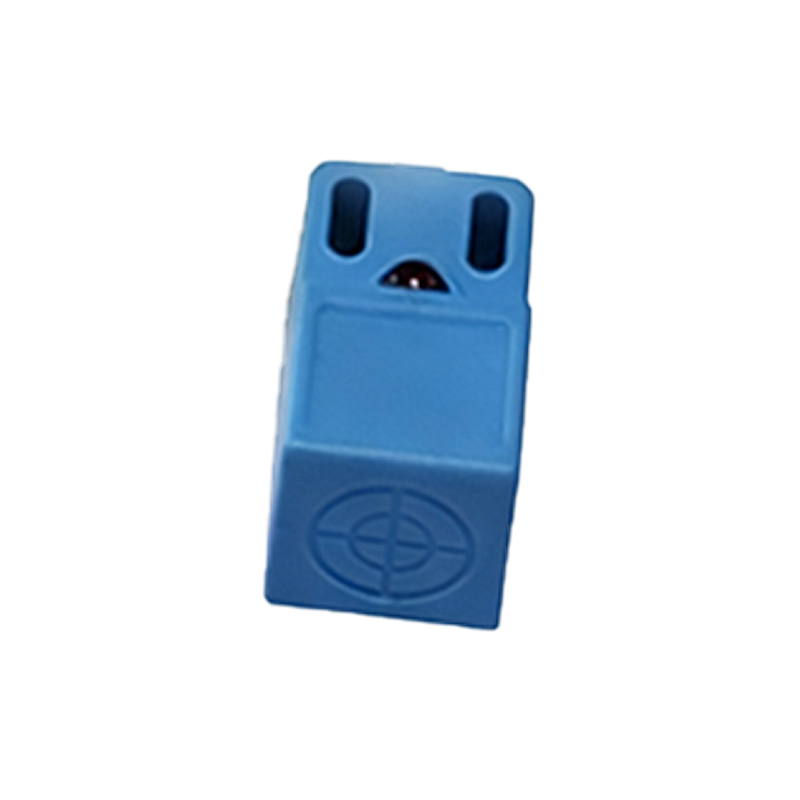
Ultrasonic Proximity Sensors utilize sound waves beyond the range of human hearing. The sensor emits short, high-frequency ultrasonic pulses from its transducer. These pulses travel through the air gap towards the liquid surface. Upon striking the surface, the pulses are reflected back to the sensor. The sensor's electronics measure the time interval between the emission of the pulse and the reception of the echo. Since the speed of sound in the ambient medium (usually air) is known, the distance to the liquid surface can be calculated with high precision: Distance = (Speed of Sound × Time of Flight) / 2. A proximity switch version is set to trigger at a specific distance threshold, providing a point-level detection output. This technology offers true non-contact sensing with no parts in the medium, making it ideal for corrosive, adhesive, or sterile liquids.
The choice between these technologies depends heavily on the application specifics. Key factors include the chemical properties of the liquid (conductivity, dielectric constant, corrosiveness), the material and structure of the tank (metal, plastic, glass), process conditions (pressure, temperature, presence of foam, vapor, or turbulence), and the required output (simple on/off switch or continuous analog measurement). For instance, a capacitive sensor is ideal for monitoring solvent levels in a polyethylene tank, while an inductive sensor with a magnetic float is perfect for high-temperature hydraulic oil in a steel reservoir, and an ultrasonic sensor excels at detecting aggressive acid levels in an open sump.
Installation and calibration are critical for optimal performance. Proper mounting location must avoid turbulent inflow zones, foam layers, or physical obstructions that could cause false readings. Environmental compensation, particularly for ultrasonic and capacitive sensors dealing with varying vapor densities or temperatures, is often necessary. Modern sensors incorporate advanced features like temperature compensation, built-in time delays (to avoid switching on splashes), and various output configurations (PNP/NPN, NO/NC, analog) to integrate seamlessly into PLC-controlled systems.
In conclusion, proximity level sensors provide a reliable, maintenance-friendly solution for point-level detection across countless industries, from chemical processing and water treatment to food and beverage and pharmaceutical manufacturing. Understanding the distinct principles of capacitive, inductive