In modern industrial manufacturing, precision and reliability are paramount. Defects in products can lead to significant financial losses, safety hazards, and reputational damage. Traditional inspection methods, such as manual visual checks or contact-based measurement tools, often fall short in terms of speed, accuracy, and consistency. This is where laser sensor technology emerges as a transformative solution for defect detection across various sectors, including automotive, aerospace, electronics, and heavy machinery.
Laser sensors operate on the principle of emitting a focused beam of light onto a target surface and analyzing the reflected signal. By measuring parameters like time-of-flight, triangulation, or interferometry, these sensors can capture detailed surface profiles with micron-level precision. For defect detection, this capability allows for the identification of anomalies such as cracks, scratches, dents, warping, or material inconsistencies that might be invisible to the naked eye. The non-contact nature of laser sensing eliminates the risk of damaging delicate components, making it ideal for inspecting sensitive parts like semiconductor wafers or turbine blades.
One of the key advantages of laser sensors is their high-speed data acquisition. In production lines operating at rapid paces, real-time inspection is crucial. Laser systems can scan thousands of points per second, enabling continuous monitoring without slowing down manufacturing processes. This efficiency is enhanced by integrating laser sensors with automated systems and robotics, allowing for seamless inline inspection. For instance, in automotive assembly, laser sensors are used to verify weld quality, check panel gaps, and detect paint flaws, ensuring each vehicle meets stringent quality standards before leaving the factory.
Moreover, laser sensor technology supports advanced data analysis through machine learning algorithms. By training systems on datasets of defective and non-defective samples, algorithms can learn to recognize complex defect patterns and improve detection accuracy over time. This adaptive approach reduces false positives and enables predictive maintenance, where potential issues are flagged before they escalate into major failures. In the aerospace industry, for example, laser sensors inspect composite materials for internal voids or delaminations, critical for maintaining structural integrity in aircraft components.

Environmental factors, such as ambient light, dust, or vibrations, can challenge sensor performance. However, modern laser sensors are designed with robust features like adaptive filtering, protective housings, and temperature compensation to ensure reliable operation in harsh industrial environments. Additionally, the versatility of laser wavelengths—from visible to infrared—allows customization for different materials and surfaces, whether reflective metals, transparent plastics, or textured fabrics.
Implementing laser sensor systems requires careful consideration of factors like resolution, range, and integration with existing control systems. Engineers must select sensors based on specific application needs, such as the size of defects to be detected or the required scanning area. Regular calibration and maintenance are also essential to sustain accuracy, though many contemporary sensors offer self-diagnostic features to simplify upkeep.
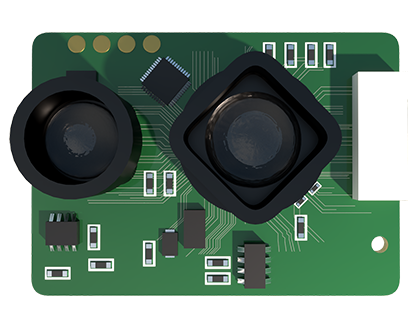
Looking ahead, innovations in laser technology, such as the development of ultrafast lasers or hyperspectral imaging, promise even greater capabilities for defect detection. These advancements could enable the identification of chemical composition changes or subsurface defects, further enhancing quality control. As industries embrace Industry 4.0 and smart manufacturing, laser sensors will play a pivotal role in driving efficiency, reducing waste, and ensuring product excellence.
In conclusion, laser sensor technology represents a cornerstone of modern defect detection strategies. Its precision, speed, and adaptability make it indispensable for maintaining high-quality standards in competitive industrial landscapes. By leveraging these advanced tools, companies can not only minimize defects but also optimize production processes, ultimately contributing to safer and more reliable products for consumers worldwide.
