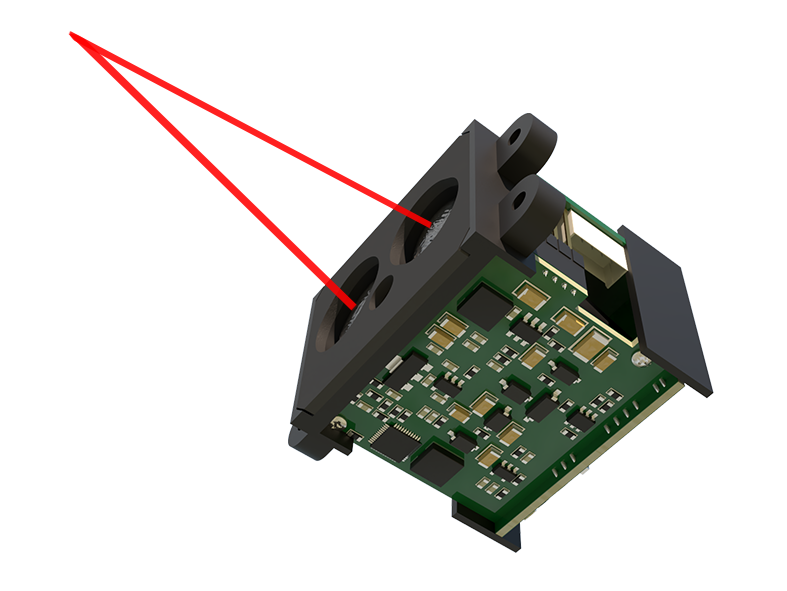
Laser sensors have become indispensable components in modern industrial automation, robotics, and measurement systems. Their ability to provide precise, non-contact detection and measurement makes them superior to many mechanical alternatives. However, a critical operational consideration is their lifespan, which directly impacts system reliability, maintenance costs, and overall productivity. Unlike simple mechanical switches, the lifespan of a laser sensor is not defined by a single moving part wearing out. Instead, it is a complex interplay of its internal components and external operating conditions.
The core of a typical laser sensor is its semiconductor laser diode. This is often the primary life-limiting factor. Laser diodes degrade over time due to mechanisms like gradual darkening of the optical facets or internal crystal defects. Manufacturers typically specify a mean time between failures (MTBF) for the diode, often ranging from 50,000 to over 100,000 hours of continuous operation under ideal conditions. It's crucial to understand that this is a statistical measure, not a guarantee for every unit. The photodetector (receiver) and the associated electronic circuitry also have finite lifespans, though they often outlast the laser diode under normal stress.
Environmental factors play a monumental role in determining the real-world lifespan of a laser sensor. Excessive operating temperature is the most significant enemy. For every 10°C increase above the specified operating range, the degradation rate of the laser diode can approximately double, drastically shortening its life. Sensors must be selected with an operating temperature range suitable for the application environment, and adequate heat dissipation should be ensured. Contamination is another major threat. Dust, oil mist, coolant, or other particulates can coat the sensor's lens, attenuating the emitted laser beam and reducing the signal strength received. This forces the sensor's internal electronics to work harder, increasing thermal stress and potential for early failure. In harsh environments, sensors with higher IP (Ingress Protection) ratings or built-in air purge connections are essential for longevity.
Electrical considerations are equally important. Voltage spikes, transients, or improper power supply regulation can cause immediate catastrophic failure or induce slow degradation of sensitive components. Ensuring a clean, stable power source as per the manufacturer's specifications is non-negotiable. Reverse polarity connection, even momentarily, can destroy the sensor instantly. Furthermore, operating the laser diode at currents higher than its rated drive current, often done to achieve higher output power, will exponentially accelerate its aging process. It is a trade-off between performance and longevity.

Physical factors, though sometimes overlooked, contribute to lifespan. Excessive vibration can loosen internal connections, misalign optical components, or cause mechanical fatigue. Choosing a sensor with an appropriate housing material and mounting it securely on a stable surface mitigates this risk. Direct physical impact or shock can cause immediate and irreparable damage to the laser diode or lens.
To maximize the operational lifespan of a laser sensor, a proactive and systematic approach is required. First, meticulous selection is key. Choose a sensor whose specifications (temperature range, IP rating, shock/vibration resistance, electrical parameters) not only meet but exceed the expected conditions of your application. Do not operate at the absolute limits of its specifications. Second, ensure proper installation. Follow all mounting, wiring, and grounding guidelines provided in the manual. Use protective conduits for cables in high-interference or high-risk areas. Third, implement a robust maintenance routine. Regularly clean the lens with appropriate materials (e.g., lint-free cloth, approved cleaners) to prevent buildup. Periodically inspect the sensor for physical damage, loose connections, or signs of environmental stress. Fourth, monitor performance. A gradual decrease in signal strength or an increase in required sensitivity setting can be an early indicator of laser diode degradation or lens contamination, allowing for planned replacement before failure.

In conclusion, the lifespan of a laser sensor is not a fixed number but a variable heavily influenced by design quality, operational discipline, and environmental management. By understanding the failure mechanisms—primarily thermal stress, contamination, and electrical abuse—and implementing strategies of careful selection, correct installation, and preventative maintenance, users can significantly extend the service life of these critical devices. This leads to enhanced system uptime, lower total cost of ownership, and more reliable automated processes. Investing time in proper sensor management pays substantial dividends in long-term operational stability.