In the rapidly evolving landscape of industrial automation and precision engineering, circular laser distance sensors have emerged as a cornerstone technology. These devices utilize a focused, circular laser beam to perform non-contact distance measurements with exceptional accuracy and reliability. Unlike traditional measurement tools, they offer a unique combination of high-speed data acquisition, minimal beam divergence, and robust performance in diverse environmental conditions.
The fundamental operating principle of a circular laser distance sensor is based on either time-of-flight (ToF) or triangulation methods. In the ToF approach, the sensor calculates distance by measuring the time it takes for a laser pulse to travel to a target and back. This method is highly effective for long-range measurements, often exceeding several hundred meters, and is commonly used in applications like surveying, logistics, and large-scale manufacturing. The circular beam profile ensures consistent energy distribution, which enhances signal stability and reduces measurement errors caused by surface irregularities.
Triangulation-based circular laser sensors, on the other hand, are ideal for short to medium-range measurements with micron-level precision. A laser diode projects a circular spot onto the target surface, and a receiving lens captures the reflected light at an angle. A position-sensitive detector (PSD) or CMOS array then calculates the displacement based on the light spot's position. The circular beam minimizes the impact of surface texture and color variations, providing more stable readings compared to linear or point beams. This makes them indispensable in quality control, robotics, and semiconductor manufacturing.
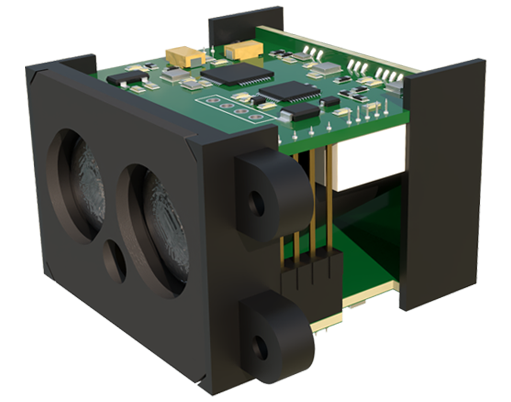
One of the key advantages of circular laser sensors is their versatility. They can measure distances, heights, thicknesses, and even detect edges or gaps with minimal setup. In automotive assembly lines, for instance, these sensors ensure precise component alignment and gap inspection. In the packaging industry, they monitor fill levels and container positioning without physical contact, thereby preventing contamination and wear. The circular beam's symmetry also allows for consistent measurements regardless of sensor orientation, simplifying integration into complex machinery.
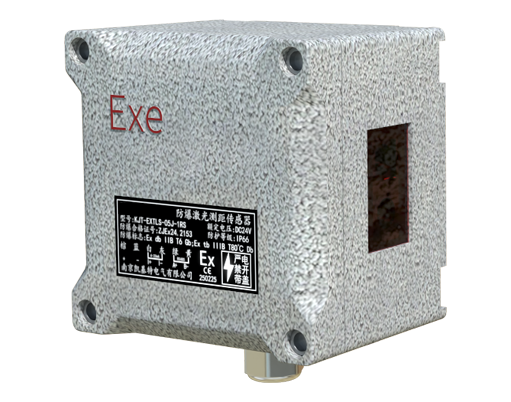
Environmental resilience is another critical feature. High-quality circular laser sensors are designed with IP67 or higher ingress protection ratings, making them resistant to dust, moisture, and vibrations. Advanced models incorporate temperature compensation algorithms to maintain accuracy across a wide operational range, from freezing cold storage facilities to hot manufacturing plants. Furthermore, their non-contact nature eliminates mechanical fatigue, ensuring long-term reliability and reducing maintenance costs.
Integration with modern industrial systems is seamless, thanks to standard communication protocols such as IO-Link, Ethernet/IP, and PROFINET. These interfaces enable real-time data transmission to PLCs (Programmable Logic Controllers) and SCADA (Supervisory Control and Data Acquisition) systems, facilitating automated decision-making and process optimization. Many sensors also feature programmable logic and multi-point measurement capabilities, allowing users to configure custom thresholds, outputs, and measurement sequences directly from a software interface.

Despite their advanced functionality, selecting the right circular laser sensor requires careful consideration of application-specific parameters. Key factors include measurement range, resolution, response time, beam diameter, and target material properties. For reflective or transparent surfaces, specialized models with adjustable laser power or background suppression technology may be necessary. It is also essential to account for ambient light interference, especially in outdoor or brightly lit environments, where sensors with narrow-band optical filters or modulated laser signals are recommended.
Looking ahead, innovations in circular laser distance sensing continue to push the boundaries of precision. Emerging trends include the integration of AI-driven analytics for predictive maintenance, miniaturization for compact robotic systems, and enhanced connectivity for Industry 4.0 applications. As industries strive for greater efficiency and accuracy, circular laser sensors will undoubtedly play a pivotal role in shaping the future of automated measurement and control systems.
In conclusion, circular laser distance sensors represent a sophisticated fusion of optical engineering and digital technology. Their ability to deliver fast, accurate, and reliable measurements across a multitude of industrial scenarios makes them an invaluable tool for engineers and technicians worldwide. By understanding their principles, advantages, and selection criteria, professionals can harness their full potential to drive innovation and operational excellence.