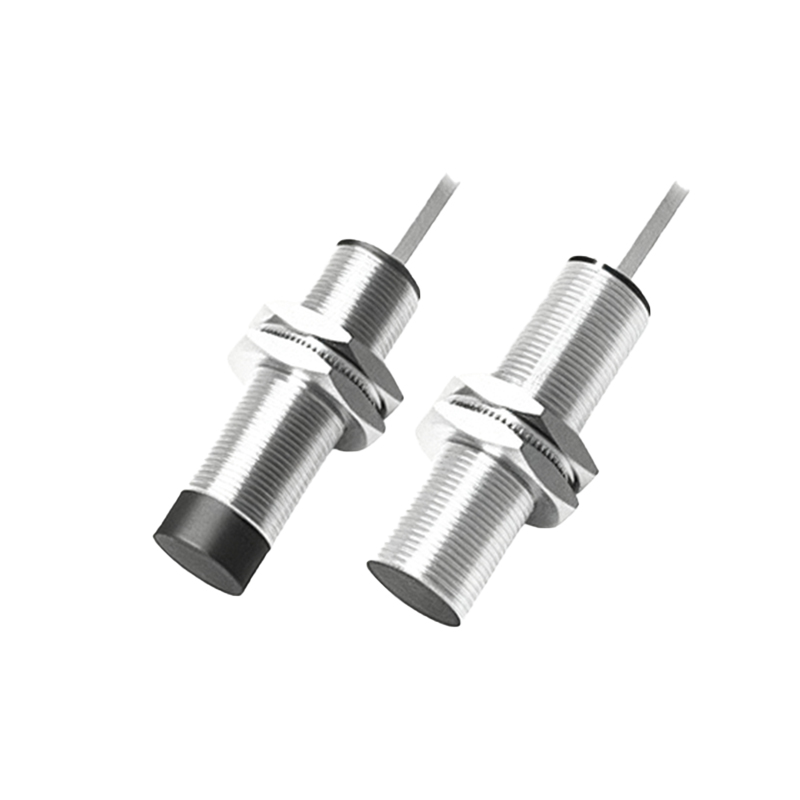
Plastic proximity sensors are widely used in industrial automation for non-contact detection of objects. These sensors operate based on electromagnetic principles, primarily through inductive or capacitive sensing technologies. Unlike metal-housed sensors, plastic variants offer advantages in environments where corrosion resistance, lightweight design, or electrical insulation is critical. This article explains the detection mechanisms, key components, and practical applications of plastic proximity sensors.
Inductive plastic proximity sensors detect metallic objects without physical contact. Inside the sensor, an oscillator generates a high-frequency electromagnetic field that extends from the sensing face. When a metal object enters this field, eddy currents are induced on the object's surface. This causes a change in the oscillation amplitude or frequency within the sensor's coil system. A signal conditioning circuit monitors these changes and triggers an output switch—typically a solid-state relay or transistor—when the object reaches a preset detection range. The sensing distance depends on factors like the target material (e.g., steel, aluminum), sensor size, and operating frequency. Plastic housings do not interfere with the electromagnetic field, allowing reliable detection while providing insulation against electrical noise and environmental contaminants.
Capacitive plastic proximity sensors can detect both metallic and non-metallic objects, including liquids, plastics, or wood. These sensors function by measuring changes in capacitance between the sensor's electrode and the target. The electrode, embedded in the plastic housing, forms one plate of a capacitor, with the target acting as the other plate. As an object approaches, the dielectric constant between the plates changes, altering the capacitance. An internal circuit converts this variation into a voltage shift, activating the output when a threshold is crossed. Capacitive sensors are sensitive to material composition and environmental conditions like humidity, but their plastic enclosures help minimize stray capacitance from surrounding metals.
Key components of a plastic proximity sensor include the sensing element (coil or electrode), oscillator, demodulator, and output stage. Advanced models integrate microprocessors for programmability, allowing adjustments to sensitivity, response time, or output delay. The plastic housing, often made from materials like PBT or PPS, provides IP67 or higher ingress protection, making the sensors suitable for washdown areas or outdoor use. Unlike metal sensors, plastic versions avoid galvanic corrosion and are ideal for food processing, pharmaceuticals, or chemical industries.
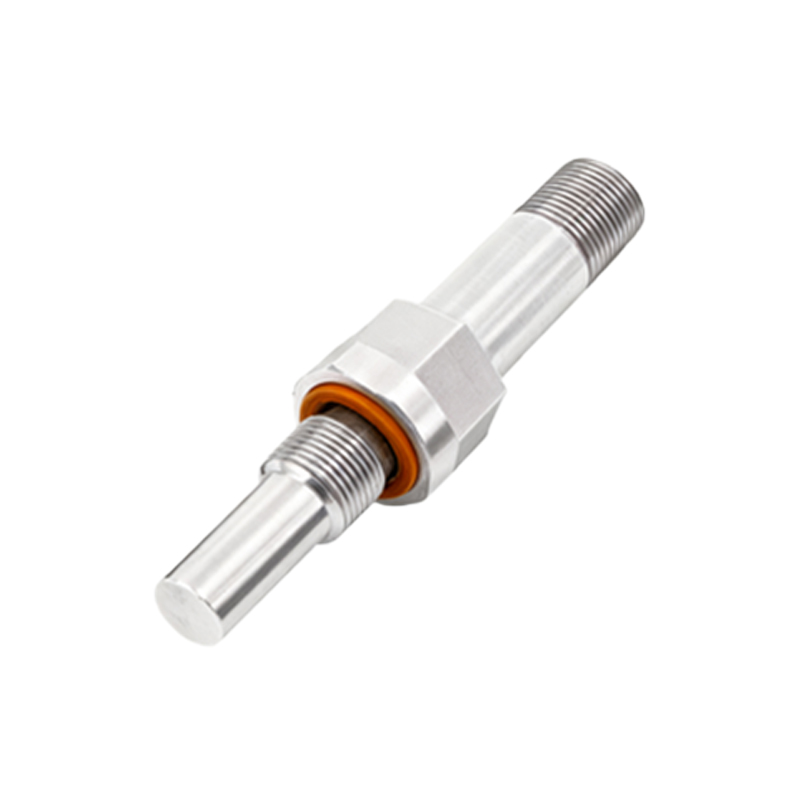
In practice, plastic proximity sensors are deployed in conveyor systems, packaging machinery, and robotic arms. For instance, in bottling plants, capacitive sensors verify liquid levels through container walls, while inductive sensors count metal parts on assembly lines. Installation requires attention to mounting clearances, temperature ranges (typically -25°C to 70°C), and electrical compatibility with PLCs. Regular maintenance involves checking for coating buildup on the sensing face, which can reduce detection range.
In summary, plastic proximity sensors leverage electromagnetic phenomena to enable precise, non-contact detection. Their plastic construction enhances durability in harsh environments while maintaining performance parity with metal counterparts. As Industry 4.0 advances, these sensors continue to evolve with features like IO-Link connectivity for real-time diagnostics and data exchange.