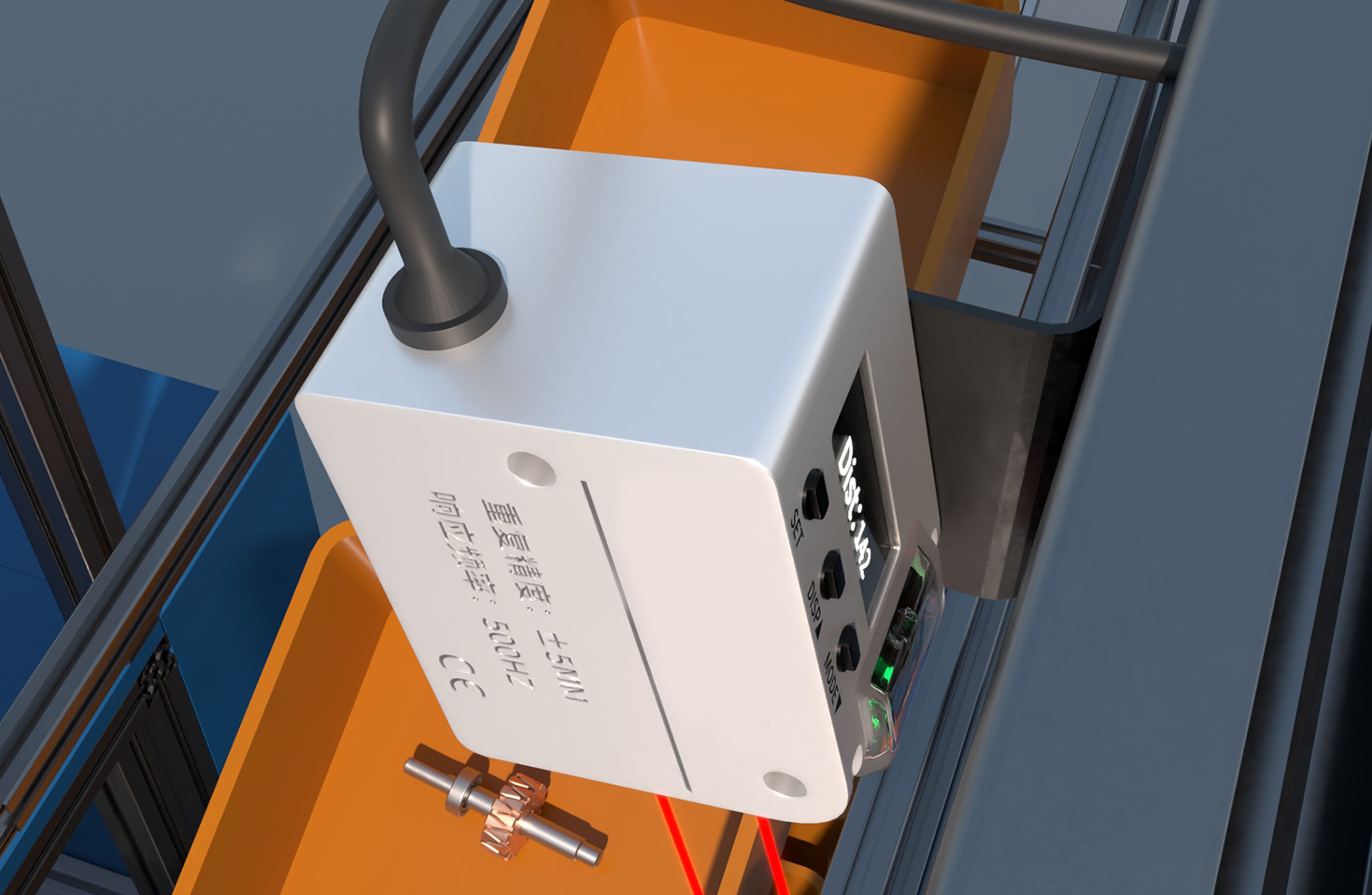
Laser distance sensor modules have become indispensable tools across numerous industrial sectors, offering unparalleled precision, speed, and reliability for non-contact measurement. These advanced devices operate on the principle of Time-of-Flight (ToF), phase-shift, or triangulation, emitting a focused laser beam towards a target and calculating the distance based on the time or phase difference of the reflected light. Their ability to deliver micron-level accuracy in challenging environments makes them a cornerstone of modern automation, quality control, and robotics.
The core technology behind these sensors is elegantly sophisticated. In a typical Time-of-Flight configuration, a laser diode emits a short pulse. A high-speed receiver captures the reflection, and an internal processor calculates the distance using the known speed of light. Phase-shift sensors, often used for higher accuracy at shorter ranges, modulate the laser beam's intensity and measure the phase difference between the emitted and received signals. For applications requiring extreme precision on close-range, diffuse surfaces, triangulation sensors project a laser spot, and its position on a CMOS or CCD array is geometrically calculated to determine distance. This diversity in operating principles allows engineers to select the optimal module for specific requirements, such as long-range detection, high-speed scanning, or measurement on low-reflectivity surfaces.
Industrial applications are vast and varied. In automated manufacturing, laser distance sensors are critical for precise positioning of robotic arms, conveyor belt monitoring, and dimensional inspection of components. They ensure that parts are assembled within tight tolerances, directly impacting product quality. In logistics and warehousing, these modules facilitate automated guided vehicle (AGV) navigation, pallet profiling, and inventory management by accurately gauging the size and position of objects. The construction and mining industries leverage robust, long-range sensors for monitoring stockpile volumes, surveying terrain, and ensuring the safe operation of heavy machinery. Furthermore, their integration into safety systems, such as light curtains and access control, helps create safer work environments by detecting personnel encroachment into hazardous zones.
Selecting the right laser distance sensor module requires careful consideration of several key parameters. Measurement range is fundamental, with modules available from a few millimeters to several hundred meters. Accuracy and repeatability specifications, often listed as ±(value) mm, define the sensor's performance limits. The response time or sampling rate determines how quickly the sensor can update measurements, a critical factor for high-speed processes. Environmental factors cannot be overlooked; industrial settings may present challenges like dust, moisture, vibration, and extreme temperatures. Therefore, ingress protection (IP) ratings, housing materials (typically stainless steel or ruggedized plastics), and operating temperature ranges are crucial for ensuring long-term reliability. Interface options, including analog outputs (4-20 mA, 0-10 V), digital protocols (RS-232, RS-485), and industrial fieldbuses (Ethernet/IP, PROFINET, IO-Link), dictate how seamlessly the sensor integrates into a control system.

The future of laser distance sensing is geared towards greater intelligence and integration. Modern modules increasingly feature onboard processors capable of performing complex calculations, such as edge detection, peak-hold, and windowing functions, reducing the computational load on central PLCs. The advent of multi-echo technology allows sensors to ignore secondary reflections from dust, steam, or glass, providing a stable reading from the intended target. Furthermore, the miniaturization of components continues, enabling the development of compact sensors for space-constrained applications without compromising performance. As Industry 4.0 and the Industrial Internet of Things (IIoT) evolve, these sensors are becoming smart data nodes, communicating rich diagnostic and process data to higher-level systems for predictive maintenance and optimized operations.
In conclusion, laser distance sensor modules represent a mature yet rapidly evolving technology that is fundamental to industrial efficiency and innovation. Their precision and versatility solve complex measurement challenges, driving automation forward. For system integrators and design engineers, a deep understanding of their operating principles, specifications, and application nuances is essential for deploying a solution that delivers optimal performance, durability, and return on investment in the demanding landscape of modern industry.