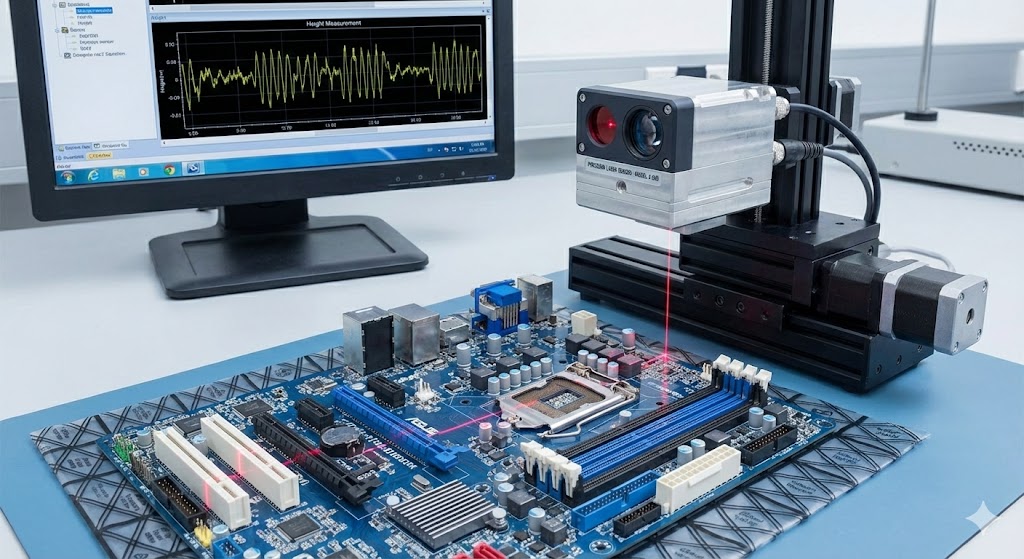
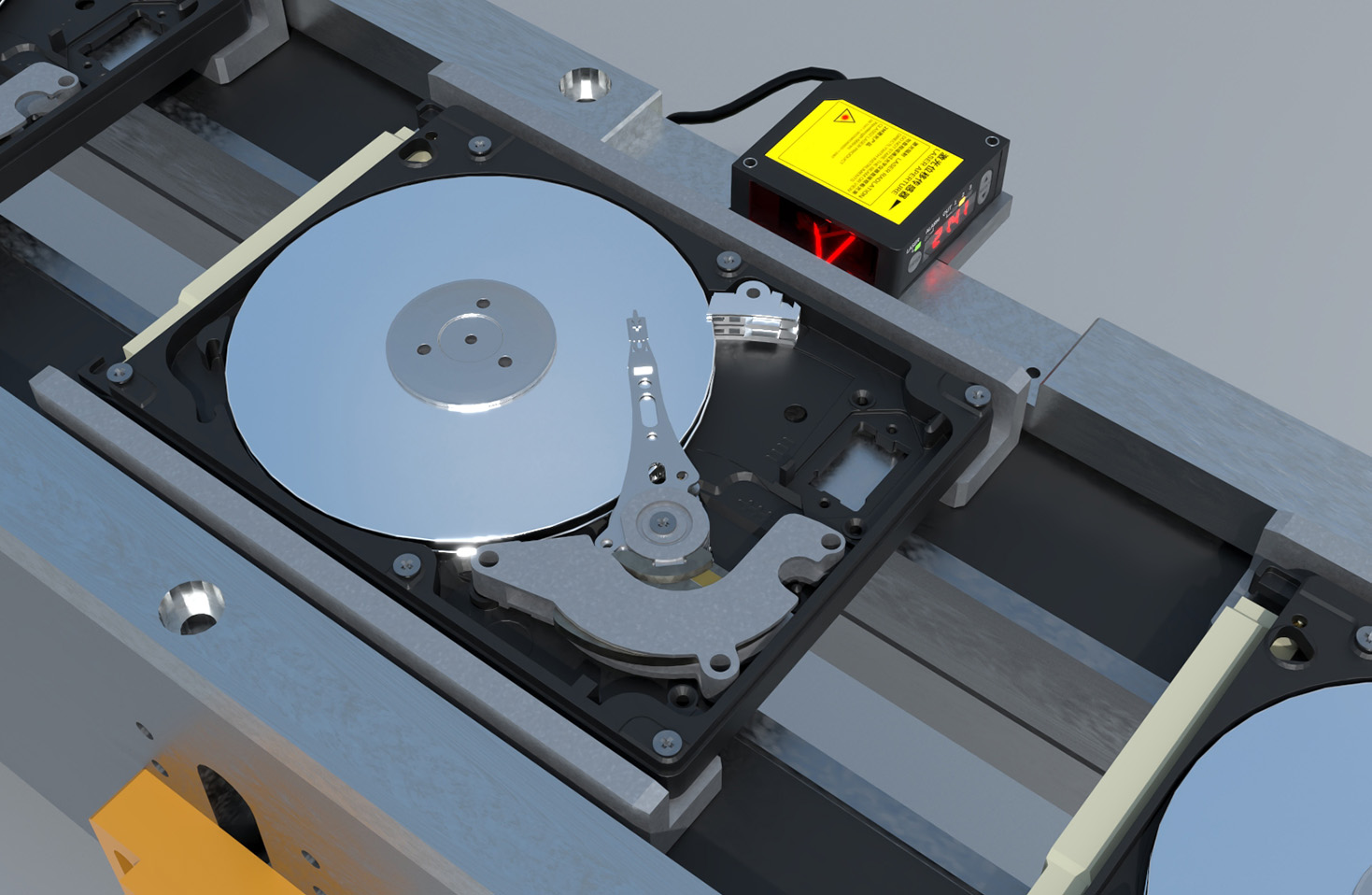
Feedback laser sensors represent a critical advancement in precision measurement and control systems across various industrial sectors. These devices operate on the principle of utilizing laser technology combined with feedback mechanisms to enhance accuracy, stability, and reliability in detecting parameters such as distance, displacement, vibration, or surface characteristics. At their core, feedback laser sensors emit a coherent laser beam toward a target object. The reflected or scattered light is then captured by a detector within the sensor. Unlike simple laser sensors that rely solely on direct measurement, feedback laser sensors incorporate a closed-loop control system. This system continuously compares the detected signal with a reference or setpoint, generating an error signal that adjusts the sensor's output or operating parameters in real-time.
The fundamental components of a feedback laser sensor include a laser diode, optical elements (like lenses or mirrors), a photodetector, and a feedback circuit. The laser diode emits light at a specific wavelength, typically in the visible or infrared spectrum, which is focused onto the target. Optical elements guide and shape the beam to optimize interaction with the object. Upon reflection, the photodetector converts the incoming light into an electrical signal. This signal is processed by the feedback circuit, which analyzes deviations from the desired condition. For instance, in distance measurement applications, if the detected phase or intensity of the reflected beam differs from the expected value due to target movement, the feedback circuit adjusts the laser's modulation or the sensor's positioning to maintain precise tracking.

One common implementation is based on interferometric principles, where the sensor uses interference patterns between the reference laser beam and the reflected beam to gauge minute changes. The feedback loop here ensures that the interferometer remains in an optimal operating range, compensating for environmental disturbances like temperature fluctuations or mechanical vibrations. Another approach involves intensity-based feedback, where the sensor monitors the power of the returned light and adjusts the laser output to sustain a constant signal level, thereby improving signal-to-noise ratio and measurement consistency.
The advantages of feedback laser sensors are manifold. They offer high resolution, often down to sub-micrometer levels, making them ideal for applications in semiconductor manufacturing, automotive assembly, and aerospace engineering. Their real-time adaptability reduces errors caused by external factors, enhancing long-term stability. Additionally, feedback mechanisms enable self-calibration features, minimizing maintenance needs and downtime in industrial settings. However, challenges such as complexity in design, higher cost compared to non-feedback sensors, and sensitivity to optical alignment must be considered during implementation.
In practice, feedback laser sensors are deployed in quality control systems for thickness measurement, alignment tasks in robotics, vibration analysis in machinery monitoring, and surface profiling in material science. As industries increasingly demand automation and precision, the evolution of these sensors continues, with trends focusing on miniaturization, integration with IoT platforms, and enhanced feedback algorithms using artificial intelligence. Understanding the principles behind feedback laser sensors is essential for engineers aiming to leverage their full potential in achieving robust and accurate measurement solutions.