In the rapidly evolving landscape of industrial automation, precision and reliability are paramount. The laser sensor screw type represents a significant advancement in sensing technology, offering unparalleled accuracy in measurement and control applications. This article delves into the technical specifications, operational principles, and diverse applications of laser sensor screw types, providing insights for engineers and industry professionals seeking to optimize their systems.
Laser sensor screw types utilize laser triangulation or time-of-flight principles to measure distances with micron-level precision. These sensors emit a focused laser beam onto a target surface—often the screw thread or adjacent components—and analyze the reflected light to determine position, displacement, or dimensional changes. The integration of screw-type mechanisms allows for robust mounting and alignment, ensuring stability in harsh industrial environments such as manufacturing floors, assembly lines, and robotic systems. Key components include a laser diode, optical lens, photodetector, and signal processing unit, all housed in a durable casing resistant to dust, moisture, and vibrations.

One of the primary advantages of laser sensor screw types is their non-contact measurement capability. Unlike mechanical probes or inductive sensors, they eliminate wear and tear, reducing maintenance costs and downtime. This feature is particularly beneficial in high-speed applications, such as monitoring screw tightening torque in automotive assembly or verifying thread integrity in aerospace components. Additionally, these sensors offer high sampling rates, enabling real-time feedback for closed-loop control systems. For instance, in CNC machining, they can detect minute deviations in screw positioning, allowing for immediate corrections to enhance product quality.
The applications of laser sensor screw types span various industries. In electronics manufacturing, they ensure precise placement of micro-screws on circuit boards, preventing short circuits and improving yield rates. In packaging machinery, they monitor fill levels by measuring screw conveyor movements, optimizing material usage and reducing waste. The pharmaceutical sector employs them for sterile packaging processes, where accuracy is critical to compliance with regulatory standards. Moreover, in renewable energy projects, such as wind turbine assembly, these sensors aid in aligning massive screw connections, ensuring structural integrity under dynamic loads.
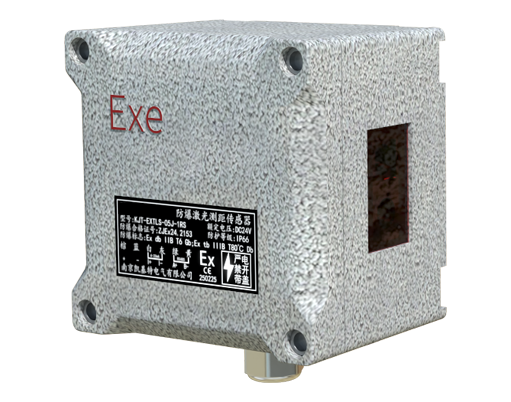
When selecting a laser sensor screw type, engineers must consider factors like measurement range, resolution, response time, and environmental conditions. Models with adjustable focus or multi-point scanning capabilities offer flexibility for complex setups. Integration with industrial networks—such as Ethernet/IP, PROFINET, or IO-Link—facilitates seamless data exchange with PLCs and SCADA systems, enabling predictive maintenance and data analytics. For example, by analyzing trends in screw vibration data, potential failures can be identified early, preventing costly breakdowns.
Despite their benefits, challenges exist, such as interference from ambient light or reflective surfaces. Advanced models incorporate filters and algorithms to mitigate these issues, ensuring consistent performance. Future trends point toward miniaturization and enhanced AI-driven diagnostics, allowing for smarter, more autonomous systems. As Industry 4.0 gains momentum, laser sensor screw types will play a crucial role in enabling interconnected, efficient production lines.
In conclusion, laser sensor screw types are indispensable tools for modern industrial automation, combining precision, durability, and versatility. By understanding their technical nuances and applications, engineers can leverage this technology to drive innovation, improve safety, and achieve operational excellence. Continuous research and development promise further refinements, solidifying their position as a cornerstone of advanced manufacturing and beyond.