In the realm of industrial automation and machinery safety, the safety laser scanner has emerged as a pivotal technology for safeguarding personnel and equipment. Unlike traditional physical guards or light curtains, these devices offer flexible, non-contact protection zones, enabling sophisticated human-machine collaboration in dynamic environments such as automated guided vehicle (AGV) systems, robotic workcells, and material handling stations.
At its core, a safety laser scanner operates by emitting infrared laser beams in a rotating or scanning pattern across a defined plane, typically at ankle or shin level. It measures the time-of-flight of the reflected pulses to calculate precise distances to objects within its field of view, which can extend up to several meters with an angular range often exceeding 270 degrees. The device's internal safety-rated processor continuously evaluates this point cloud data against pre-configured protective fields. These fields are defined within configuration software and can include multiple zones, such as a warning zone (where speed reduction is triggered) and a protective zone (where a machine stop command is initiated). When an intrusion is detected in the protective field, the scanner's safety outputs (typically OSSD outputs - Output Signal Switching Devices) switch to a safe state, signaling the connected safety controller or directly halting hazardous machine motion.
The advantages of implementing safety laser scanners are substantial. They provide a large, customizable detection area without impeding workflow, which is crucial for efficiency in logistics and flexible manufacturing. Their ability to define complex, shape-adaptive zones allows for safe navigation of AGVs alongside human workers. Furthermore, modern scanners are built to comply with stringent international safety standards like IEC 61496 (Type 3) and IEC 62061, achieving Performance Level (PL) d or e and Safety Integrity Level (SIL) 2 or 3. This certification ensures high reliability and fault tolerance, with built-in self-monitoring for failures like mirror contamination or laser diode degradation.
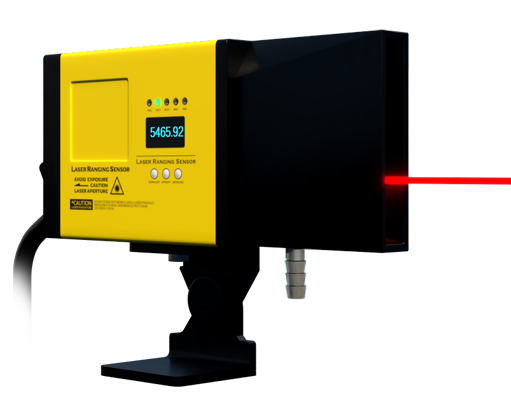
Selecting the appropriate safety laser scanner requires careful consideration of several technical and application-specific factors. The required protective field distance and resolution are paramount; the scanner must detect a human leg (a standard test object) at the necessary range. Environmental conditions such as ambient light, dust, fog, or vibrations can affect performance, necessitating models with robust filtering algorithms and appropriate Ingress Protection (IP) ratings. Integration capability is another key criterion. The scanner must communicate seamlessly with the broader safety system via fieldbus protocols like PROFIsafe, CIP Safety, or EtherCAT Safety. For mobile applications, features like contour-based field switching or teach-in functionality via external signals are essential for dynamic zone adaptation.
Installation and commissioning are critical phases. The scanner must be mounted at the correct height and orientation to cover the intended hazard area without blind spots. All configured protective and warning fields must be validated through rigorous testing with a test rod of the specified diameter to ensure the system responds as designed. Regular maintenance, including lens cleaning and functional checks, is mandatory to preserve the system's safety integrity over time.
Looking ahead, advancements in sensor fusion and artificial intelligence are set to enhance the capabilities of safety laser scanners. Integration with 3D vision systems and predictive analytics will enable even more intelligent and pre-emptive safety functions, paving the way for truly collaborative and adaptive industrial workspaces. For engineers and system integrators, a deep understanding of this technology's principles, standards, and application nuances is indispensable for designing systems that are not only compliant but also optimally balanced for both safety and productivity.