In the realm of modern access control and traffic management, gate barrier systems are fundamental. Their reliable operation hinges on a critical component often unseen but indispensable: the laser sensor. Moving far beyond simple mechanical limits or basic photoelectric beams, contemporary laser sensors for gate barriers represent a sophisticated fusion of optics, electronics, and intelligent software, delivering unparalleled precision, safety, and operational efficiency.
The core principle involves the emission of a highly focused, coherent laser beam—typically from a Class 1 or Class 2 laser source, ensuring eye safety—across the path of the gate barrier. A receiver unit, positioned precisely opposite the transmitter, detects this beam. Any object interrupting this invisible line triggers an immediate signal to the gate's control system. This fundamental "break-beam" principle is enhanced by advanced modulation techniques. The laser beam is pulsed or coded with a specific frequency, allowing the receiver to distinguish the genuine signal from ambient light interference, such as bright sunlight or car headlights, which plagued earlier infrared systems. This ensures stable operation 24/7 under virtually all weather conditions.
The applications and benefits are multifaceted. Primarily, they serve as a vital safety reversal device. During the gate's closing cycle, if a vehicle stops abruptly under the barrier or a pedestrian walks through, the laser beam is broken, commanding the gate to stop and reverse direction immediately, preventing property damage and, more importantly, personal injury. This function is often mandated by safety regulations in many regions. Beyond safety, these sensors provide precise vehicle positioning. They can detect the exact moment a vehicle has fully cleared the gate's swing or slide path, allowing for optimal closing sequences that maximize throughput without compromising security. In high-security areas, multiple laser beams can create a "light curtain," monitoring the entire protected zone for any unauthorized intrusion, even detecting individuals attempting to crawl under a partially open barrier.
Furthermore, modern laser sensors contribute significantly to system diagnostics and health monitoring. Intelligent sensors can communicate data such as lens contamination levels, alignment status, and operating temperature to a central management system. Predictive maintenance alerts can be generated before a failure occurs, minimizing downtime. Integration with broader access control systems is seamless via standard industrial communication protocols like IO-Link, Ethernet/IP, or Modbus TCP, allowing for centralized monitoring and control of entire parking or perimeter security networks.
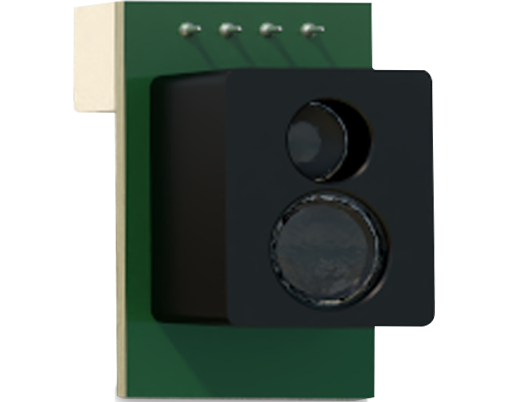
When selecting a laser sensor for a gate barrier application, several technical specifications demand careful consideration. Range is paramount; it must cover the entire gate opening width with a safety margin. Beam alignment mechanisms, often aided by visible pilot lasers or advanced digital alignment indicators, are crucial for quick and accurate installation. Housing must be robust, typically rated IP67 or higher, to withstand dust, water jets, temperature extremes, and constant vibration. Response time must be extremely fast, measured in milliseconds, to ensure the gate stops before contacting an obstacle. Finally, output configurations (e.g., NPN/PNP, relay, analog) must be compatible with the existing gate controller.
Looking ahead, the evolution of gate barrier laser sensors is intertwined with Industry 4.0 trends. We are seeing the emergence of sensors with integrated AI-based object classification. Instead of merely detecting an interruption, these next-generation sensors can differentiate between a vehicle, a person, or debris, enabling more nuanced control logic. Enhanced connectivity for IoT integration will allow sensors to be part of a larger smart city infrastructure, sharing data on traffic flow, gate usage patterns, and maintenance needs. Furthermore, research into novel sensing principles, like time-of-flight (ToF) laser measurement, could allow a single sensor unit to not only detect presence but also measure the speed and profile of an object, opening new possibilities for dynamic barrier control.
In conclusion, the laser sensor is the intelligent sentinel of the gate barrier system. It transforms a simple mechanical arm into a safe, efficient, and reliable automated portal. As technology advances, these sensors will become even more intelligent and interconnected, solidifying their role as a cornerstone of modern, secure, and efficient access management solutions. Their continued development is essential for meeting the growing demands for safety, speed, and data-driven management in parking facilities, industrial sites, and residential complexes worldwide.
