In the realm of industrial automation and machine safety, the response speed of a proximity sensor is a critical performance parameter that directly impacts system efficiency, precision, and reliability. Often referred to as response time, this metric defines the delay between the moment a target enters the sensor's detection range and the moment the sensor's output signal switches state. For engineers and system designers, a deep understanding of this specification is non-negotiable for optimizing production cycles and ensuring seamless integration within high-speed control loops.
Fundamentally, the response speed of a proximity sensor is not a single, fixed value but a characteristic influenced by several intrinsic and extrinsic factors. The core sensing technology plays a primary role. Inductive proximity sensors, which detect metallic objects, typically offer very fast response times, often in the range of 0.1 ms to 1 ms. Their speed is derived from the rapid change in oscillation amplitude within the sensor's coil when a metal target approaches. Capacitive sensors, used for detecting both metallic and non-metallic materials, generally have slightly slower response times due to the nature of measuring changes in capacitance, often ranging from 10 ms to 50 ms. Photoelectric sensors, depending on their modulation type (e.g., pulsed vs. continuous), can achieve extremely high speeds, with some models boasting response times under 0.05 ms, making them ideal for counting or detecting very small, fast-moving objects.
Beyond the core technology, the sensor's design and output configuration are decisive. The switching frequency, usually measured in Hertz (Hz), is a direct derivative of response time. A sensor with a 1 ms response time can theoretically switch up to 500 times per second (500 Hz). However, this is a maximum theoretical value. The actual achievable frequency in an application is lower, as it must account for the target's approach and retreat times. Furthermore, the type of output circuit significantly affects the signal's readiness for the controller. Sensors with NPN or PNP transistor outputs provide the fastest switching, ideal for direct PLC input connections. Sensors with analog current (4-20 mA) or voltage (0-10 V) outputs have a different speed characteristic, often defined by a time constant (e.g., 10 ms) that describes how quickly the output signal can follow a change in the sensing distance.

External application conditions impose practical limits on the theoretical response speed. The most crucial factor is the speed and size of the target itself. A sensor with a 1 ms response time cannot reliably detect an object that passes through its sensing field in 0.5 ms. The target must remain within the effective sensing range for a duration longer than the sensor's response time to guarantee a stable output signal. Environmental factors like extreme temperatures, strong electromagnetic interference (EMI), or contamination on the sensor face can also degrade performance and increase response latency. Power supply stability is another often-overlooked factor; voltage fluctuations can cause internal circuitry to operate sub-optimally.
From an industry standards perspective, response time is rigorously defined and tested. Key international standards, such as IEC 60947-5-2 for proximity sensors, provide frameworks for testing and declaring performance parameters. The standard specifies definitions for "operating time" (the delay from target entry to output switch) and "release time" (the delay from target exit to output switch-back). Reputable manufacturers provide these values in their datasheets under specific conditions (e.g., supply voltage, target material, and size). It is imperative for engineers to consult these datasheets rather than relying on generic claims. For safety-related applications, sensors must comply with standards like ISO 13849 or IEC 61508, where response time is a vital part of calculating the overall system's Performance Level (PL) or Safety Integrity Level (SIL). A slower-than-expected response can compromise the entire safety function.
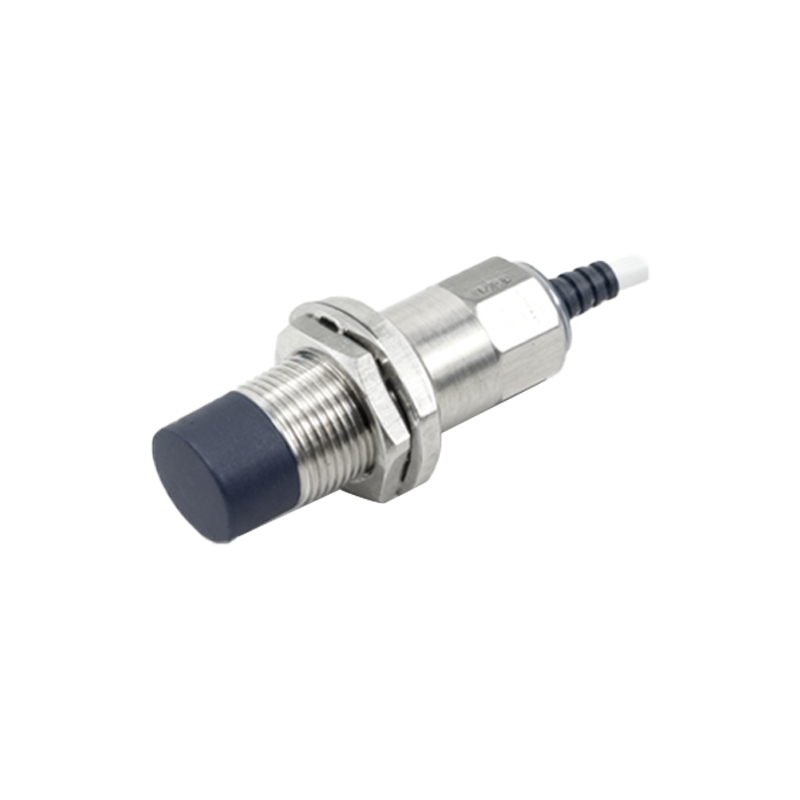
When selecting a sensor for a high-speed application, a systematic approach is required. First, calculate the minimum required sensing time based on the target's maximum velocity and the necessary detection zone length. The sensor's total response time (operating plus release time) must be significantly shorter than this minimum sensing time, with a safety factor of at least 2-3x recommended. Always consider the entire signal chain: the sensor's response time, the signal transmission delay through cables, and the input response time of the PLC or controller. The slowest component in this chain dictates the system's overall response. For ultra-high-speed tasks, such as precise positioning or sorting on a conveyor, laser-based or specialized fiber-optic sensors with microsecond-range response times may be necessary, albeit at a higher cost.

In conclusion, the question "What is the response speed of a proximity sensor?" invites a nuanced answer rooted in physics, electronics, and practical application. While datasheets provide the essential baseline numbers, the true operational speed is