In industrial automation and control systems, proximity switches are indispensable components for non-contact object detection. A fundamental, yet often overlooked, specification is the minimum size of the sensing face—the active area of the sensor from which the electromagnetic field emanates. This parameter is critical for ensuring reliable detection of small targets and for the physical design of machinery. This article delves into the technical factors determining the minimum sensing face size, its implications for application, and practical selection guidelines.
The sensing face size is intrinsically linked to the sensor's operating principle. Inductive proximity switches, which detect metallic objects, generate an oscillating electromagnetic field from a coil housed behind the sensing face. The diameter of this coil largely dictates the minimum possible size of the face. Capacitive sensors, sensitive to both metallic and non-metallic materials, operate on a similar principle with electrode plates. For miniature sensors, the physical construction—encompassing the coil/winding, ferrite core, oscillator circuit, and housing—sets a hard lower limit. Current manufacturing technologies allow for cylindrical inductive sensors with sensing face diameters as small as M3 (3mm) or even M2.5. These ultra-miniature sensors are engineered with precision-wound micro-coils and specialized electronics.
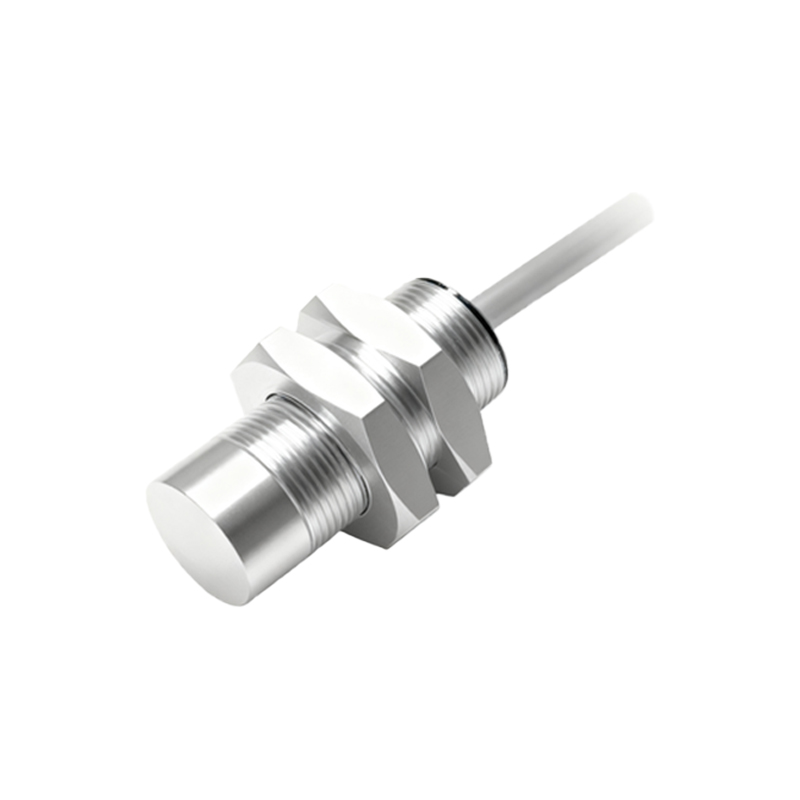
However, a smaller sensing face directly impacts key performance metrics, primarily the rated operating distance (Sn). The sensing range is proportional to the diameter of the active face. An M5 sensor typically offers a Sn of 0.8-1.5 mm, while an M30 sensor may provide 10-15 mm. Therefore, selecting a sensor with a minuscule face necessitates accepting a significantly reduced detection range. This trade-off is paramount in design. Furthermore, the size of the target object must be considered. As a rule of thumb, for standard sensing reliability, the target should be at least equal to, and ideally 1.5 times, the diameter of the sensor's sensing face. A 3mm sensor might reliably detect a 4mm screw head, but could fail to sense a thin wire or a very small tool tip, even if within the nominal range, due to insufficient material to dampen the electromagnetic field effectively.
Environmental and installation factors also play a crucial role. Miniature sensors with tiny sensing faces are more susceptible to misalignment. Even a slight angular deviation or offset can drastically reduce the effective sensing distance. They are also more vulnerable to physical damage from impacts or debris. The mounting nuts and threads for such small sensors (e.g., M3, M4) require careful torque application to avoid stripping. In high-vibration environments, the integrity of both the sensor mount and the tiny target's position becomes critically important.
From an application perspective, the drive toward miniaturization in electronics assembly, micro-mechanics, and precision robotics has fueled the demand for these tiny sensors. They are essential for detecting small components on pick-and-place heads, verifying the presence of micro-screws, monitoring the position of miniature actuators, or counting tiny parts on narrow conveyor belts. In such contexts, the physical space constraint is the dominant design driver, often outweighing the need for a long sensing range.
When selecting a proximity switch based on sensing face size, engineers must follow a systematic approach. First, define the absolute spatial envelope available for the sensor body. Second, determine the smallest target to be detected and its material (ferrous/non-ferrous metal for inductive, any material for capacitive). Third, calculate the required effective sensing distance based on machine tolerances and potential target position variations. Fourth, consult manufacturer datasheets, which always specify the sensing face diameter and the corresponding guaranteed operating distance. Do not rely on generic "miniature" labels. Finally, consider environmental protections (IP rating), switching frequency requirements, and output type (PNP/NPN, NO/NC) compatible with the small form factor.
In conclusion, the minimum sensing face size for modern proximity switches can be as small as 2-3 millimeters, enabled by advanced micro-engineering. While this enables solutions for ultra-compact machinery, it imposes strict compromises on sensing range, target size requirements, and installation precision. Successful implementation hinges on a thorough understanding of this trade-off and a meticulous analysis of the application's mechanical, electrical, and environmental constraints. The smallest sensor is not always the optimal choice; the correct sensor is the one whose minimum face size reliably fulfills all functional requirements within the given physical space.