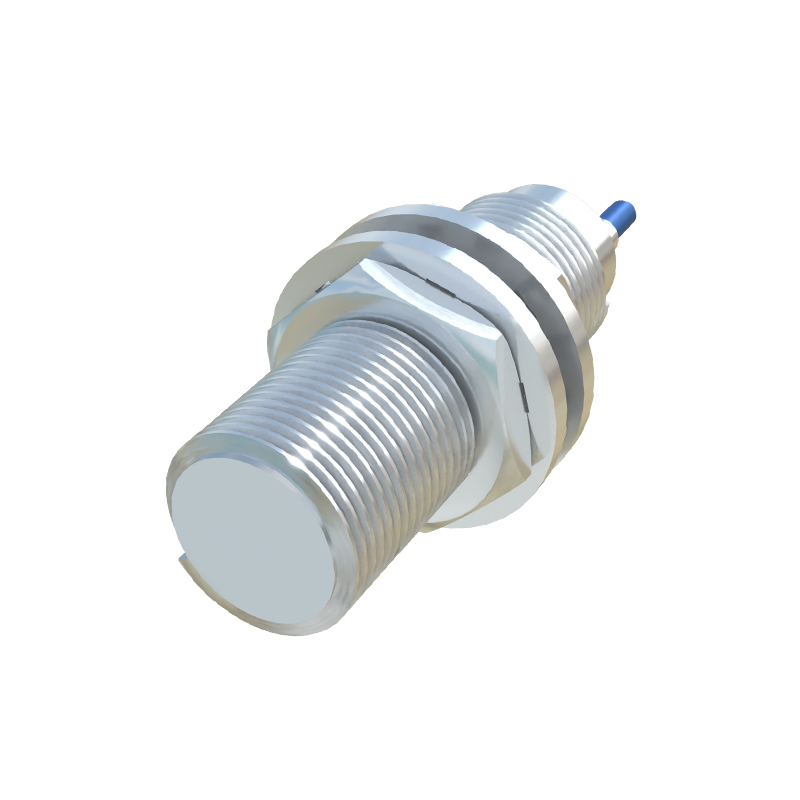
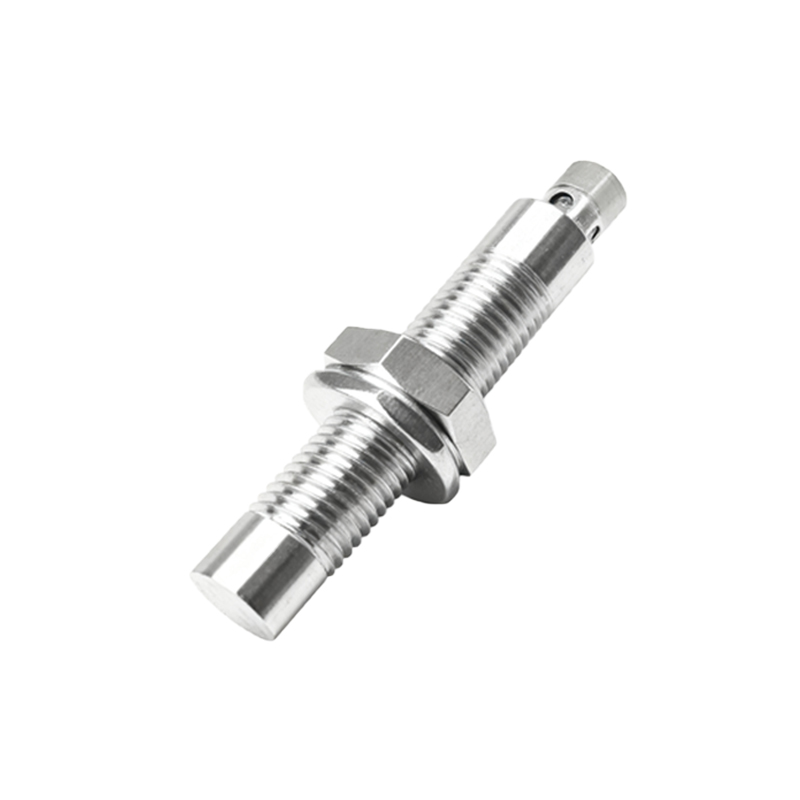
Proximity sensors are essential components in modern industrial automation, offering non-contact detection of objects within a defined range. These devices are widely used in manufacturing, robotics, automotive systems, and safety applications due to their reliability, durability, and ability to operate in harsh environments. Understanding their structure and working principle is crucial for engineers and technicians involved in system design and maintenance.
Structurally, proximity sensors consist of several key components. The core element is the sensing element, which varies depending on the type of sensor. Common types include inductive, capacitive, ultrasonic, and photoelectric sensors. For inductive sensors, the sensing element is typically a coil wound around a ferrite core, enclosed in a housing made of materials like nickel-plated brass or stainless steel for protection against mechanical stress and environmental factors. Capacitive sensors feature electrodes that form a capacitor, while ultrasonic sensors incorporate a piezoelectric transducer. The housing also includes an oscillator circuit, signal conditioner, and output stage (e.g., transistor or relay). Many models have LED indicators for status monitoring and are designed with standardized mounting options (e.g., threaded barrels or flat surfaces) for easy integration.
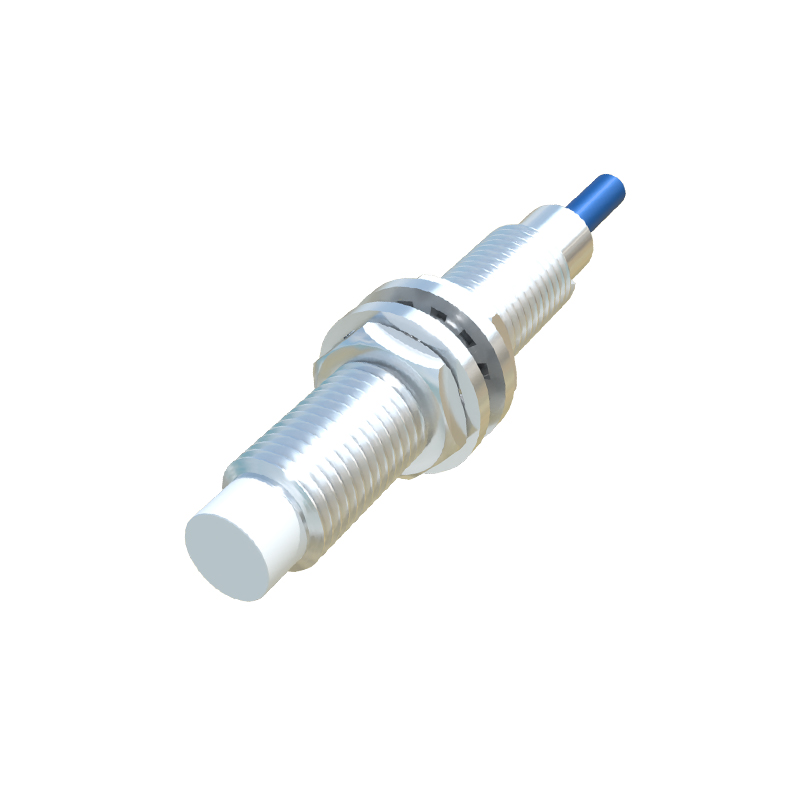
The working principle of proximity sensors is based on detecting changes in a physical field without physical contact. Inductive sensors generate an electromagnetic field using the oscillator circuit. When a metallic object enters this field, eddy currents are induced in the object, causing a change in the oscillation amplitude. This change is detected by the sensor's circuitry, triggering an output signal (e.g., switching a load). Capacitive sensors operate by measuring changes in capacitance between the sensor electrode and the target object. When an object (metallic or non-metallic) approaches, the capacitance increases, altering the oscillator frequency and activating the output. Ultrasonic sensors emit high-frequency sound waves and measure the time delay of reflected waves to determine distance, whereas photoelectric sensors use light beams interrupted by objects.
Key advantages include high switching speeds, long service life (as there is no mechanical wear), and immunity to surface conditions like dirt or moisture. However, selection must consider factors such as sensing range, material compatibility, and environmental interference. For instance, inductive sensors only detect metals, while capacitive sensors respond to a wider range of materials but are sensitive to humidity. Proper installation and calibration are vital to avoid false triggers from external vibrations or electromagnetic noise.
In summary, proximity sensors leverage electromagnetic, capacitive, or acoustic principles to enable precise, non-contact detection. Their robust construction and versatile operation make them indispensable in automation, enhancing efficiency and safety. Engineers should prioritize matching sensor type to application requirements, ensuring optimal performance in diverse industrial settings.