In today's highly automated industrial landscape, proximity sensors are indispensable components, serving as the critical "eyes" of machinery for non-contact detection of objects. For procurement specialists, project engineers, and system integrators, navigating the vast market of proximity sensors and understanding their associated costs is a fundamental task. This guide provides a detailed analysis of the current pricing landscape for bulk purchases of proximity sensors, categorized by technology, specifications, and application requirements. It is designed to offer a clear, industry-standard reference, helping professionals make informed budgetary and sourcing decisions.
The pricing of proximity sensors is not a one-size-fits-all metric. It is a complex function of several interdependent factors. Primarily, the underlying sensing technology dictates a significant portion of the base cost. Inductive sensors, used for detecting metallic objects, are generally the most cost-effective, especially in standard cylindrical housings (e.g., M8, M12, M18, M30). For bulk OEM purchases of standard 12mm or 18mm inductive sensors with a sensing range of 2-8mm, prices can range from $8 to $25 per unit, depending on the brand (premium European vs. value Asian manufacturers), housing material (nickel-plated brass vs. stainless steel), and output configuration (PNP/NPN, NO/NC). Capacitive sensors, capable of detecting both metallic and non-metallic materials like liquids, plastics, and wood, typically command a 20-40% premium over their inductive counterparts due to their more complex circuitry and calibration requirements.
Magnetic sensors (reed or Hall-effect) and ultrasonic sensors occupy different price brackets. Tubular magnetic sensors are often very economical for simple position detection of magnets, while more sophisticated ultrasonic sensors with analog output or advanced filtering start at a higher price point, often above $50 per unit in bulk. Photoelectric sensors, with their long-range capabilities and versatility, show the widest price variance. A standard diffuse photoelectric sensor might cost between $20 and $60, while precise background suppression models, high-speed thru-beam sets, or laser-based versions for minute object detection can easily exceed $100 per unit.
Beyond core technology, specifications critically impact price. Extended sensing range, higher switching frequency (important for high-speed packaging or assembly lines), and superior environmental ratings (IP67, IP69K for washdown environments) all add cost. Sensors with advanced features like IO-Link connectivity, which enables digital parameter setting, condition monitoring, and easier integration into Industry 4.0 frameworks, add a substantial premium—often 30-100% more than a basic analog or discrete output version. The choice of housing material is another key driver; stainless steel housings (V2A, V4A) for corrosive or food-grade applications are significantly more expensive than standard nickel-plated brass or PBT plastic housings.
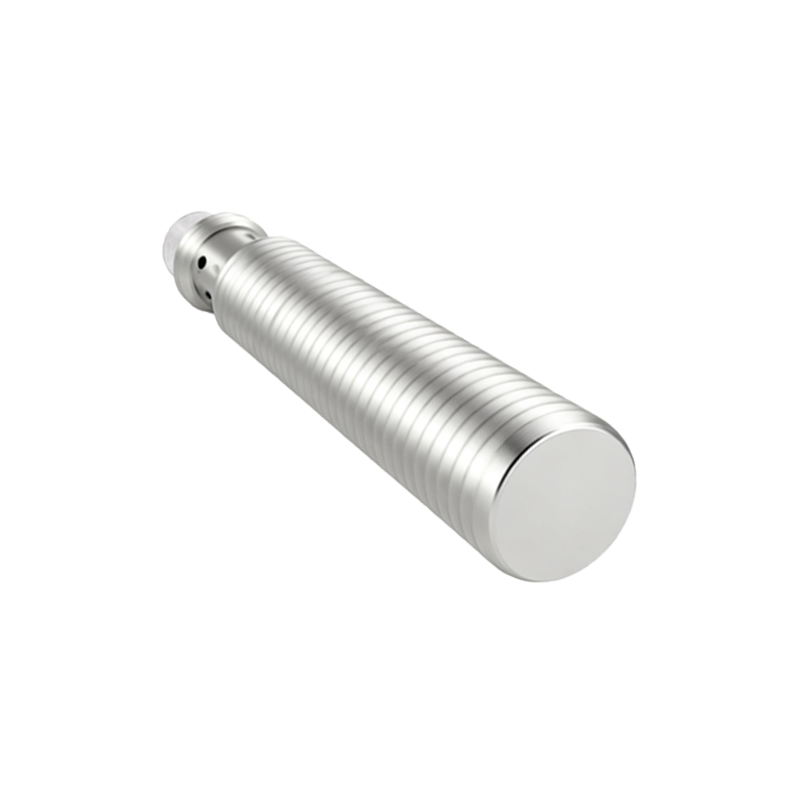
The supply chain and brand tier create distinct price strata. Established European and Japanese brands (e.g., Siemens, Sick, Omron, Pepperl+Fuchs, ifm) represent the premium segment. Their sensors are renowned for reliability, precision, and global support, but this comes at a cost. A bulk order for a standard inductive sensor from these manufacturers may range from $25 to $80 per unit. Mid-tier brands, often from other global regions, offer a balance of quality and value. Value-line or economy brands, frequently sourced from Asian manufacturers, provide the most aggressive pricing, with basic inductive sensors available for under $10 per unit in very large quantities (thousands of pieces). However, this often involves trade-offs in long-term reliability, certification completeness (e.g., UL, CE), and technical support.
For an accurate bulk price list, one must consider the application's Total Cost of Ownership (TCO). A cheaper sensor that fails prematurely can cause costly production downtime. Therefore, the quoted price per sensor is just the starting point. Engineers must evaluate the required mean time between failures (MTBF), environmental robustness, and compatibility with existing control systems. Requesting formal quotations from distributors or manufacturers with exact part numbers, required quantities (e.g., 500, 1000, 5000 pieces), and desired delivery terms is essential. Prices are dynamic and subject to raw material costs, global logistics, and market demand.

In conclusion, a bulk proximity sensor price table is a matrix, not a simple list. A simplified reference for large-quantity procurement (500+ units) might look like this: Standard Inductive Cylindrical (M18, 8mm range): $12 - $45; Heavy-Duty Inductive (M30, Stainless Steel): $40 - $100; Standard Capacitive (M30, for liquids): $30 - $70; Diffuse Photoelectric (500mm range): $25 - $80; Ultrasonic Sensor (Analog