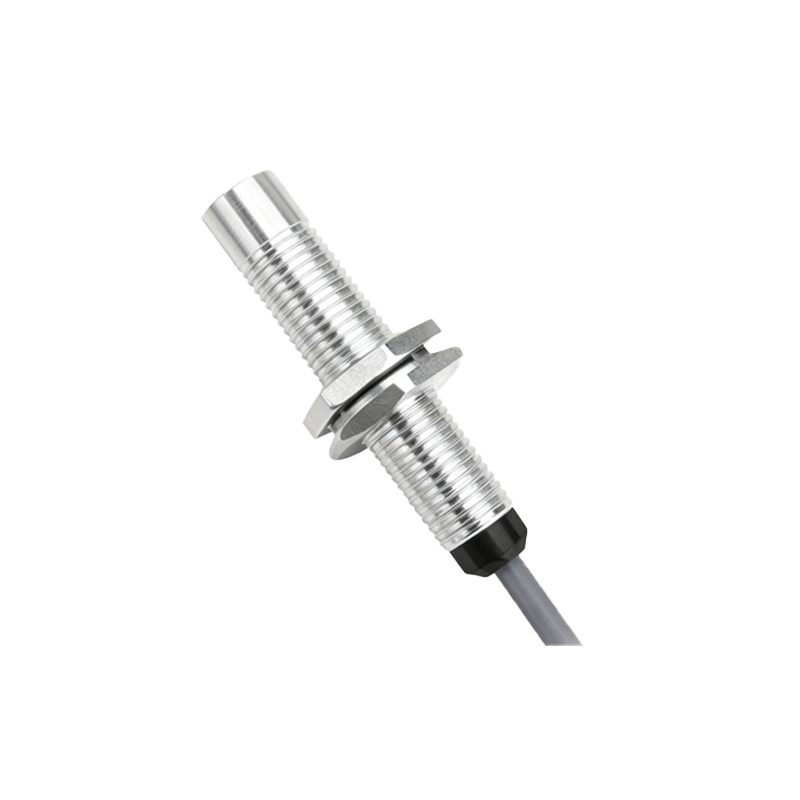
In industrial automation and control systems, proximity sensors play a critical role in detecting the presence or absence of objects without physical contact. Among the various configurations available, the 3-wire PNP (Positive-Negative-Positive) quick-disconnect proximity sensor stands out for its reliability, ease of installation, and maintenance efficiency. This article delves into the operational principles, wiring standards, advantages, and typical applications of these sensors, providing a comprehensive guide for engineers and technicians in the electrical and automation fields.
A 3-wire PNP proximity sensor operates on the principle of electromagnetic field generation and detection. It typically consists of an oscillator circuit that creates a high-frequency electromagnetic field at the sensing face. When a metallic or conductive target enters this field, eddy currents are induced, causing a change in the oscillation amplitude. This change is detected by the sensor's circuitry, which then switches the output state. The "PNP" designation refers to the type of transistor output used. In a PNP configuration, the output switches the positive voltage supply line. When the sensor is active (target detected), it connects the load to the positive supply, allowing current to flow from the sensor to the load. This is in contrast to NPN (Negative-Positive-Negative) sensors, which switch the negative or ground line.
The three wires in these sensors are color-coded according to international standards, typically IEC 60947-5-2, to ensure safe and correct installation. The standard color scheme is as follows: Brown wire for the positive supply voltage (usually +10 to +30 VDC), Blue wire for the common negative or ground (0 VDC), and Black wire for the switched output signal. This consistent coding minimizes wiring errors and facilitates troubleshooting. The quick-disconnect feature, often implemented with a M8 or M12 circular connector, allows for rapid sensor replacement or removal without the need for tools. This connector system typically includes a bayonet or screw-locking mechanism, ensuring a secure and vibration-resistant connection while enabling swift disconnection for maintenance or reconfiguration. This is particularly valuable in high-availability production environments where downtime must be minimized.
The advantages of using 3-wire PNP quick-disconnect proximity sensors are numerous. Firstly, their solid-state design ensures a long operational life with no moving parts to wear out. They offer high switching frequencies, enabling detection of fast-moving objects on production lines. The PNP output is often preferred in many PLC (Programmable Logic Controller) and control system architectures because it sources current, which can be more intuitive for wiring to PLC digital input modules that are commonly configured to accept a sourcing input. The quick-disconnect capability drastically reduces mean time to repair (MTTR), as a faulty sensor can be unplugged and a new one installed in seconds. Furthermore, these sensors are available in various housing materials (such as nickel-plated brass or stainless steel) and sensing ranges (from a few millimeters to several tens of millimeters), making them suitable for diverse industrial environments, including those with exposure to coolants, oils, or metal chips.
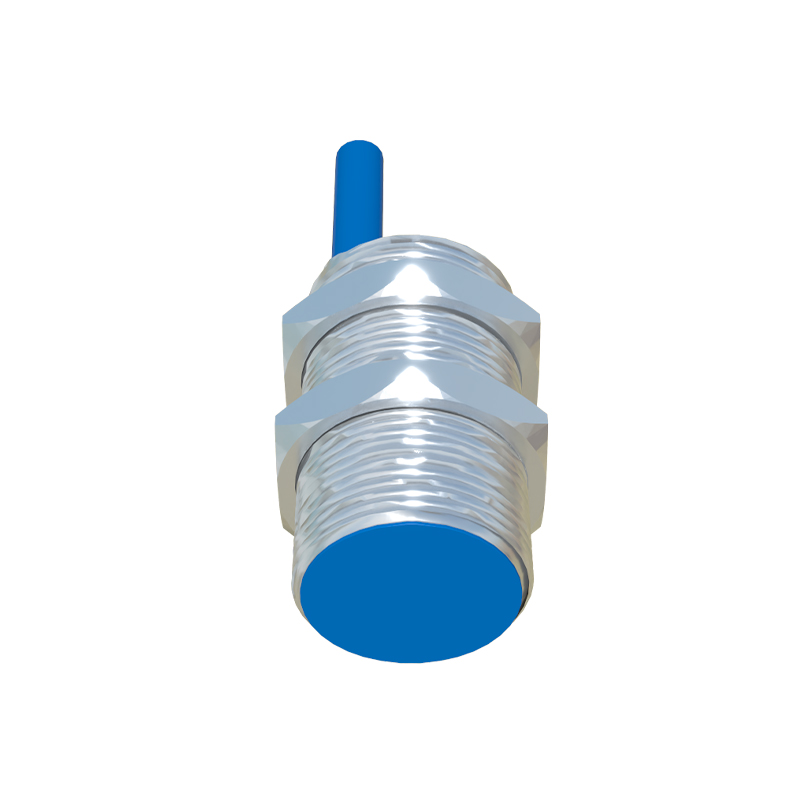
Typical applications for 3-wire PNP quick-disconnect sensors are widespread across manufacturing and processing industries. They are commonly used for object detection on conveyor belts, position verification of machine parts (like cylinders in the end-of-stroke position), counting of products, and monitoring of rotary equipment (e.g., detecting the teeth of a gear for speed measurement). In automated assembly systems, they ensure components are present and correctly positioned before a process step is executed. Their robust construction allows them to perform reliably in harsh conditions found in automotive manufacturing, packaging machinery, and material handling systems.
When selecting and installing these sensors, several key considerations must be addressed. The sensing distance, or nominal range, should be chosen with a safety margin (typically 70-80% of the nominal range) to account for target material, size, and environmental factors like temperature fluctuations. The sensor must be compatible with the power supply voltage of the control system. Proper mounting is crucial to avoid false triggers from surrounding metal; non-flush or shielded sensors require a metal-free zone around the sensing face, while flush-mounted sensors can be installed level with metal surfaces. Regular maintenance, though minimal, should include periodic cleaning of the sensing face to remove debris that could attenuate the sensing field and checking the integrity of the quick-disconnect connector for signs of corrosion or physical damage.
In conclusion, the 3-wire PNP quick-disconnect proximity sensor is a versatile and robust component essential for modern industrial automation. Its design balances performance, durability, and serviceability. Understanding its operation, wiring, and application best practices enables engineers to design more efficient, reliable, and maintainable control systems, ultimately contributing to enhanced productivity and reduced operational costs in industrial settings.