In the realm of industrial automation and control systems, proximity sensors are indispensable components. They detect the presence or absence of an object without physical contact, enabling precise, reliable, and wear-free operation in countless applications. However, with several distinct technologies available, a common and critical question arises: which category of proximity switch sensor is truly the best? The unequivocal answer is that there is no single "best" type universally. The optimal choice is dictated by the specific application requirements, target material, environmental conditions, and performance needs. This guide delves into the primary categories of proximity sensors—inductive, capacitive, ultrasonic, and photoelectric—to help you make an informed selection.
Inductive Proximity Sensors: The Metal Detectors
Inductive proximity sensors are the workhorses of the industry when it comes to detecting metallic objects. They generate an electromagnetic field. When a ferrous or non-ferrous metal target enters this field, it induces eddy currents, causing a change in the sensor's oscillation amplitude, which triggers the output switch.
Key Strengths: Exceptional reliability and long service life with no moving parts. They are highly resistant to environmental factors like dust, dirt, oil, and moisture. Ideal for high-speed counting or position detection of metal parts.
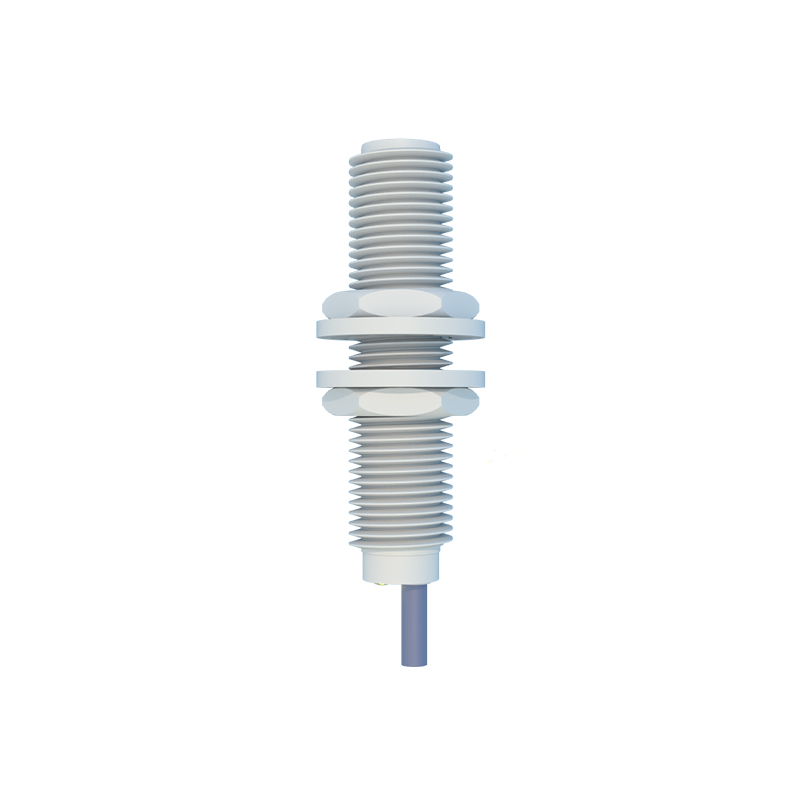
Ideal For: Machine tools, automotive assembly lines, metal detection in conveyors, and position sensing of cylinders.
Limitations: Only detect metals. Sensing range is limited and varies with the type of metal (shorter for non-ferrous metals like aluminum or copper).
Capacitive Proximity Sensors: The Versatile Detectives
Capacitive sensors function by generating an electrostatic field. They can detect virtually any material—metals, plastics, glass, wood, liquids, and granular substances—by measuring changes in capacitance caused by the target material's dielectric constant.
Key Strengths: Remarkable material versatility. They can sense through non-metallic walls, making them perfect for level detection of liquids, powders, or plastics inside containers.
Ideal For: Level control in silos or tanks, material handling of non-metals, detection of filled bottles, and moisture or presence detection.
Limitations: More susceptible to environmental influences like humidity or temperature fluctuations. Can be triggered by unintended contaminants, requiring careful tuning.
Ultrasonic Proximity Sensors: The Long-Range Measurers
These sensors use sound waves beyond the human hearing range. They emit ultrasonic pulses and measure the time taken for the echo to return from a target object. This principle allows for both presence detection and precise distance measurement.
Key Strengths: Long sensing ranges and excellent performance with a wide variety of surfaces, regardless of color, transparency, or material (though absorbent materials can be challenging). Highly effective in challenging environments with dust, fog, or smoke where photoelectric sensors might fail.
Ideal For: Bulk material level sensing, loop control in web handling, parking assistance systems, and robot palletizing.
Limitations: Temperature and air turbulence can affect accuracy. Typically have a slower response time compared to inductive or photoelectric sensors. The sensing beam is relatively wide, which can be a drawback for small object detection.
Photoelectric Sensors: The Flexible All-Rounders
Photoelectric sensors operate by emitting a beam of light (visible red, infrared, or laser) and detecting changes in the received light. They come in three main configurations: through-beam (separate emitter and receiver), retro-reflective (bounces light off a reflector), and diffuse (reflects light directly off the target).
Key Strengths: Very long sensing ranges, especially with through-beam models. Capable of detecting extremely small objects. Diffuse sensors offer easy installation without a separate reflector. Laser versions provide high precision for alignment.
Ideal For: Conveyor line object counting, bottle cap detection, packaging machinery, security systems, and automated doors.
Limitations: Performance can be adversely affected by environmental contaminants like dirt, steam, or heavy dust. Transparent or highly reflective objects may cause detection issues. Ambient light can sometimes interfere.
Choosing the Right Sensor: Key Decision Factors
To select the best proximity sensor category, systematically evaluate these parameters:
1. Target Material: Is it metal, plastic, liquid, or transparent? This often immediately narrows the choice to inductive or capacitive.
2. Sensing Distance: Required range from a few millimeters to several meters.
3. Environmental Conditions: Exposure to washdown, chemicals, extreme temperatures, dust, or vibration.
4. Output Requirements: Digital (PNP/NPN) or analog output, switching frequency/speed.
5. Installation