In the realm of industrial automation and machine safety, selecting the optimal sensing technology is a critical engineering decision that directly impacts system reliability, efficiency, and cost. Two prominent categories of non-contact sensors—laser through-beam sensors and proximity sensors—serve distinct yet sometimes overlapping functions. A deep understanding of their operational principles, performance characteristics, and ideal applications is essential for any design or maintenance engineer.
Fundamental Operating Principles
Laser through-beam sensors, also known as photoelectric thru-beam sensors, operate on a straightforward principle. They consist of two separate units: a laser transmitter and a receiver. The transmitter emits a focused, coherent beam of light, typically in the visible red or infrared spectrum. The receiver, positioned directly opposite, continuously monitors for this specific light signal. An object is detected when it physically interrupts the beam path between the two units. This "break-beam" method provides a highly reliable and precise detection signal, largely immune to the object's surface color, texture, or material, as it relies on the absence of light rather than its reflection.
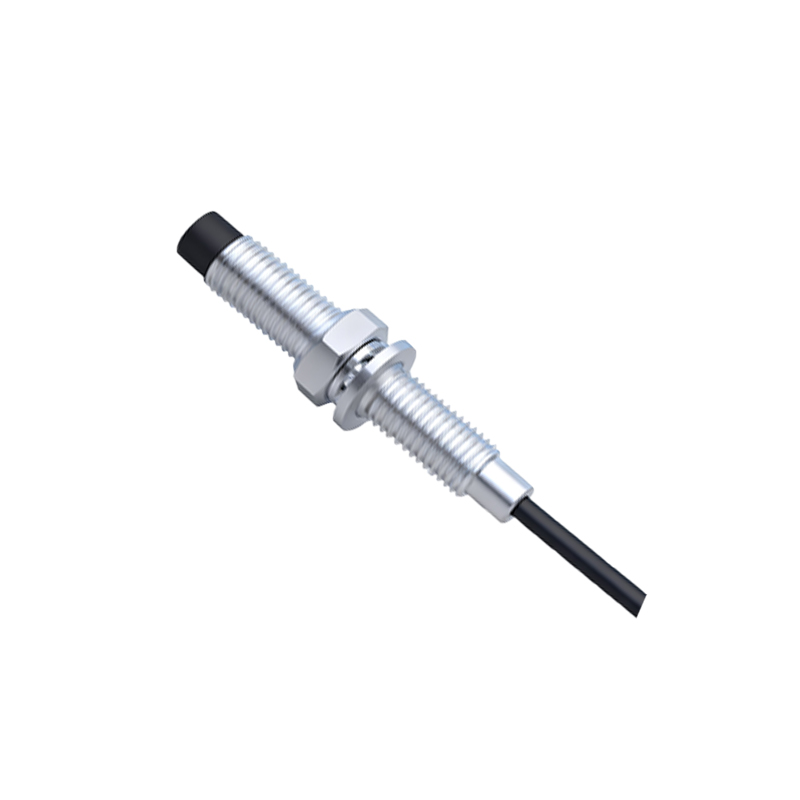
Proximity sensors, in contrast, are single-unit devices that detect the presence or absence of an object within a defined sensing range without physical contact. The most common types are inductive and capacitive. Inductive proximity sensors generate an oscillating electromagnetic field. When a metallic object (ferrous or non-ferrous) enters this field, it induces eddy currents within the object, causing a change in the sensor's oscillation amplitude, which triggers the output switch. Capacitive proximity sensors generate an electrostatic field and can detect both metallic and non-metallic materials (e.g., plastics, liquids, wood) by measuring changes in capacitance when an object enters the field.
Performance and Technical Specifications Comparison
The performance divergence between these technologies is significant. Laser through-beam sensors excel in sensing range and accuracy. They can reliably detect objects over distances ranging from a few centimeters to several hundred meters, with detection accuracy often in the sub-millimeter range. Their response time is extremely fast, typically in the microsecond range, making them suitable for high-speed counting or positioning applications. However, their installation requires precise alignment of two separate components, which can be challenging in vibrating environments or over very long distances. They are also susceptible to false triggers if contaminants like dust, smoke, or heavy fog obscure the beam, though certain models use modulated light to mitigate ambient light interference.
Proximity sensors offer a much shorter sensing range, typically from a few millimeters up to about 60 mm for inductive types, and slightly more for capacitive types. Their accuracy is sufficient for presence detection but not for precise edge detection over distance. A key advantage is their robustness. Inductive sensors, in particular, are virtually immune to environmental factors like dust, oil, coolant, and vibrations. They are compact, easy to install as a single unit, and require no alignment. Their response time, while fast (in the kilohertz range), is generally slower than that of a laser beam system.
Typical Industrial Applications
The application landscape clearly defines where each sensor shines. Laser through-beam sensors are the preferred choice for:
High-Precision Tasks: Detecting small parts, verifying hole presence, or precise edge detection in manufacturing.
Long-Range Detection: Monitoring object passage on large conveyor systems, gate control, or vehicle detection in parking garages.
Safety Systems: Forming safety light curtains around hazardous machinery where any beam break signals an immediate stop.
High-Speed Counting: Tallying bottles on a filling line or packages on a high-speed sorter.
Proximity sensors are the workhorses for:
Position Sensing: Detecting the end position of a cylinder rod, verifying the closed position of a door or hatch.
Metal Object Detection: Counting metallic parts, detecting gear teeth, or monitoring spindle position.
Level Detection: Capacitive sensors are ideal for detecting the presence of liquids or granular materials in tanks or hoppers.
Harsh Environments: Applications in machine tools, welding cells, or foundries where oil, chips, and grime are prevalent.
Selection Criteria Summary
The engineer's selection process should follow a logical hierarchy:
1. Target Object: Metallic? Use inductive proximity. Non-metallic, liquid, or any material at long range? Consider capacitive or laser.
2. Required Sensing Distance: Short range (<=60mm) favors proximity. Long or very precise distance demands a through-beam laser.
3. Environmental Conditions: Dirty, oily, or vibrating? Proximity sensors are more robust. Clean, controlled environments allow for laser use.
4. Accuracy and Speed Needs: Ultra-high speed or precision points to laser. General presence detection is