In the rapidly evolving landscape of industrial automation, the demand for compact, efficient, and multifunctional sensing solutions has never been higher. Among the most significant innovations meeting this demand is the pressure sensor proximity switch combo sensor—a sophisticated device that integrates two critical sensing functions into a single, robust unit. This integration represents a paradigm shift in how engineers approach system design, offering unparalleled advantages in space-constrained and complex applications.
At its core, the combo sensor merges the capabilities of a pressure sensor and a proximity switch. The pressure sensor component is responsible for accurately measuring the force exerted by gases or liquids within a system, converting this physical parameter into a reliable electrical signal. This is crucial for monitoring and controlling processes in hydraulic systems, pneumatic lines, and various fluid handling applications. Simultaneously, the integrated proximity switch functions as a non-contact detection device, typically using inductive, capacitive, or ultrasonic principles to sense the presence or absence of a target object without physical contact. This dual functionality allows a single device to perform tasks that traditionally required two separate sensors, such as monitoring fluid pressure in a cylinder while also detecting the precise position of the piston rod.
The primary driver for adopting this integrated sensor is the substantial reduction in system complexity and physical footprint. In modern machinery, especially within sectors like automotive manufacturing, packaging, and semiconductor production, real estate on control panels and within equipment is at a premium. Installing a single combo sensor instead of two discrete units saves valuable space, simplifies wiring harnesses, and reduces the number of required mounting points and connection ports. This consolidation directly translates to lower installation costs, decreased potential for wiring errors, and enhanced overall system reliability. Fewer components mean fewer potential points of failure, a critical consideration for maintaining high uptime in continuous production environments.
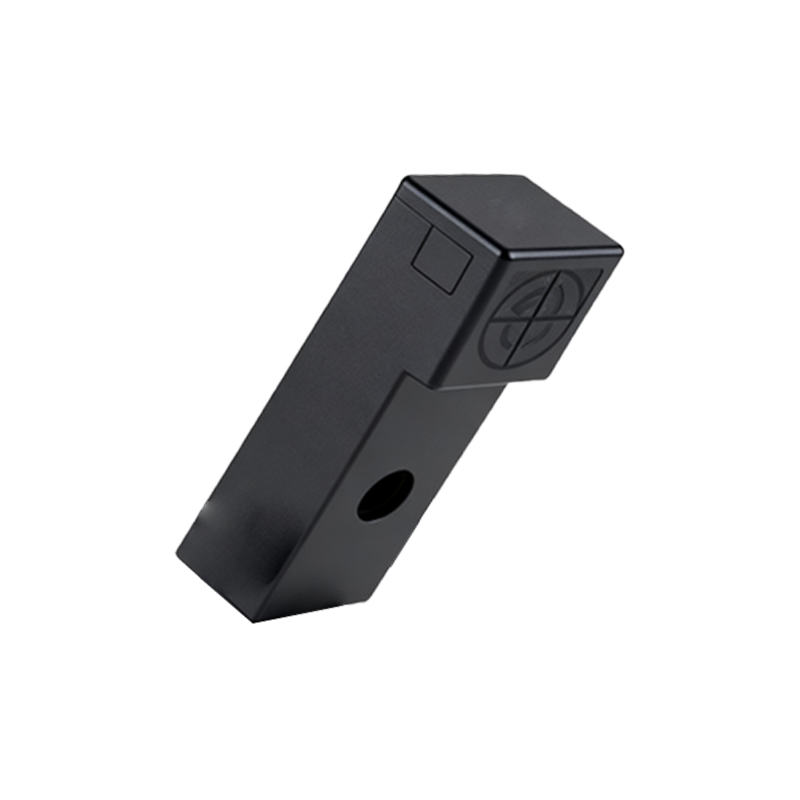
From a performance perspective, these combo sensors are engineered for high precision and durability. They are typically housed in ruggedized enclosures rated for IP67 or higher, making them resistant to dust, moisture, oils, and coolants commonly found in industrial settings. The internal electronics are designed to minimize interference between the pressure sensing and proximity switching circuits, ensuring that the output signal for each function remains stable and accurate. Advanced models feature digital interfaces such as IO-Link, which provide not only the switching signal and analog pressure value but also a wealth of diagnostic data. This includes information on sensor health, operating temperature, and signal strength, enabling predictive maintenance and smarter process control.
The application spectrum for pressure sensor proximity switch combo sensors is remarkably broad. In hydraulic press systems, for instance, the sensor can monitor the oil pressure to ensure it remains within safe operating limits while simultaneously confirming that the press plate has reached its correct home or end position. In automated assembly lines, they can be used in pneumatic grippers to verify both the gripping force (via pressure) and the successful pick-up of a component (via proximity detection). This dual verification is essential for quality control and error-proofing in high-speed automation.
When selecting a combo sensor, engineers must consider several key parameters. The pressure range, accuracy (often expressed as a percentage of full scale), and the type of media compatible with the sensor (e.g., oil, air, water) are paramount for the pressure function. For the proximity switch, the sensing distance, repeat accuracy, and the material of the target object (ferrous vs. non-ferrous metal) are critical. The output configuration is another vital factor; common options include a digital PNP/NPN switch for the proximity function paired with an analog 4-20 mA or 0-10 V output for the pressure reading, or fully digital outputs via fieldbus protocols.
Looking ahead, the trend toward sensor fusion and Industry 4.0 will only accelerate the adoption of such integrated devices. The ability to gather multiple data points from a single node in a network aligns perfectly with the goals of smart factories, where data-driven decision-making is key. The pressure sensor proximity switch combo sensor is more than just a convenience; it is a strategic component that enhances machine intelligence, optimizes floor space, and drives down total cost of ownership. Its role in simplifying complex systems while boosting reliability and data granularity makes it an indispensable tool for engineers designing the next generation of automated industrial equipment.