In the realm of industrial automation, the inductive proximity sensor stands as a cornerstone technology, enabling non-contact detection of metallic objects with remarkable reliability. As a factory specializing in the design and manufacture of these critical components, we delve into the core principles, technological advancements, and diverse applications that define modern inductive sensing solutions.
At its heart, an inductive proximity sensor operates on the principle of electromagnetic induction. The sensor's core component is a coil wound around a ferrite core, which generates a high-frequency oscillating electromagnetic field from an integrated oscillator circuit. When a metallic object enters this active field, eddy currents are induced on the surface of the target. These eddy currents draw energy from the oscillator, resulting in a measurable amplitude reduction of the oscillation. This change is detected by a threshold circuit, which subsequently triggers a solid-state output switch (PNP/NPN, NO/NC). The entire process is entirely non-contact, ensuring no physical wear on the sensor and minimal impact on the target object.
Key performance parameters are meticulously engineered in our factory production. Sensing distance, a critical specification, varies based on the sensor's design and the target material. Standard sensing distances are calibrated for mild steel. For other metals like stainless steel, aluminum, or copper, correction factors must be applied, as their different electrical conductivities and magnetic permeabilities affect the eddy current generation. Factors such as switching frequency (response speed), temperature stability, housing material (often nickel-plated brass, stainless steel, or PBT plastic), and protection ratings (IP67, IP69K) are rigorously tested. Modern sensors from advanced factories also incorporate features like short-circuit protection, overload protection, and immunity to electromagnetic interference (EMI), ensuring robust performance in harsh industrial environments.
The manufacturing process in a dedicated inductive sensor factory is a symphony of precision engineering. It begins with the design and winding of the coil, a step where consistency is paramount. The coil is then potted with a specialized compound to protect against vibration, moisture, and thermal stress. The assembly of the ferrite core, oscillator circuit, and signal conditioning electronics follows. Calibration is perhaps the most critical phase, where each sensor is tuned to its specified switching distance with high accuracy. Finally, rigorous quality control checks, including functional testing under various temperatures and with different target materials, guarantee that every unit meets stringent industry standards.
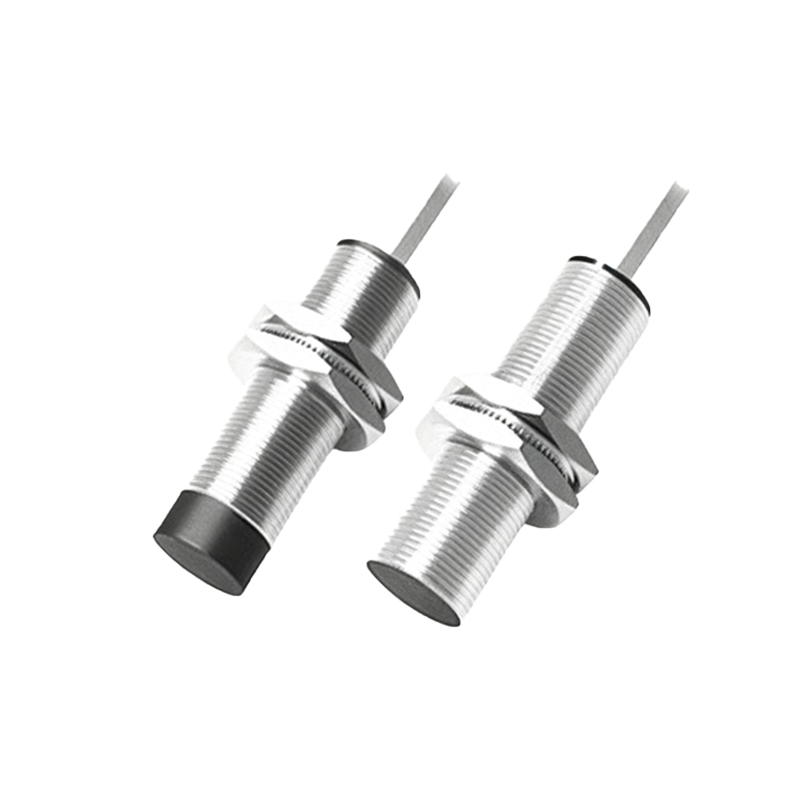
Applications for inductive proximity sensors are virtually limitless across factory floors and automated systems. They are indispensable in position detection—verifying if a robot arm has reached its endpoint, if a cylinder is fully extended or retracted, or if a part is present on a conveyor. They facilitate counting tasks on production lines, monitor rotational speed by detecting gear teeth or bolt heads, and ensure end-of-travel safety in moving machinery. In metalworking, packaging, automotive assembly, and material handling, these sensors provide the essential "eyes" for control systems like PLCs, enabling precise, high-speed, and reliable automation.
The evolution continues with smart factory trends. Today's leading factories produce sensors with IO-Link capability, transforming a simple binary switch into an intelligent device. IO-Link allows for parameterization on-the-fly (e.g., adjusting switching hysteresis), provides detailed diagnostic data (operating temperature, signal strength), and enables predictive maintenance by monitoring performance degradation. This digital transformation enhances system flexibility and reduces downtime.
Selecting the right inductive sensor from a reputable factory requires careful consideration. Engineers must evaluate the required sensing distance, the target metal type and size, the required housing shape (cylindrical, rectangular, ring-shaped), the electrical output type compatible with the controller, and the environmental conditions (presence of coolants, metal chips, extreme temperatures). A consultation with factory application engineers is often invaluable for optimal selection.
In conclusion, the inductive proximity sensor factory is more than a production site; it is a hub of innovation for a fundamental automation component. Through continuous refinement of electromagnetic design, material science, and electronic integration, these factories deliver sensors that form the reliable, unseen backbone of modern industrial productivity. Their non-contact, durable, and increasingly intelligent nature ensures they will remain vital in the automated factories of today and the smart, interconnected industries of the future.