In the realm of industrial automation and machine safety, proximity sensors are indispensable components. While their primary function of detecting the presence or absence of an object is well-understood, a critical and often nuanced specification is the lateral detection distance. This parameter, distinct from the standard sensing distance, is pivotal for applications requiring side-approaching detection or for ensuring reliable operation in spatially constrained environments. This article delves into the technical intricacies of lateral detection distance, its influencing factors, and practical considerations for optimal sensor selection and integration.
Understanding Lateral Detection Distance
Lateral detection distance, sometimes referred to as side-sensing distance or horizontal offset sensitivity, defines the maximum permissible horizontal offset between the sensor's central axis and the target's approach path while still guaranteeing reliable detection. Imagine a standard inductive proximity sensor designed to detect a metal plate approaching head-on with a rated sensing distance (Sn) of 10mm. If the same plate approaches from the side, parallel to the sensor face, the effective distance at which the sensor triggers will be different—this is the lateral detection characteristic. It is typically a fraction of the nominal Sn and is not always explicitly stated in standard datasheets, necessitating a deeper look at sensor design and testing.
Key Factors Influencing Lateral Performance
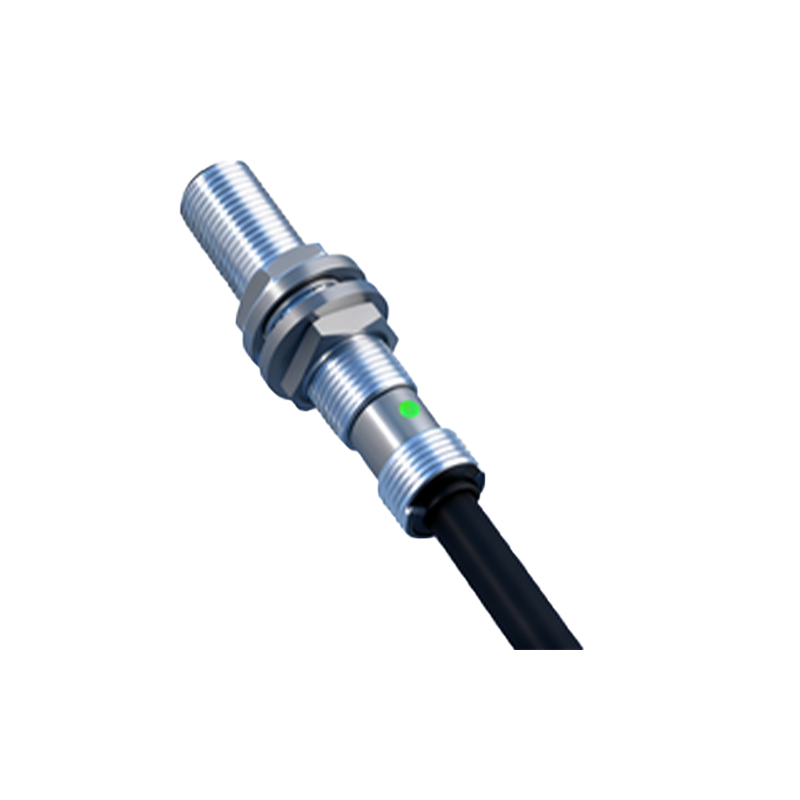
The lateral detection capability is not a fixed value but is governed by several interrelated factors:
1. Sensor Technology & Field Shape: The core determinant is the electromagnetic or electrostatic field geometry.
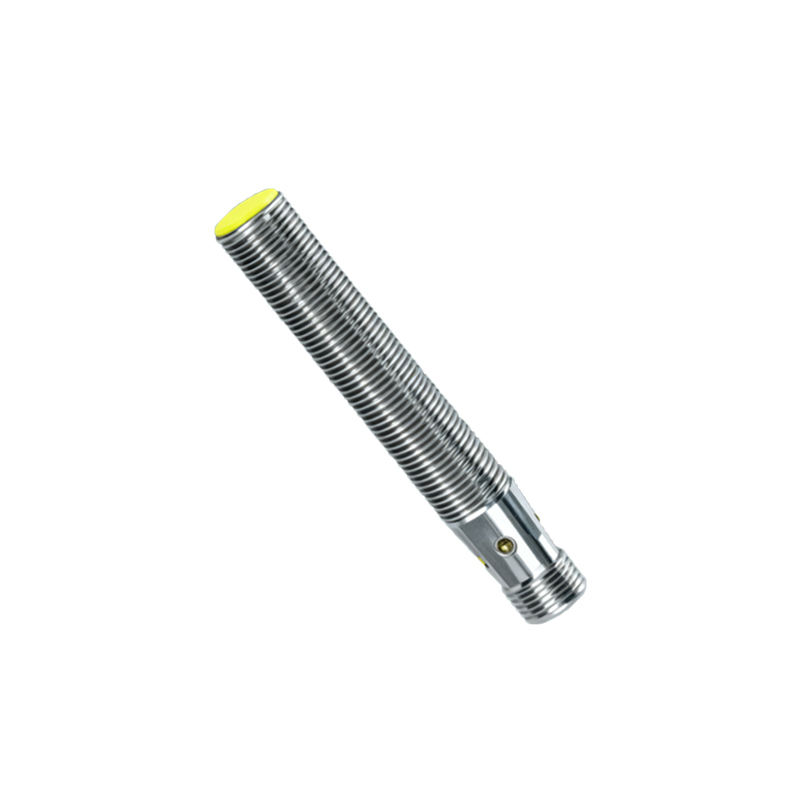
Inductive Sensors: Generate a magnetic field. Shielded (flush-mountable) types have a more concentrated frontal field, resulting in a very short lateral range, often just 1-2mm beyond the housing diameter. Unshielded (non-flush) types have a more expansive field that extends slightly to the sides, offering a marginally better lateral reach.
Capacitive Sensors: Create an electrostatic field that tends to be broader and more diffuse around the active face and sides. Consequently, they generally exhibit a more significant lateral detection range compared to inductive types, but this also makes them more susceptible to unintended interference from adjacent objects.
Ultrasonic & Photoelectric Sensors: These technologies have highly directional beams. Their lateral sensitivity is typically minimal and defined by the beam width or aperture angle. Detection outside this narrow cone is unreliable.
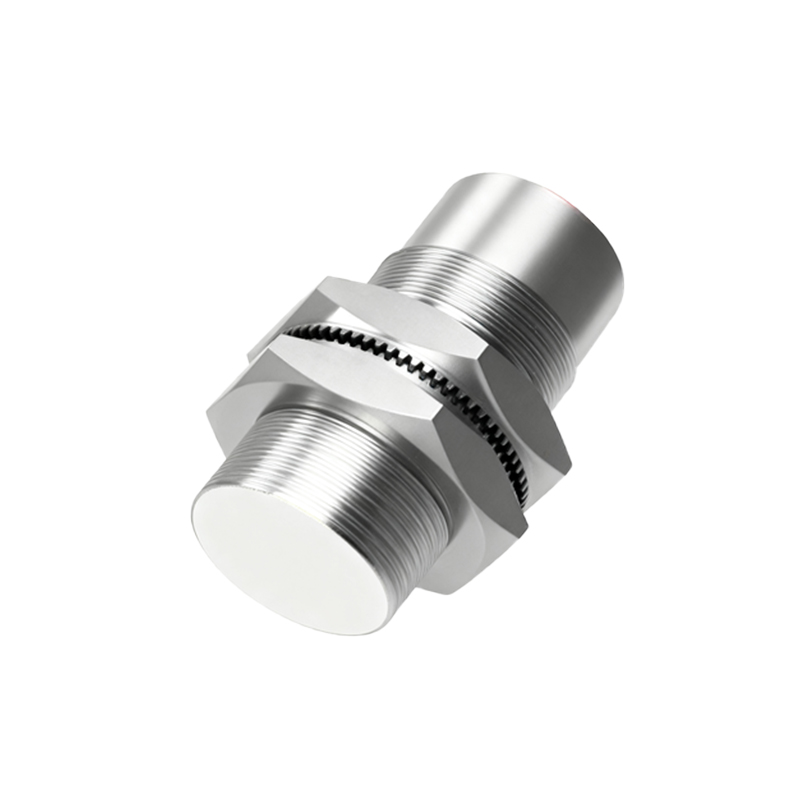
2. Sensor Diameter and Housing: As a rule of thumb, for inductive and capacitive sensors, a larger sensor diameter often correlates with a slightly increased lateral detection zone due to the larger active surface area generating the field. However, the housing design (cylindrical, rectangular, flat) physically limits how close a side-approaching target can get.
3. Target Material, Size, and Shape: For inductive sensors, the target's material (steel, aluminum, copper) and its size relative to the sensor face significantly impact lateral sensitivity. A larger, ferrous steel target will be detected from a greater lateral offset than a small or non-ferrous one. The target's shape (flat plate, rod, wire) also alters the field interaction.
4. Mounting and Environmental Conditions: The proximity of metal mounting surfaces (for inductive sensors) or other dielectrics (for capacitive sensors) can distort the field shape, severely attenuating lateral sensitivity. Environmental factors like temperature, humidity, and contamination (oil, dust) can also marginally affect performance.
Practical Implications for System Design
Ignoring lateral detection distance can lead to system malfunctions, missed detections, or false triggers. Key application considerations include:
Conveyor Side-Guiding: Detecting objects on a conveyor that may drift laterally. A sensor with a known and sufficient lateral range must be selected.
Robot Arm Position Verification: Ensuring a gripper or tool is laterally aligned before engagement.
Narrow Path Detection: In tight spaces where a target cannot approach axially, a side-detection setup is necessary.
Avoiding Unwanted Activation: In densely packed control panels or machines, understanding the lateral field prevents adjacent metal parts or moving components from accidentally triggering a sensor.
Testing and Specification Best Practices
Given the scarcity of published lateral distance data, engineers should:
1. Consult Application Notes: Request detailed application guides or field characteristic diagrams from the sensor manufacturer.
2. Perform Empirical Testing: Under controlled conditions, prototype the actual mounting and target approach to map the effective lateral detection zone. Use the target material and size identical to the final application.
3. Apply a Safety Factor: Once the experimental lateral distance is determined, derate it by 20-30% to account for production tolerances, supply voltage variations, and temperature drift.
4. Consider Alternative Solutions: If standard sensors provide insufficient lateral range, consider using a sensor with a larger diameter,