In the rapidly evolving landscape of industrial automation, the question "Are there N3 proximity sensors?" is both pertinent and significant. Proximity sensors are fundamental components in modern control systems, detecting the presence or absence of objects without physical contact. The designation "N3" typically refers to a specific series, model classification, or performance tier within a manufacturer's product lineup. Therefore, the direct answer is affirmative: N3 proximity sensors do exist, representing a category of devices engineered for particular applications and environmental demands.
N3 series proximity sensors are commonly developed by leading industrial automation brands to meet stringent operational criteria. These sensors often feature robust housing materials, such as nickel-plated brass or stainless steel, providing enhanced resistance to corrosion, mechanical stress, and electromagnetic interference. A key characteristic of many N3 models is their extended sensing range compared to standard variants, allowing for greater flexibility in machine design and object detection. For instance, certain inductive N3 sensors can detect metallic targets at distances up to 15mm, while capacitive versions are calibrated for non-metallic materials like plastics, wood, or liquids, with adjustable sensitivity to compensate for material variations.
The electrical output configurations for N3 proximity sensors are diverse, catering to various control system architectures. Common outputs include NPN (sinking), PNP (sourcing), and Analog (4-20mA or 0-10V) signals, facilitating seamless integration with Programmable Logic Controllers (PLCs), motor drives, and data acquisition systems. Many N3 sensors incorporate advanced diagnostics, such as LED status indicators for power, output activity, and short-circuit protection, which significantly reduces troubleshooting time and enhances system reliability. The operating voltage range is typically broad, from 10-30V DC, ensuring compatibility with standard industrial power supplies.
Application scenarios for N3 proximity sensors are extensive across multiple sectors. In automotive manufacturing, they are deployed for precise positioning of robotic arms, part verification on assembly lines, and end-of-stroke detection in pneumatic cylinders. The packaging industry utilizes these sensors to monitor fill levels, count products on conveyor belts, and detect label presence. In material handling, N3 sensors ensure pallet positioning accuracy and prevent collisions in automated guided vehicle (AGV) systems. Their high switching frequency, often exceeding 1kHz, makes them suitable for high-speed counting and sorting operations.
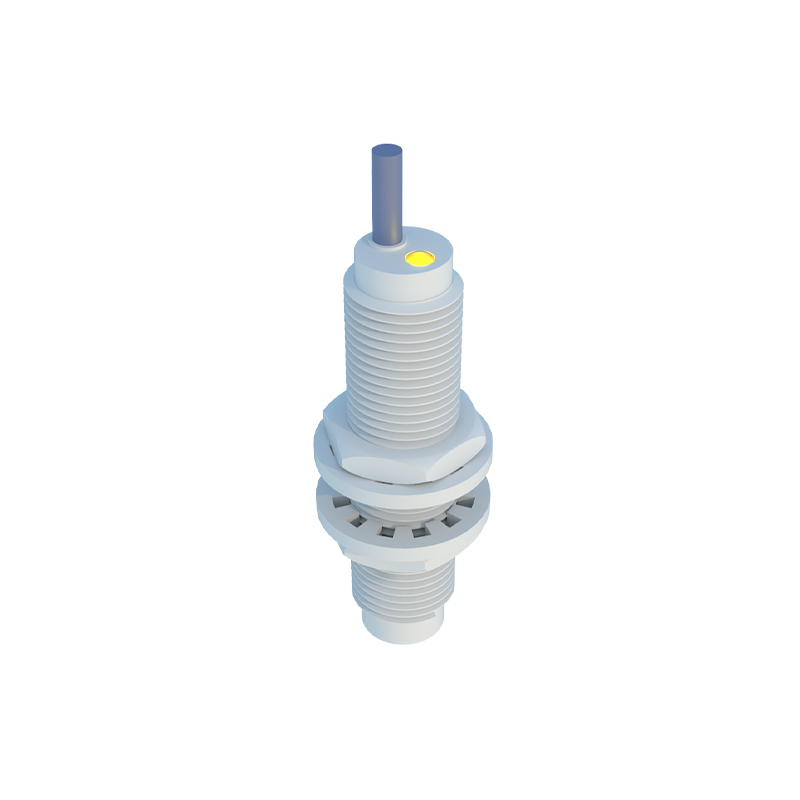
Environmental resilience is a hallmark of the N3 series. Most models boast an Ingress Protection (IP) rating of IP67 or higher, indicating complete protection against dust ingress and the ability to withstand temporary immersion in water. Operating temperature ranges generally span from -25°C to +70°C, allowing deployment in unheated warehouses or near heat-generating machinery. This durability minimizes downtime in harsh conditions, such as foundries, food processing plants with frequent washdowns, or outdoor logistics hubs.
When selecting an N3 proximity sensor, engineers must consider several technical parameters. The sensing distance, as specified by the manufacturer, should have a 10-20% safety margin to account for target material variations and alignment tolerances. The hysteresis—the difference between the switch-on and switch-off points—is critical for preventing output oscillation with vibrating targets. Additionally, the target material's properties (e.g., steel, aluminum, copper) directly influence the effective sensing range for inductive sensors; correction factors provided in datasheets must be applied. For capacitive N3 sensors, the dielectric constant of the target material dictates sensitivity settings.
Installation and wiring practices profoundly impact sensor performance and longevity. Maintaining the recommended clearance between the sensor face and surrounding metal (typically 1-2 times the sensor diameter) prevents false triggering due to side interference. Using shielded cables in electrically noisy environments and ensuring proper grounding are essential to maintain signal integrity. Regular maintenance, including cleaning the sensor face from oil, dust, or debris accumulation, preserves optimal sensitivity. Diagnostic tools like oscilloscopes or manufacturer-specific software can analyze output waveforms to identify issues like voltage drops or signal noise.
The future trajectory of N3 and similar proximity sensor series involves integration with Industrial Internet of Things (IIoT) frameworks. Next-generation models are incorporating IO-Link communication protocols, enabling digital parameter setting, real-time condition monitoring, and predictive maintenance data transmission to supervisory systems. This digital transformation enhances asset management, reduces unplanned downtime, and allows for adaptive calibration based on production line changes.
In conclusion, N3 proximity sensors constitute a vital, specialized category within industrial sensing technology. Their design emphasizes reliability, extended range, and environmental toughness, addressing complex automation challenges. By understanding their specifications, correct application principles, and installation nuances, engineers can leverage these sensors to build more efficient, resilient, and intelligent automated systems. As industries advance toward greater connectivity and precision, the role of high-performance sensors like the N3 series will only become more central to operational success.