In the realm of industrial automation and sensor manufacturing, the proximity switch sensor winding machine stands as a critical piece of equipment, embodying the intersection of precision engineering, electrical design, and automated production. This specialized machinery is dedicated to the meticulous task of winding coils—a core component of inductive and capacitive proximity sensors. These sensors are ubiquitous in modern factories, serving as non-contact detection devices for position sensing, object counting, and speed monitoring on conveyor systems, robotic arms, and assembly lines.
The fundamental operation of a proximity switch sensor winding machine revolves around transforming conductive wire, typically fine-gauge copper or aluminum, into a tightly wound, layered coil with specific electrical characteristics. The machine must achieve exceptional consistency in turn count, winding tension, layer alignment, and insulation integrity. Any deviation can directly impact the sensor's performance parameters, such as its sensing range, hysteresis, and operational frequency. Modern winding machines are predominantly CNC (Computer Numerical Control) based, allowing for programmable control over every aspect of the winding process. An operator inputs the desired parameters—wire gauge, number of turns, winding pattern (random, orthocyclic, or layer), and coil dimensions—into the machine's human-machine interface (HMI). The CNC system then orchestrates the precise movements of the spindle, which holds the coil bobbin or core, and the wire guide mechanism.
Key subsystems of a high-performance winding machine include a precision wire tensioning system, a flyer or needle-based wire guidance assembly, and often an integrated vision system for quality inspection. The tensioning system is paramount; it must maintain a constant, adjustable tension on the wire throughout the winding cycle to prevent loose winds or wire breakage. Advanced systems use closed-loop servo control for real-time tension feedback and adjustment. The wire guide, often a programmable traversing unit, ensures each turn is placed with micron-level accuracy, critical for achieving the designed inductance and Q-factor of the coil. For complex multi-coil sensors or bobbins with multiple pins, machines may feature multiple spindles and wire feeders for simultaneous winding, drastically improving production throughput.
Post-winding processes are frequently integrated into the machine's workflow. These include automatic lead trimming, where the wire ends are cut to a specified length; terminal attachment, where the leads are soldered or welded to the sensor's connector pins; and potentially an initial electrical test to verify coil resistance and check for short circuits. This integration transforms the machine from a simple winding unit into a complete coil manufacturing cell, reducing manual handling and potential for damage.
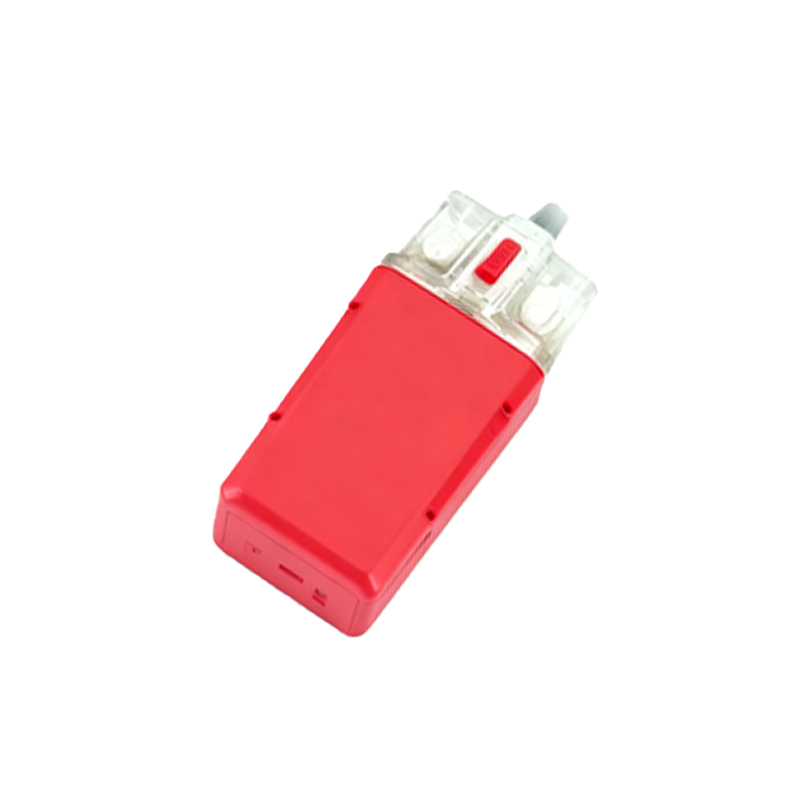
The choice of winding technology depends heavily on the sensor type. For standard cylindrical inductive proximity sensors, a simple spindle winding with a rotating bobbin is common. For miniaturized sensors or those with complex core geometries (like E-cores or pot cores), linear winding or shuttle-type machines might be employed. The industry is witnessing a trend towards greater flexibility, with machines capable of quick changeovers between different sensor models to accommodate high-mix, low-volume production runs without sacrificing precision.
Maintenance and calibration are non-negotiable for sustained accuracy. Regular checks on spindle runout, wire guide alignment, and tensioner calibration are essential. Furthermore, environmental factors in the production area, such as temperature stability and cleanliness, can influence the machine's performance and the quality of the wound coils.
In conclusion, the proximity switch sensor winding machine is a sophisticated enabler of modern industrial sensing. Its evolution from manual, mechanical devices to today's fully automated, digitally controlled systems mirrors the broader advancement in smart manufacturing. By ensuring the production of highly reliable and consistent sensor coils, these machines underpin the reliability of the vast automated systems that define contemporary industry, making them an indispensable asset in the electrical and automation engineering landscape.