In the vast and intricate world of industrial automation, motion control, and machinery, sensors are the fundamental components that provide critical data about the physical state of a system. Among the most commonly discussed are position sensors and proximity sensors. While these terms are sometimes used interchangeably in casual conversation, they represent distinct categories with specific functionalities, operating principles, and applications. Understanding the difference is crucial for engineers, technicians, and procurement specialists to select the right component for the job, ensuring optimal performance, reliability, and cost-effectiveness.
At its core, a proximity sensor is a device designed to detect the presence or absence of an object within a specified range without making physical contact. Its primary function is binary: to indicate whether an object is "near" or "not near." The sensing distance, often called the nominal range, is typically fixed and relatively short, ranging from a few millimeters to several tens of millimeters. Proximity sensors do not provide information about the exact distance of the object; they trigger a discrete on/off signal when the target enters their detection field. Common technologies include inductive sensors (for detecting metals), capacitive sensors (for detecting metals, liquids, plastics, and other materials), ultrasonic sensors, and photoelectric sensors. A classic application is on a conveyor line, where an inductive proximity sensor detects the passage of a metal part to trigger a counting mechanism or to confirm a part is in place for the next operation.
A position sensor, on the other hand, is a device that provides continuous, precise information about the linear or angular displacement of an object. Its output is not merely a switch signal but an analog value or a digital signal that corresponds to the exact location of the target relative to a reference point. Position sensors measure "where" an object is, not just "if" it is there. They are characterized by their range, resolution, accuracy, and repeatability. Technologies used for position sensing are diverse and include potentiometers, Linear Variable Differential Transformers (LVDTs), magnetostrictive sensors, optical encoders (incremental and absolute), resolvers, and laser distance sensors. For example, in a CNC machine, a high-resolution optical encoder on a ball screw provides real-time, precise feedback on the tool head's position, enabling micron-level accuracy in machining.
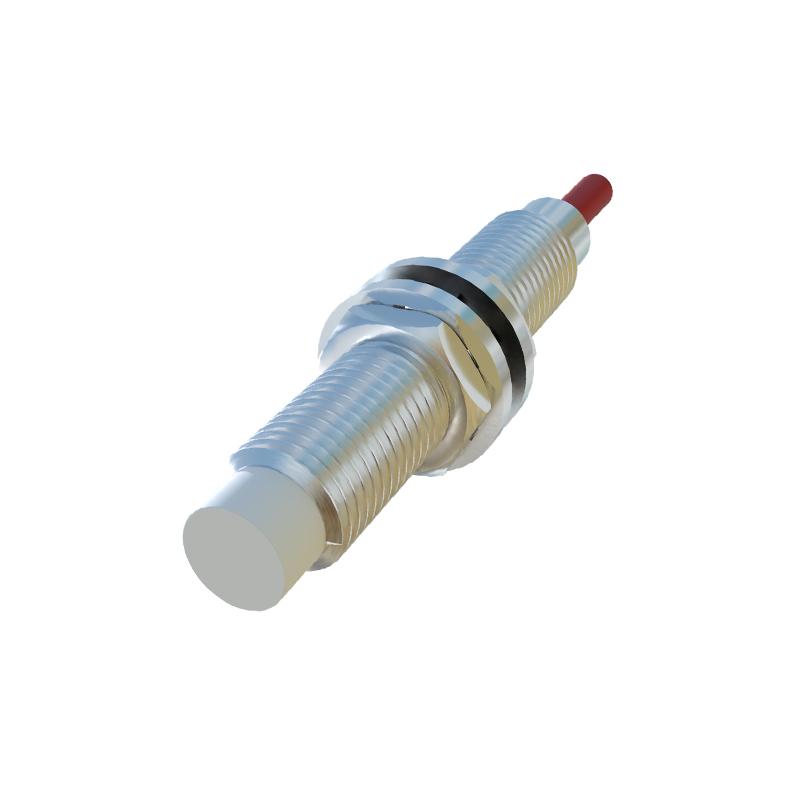
The key distinction lies in the nature of the output and the information provided. A proximity sensor offers a discrete (digital) output—often a simple PNP or NPN transistor switch—signaling a state change. A position sensor provides a continuous (analog) or high-resolution digital output, such as a 4-20 mA current loop, a 0-10 V voltage signal, or a serial communication protocol like SSI or IO-Link, which conveys precise positional data.
This fundamental difference dictates their application landscapes. Proximity sensors excel in simple detection tasks: object presence for sorting, limit switching, jam detection, or part positioning verification. They are robust, relatively inexpensive, and easy to install and integrate into programmable logic controller (PLC) systems. Position sensors are indispensable in applications requiring closed-loop control, precise measurement, or continuous monitoring. This includes robotics (for joint angle feedback), hydraulic cylinder rod positioning, valve stem position feedback, and coordinate measuring machines. Using a proximity sensor where a position sensor is needed would result in a lack of critical data, leading to poor control and potential system failure. Conversely, using an expensive high-accuracy position sensor for a simple presence detection task is an unnecessary cost.
However, the line can blur with advanced sensor technologies. For instance, some laser distance sensors or ultrasonic sensors can function in both modes. They can be configured with setpoints to act as a proximity switch (e.g., trigger when an object is within 100mm) or they can output a continuous distance measurement, effectively operating as a position sensor. Similarly, certain magnetostrictive sensors provide both a precise analog position value and discrete switch outputs at programmable setpoints within their stroke length.
In summary, while all position sensors can technically detect proximity (by indicating a non-zero position), not all proximity sensors can measure position. The choice between them is application-driven. Ask the critical questions: Is the requirement simply to know if an object is present or absent within a zone? A proximity sensor is likely the optimal, economical solution. Is there a need to know the exact distance, the precise angle, or to track movement continuously with high resolution? Then a dedicated position sensor is the necessary choice. For professionals in electrical engineering, automation, and mechanical design, clearly defining the required feedback—state detection versus continuous measurement—is the first and most important step in specifying the correct sensor technology, ensuring system integrity and performance.