In the realm of industrial automation, precision, reliability, and speed are non-negotiable. Among the myriad of sensing technologies available, photoelectric laser sensors have emerged as a cornerstone for high-accuracy detection and measurement tasks. Unlike standard photoelectric sensors that use LED light, laser sensors employ a highly focused, coherent beam of light, offering unparalleled performance in challenging applications. This article delves into the operational principles, key advantages, diverse applications, and critical selection criteria for these sophisticated devices.
Fundamental Operating Principle
At its core, a photoelectric laser sensor operates on the same basic principle as conventional photoelectric sensors: it emits a light beam and detects changes in the received light to determine the presence, absence, or position of an object. The critical differentiator is the light source. Laser sensors utilize a laser diode to generate a concentrated, single-wavelength beam with very low divergence. This coherent light can be precisely aimed over long distances and creates a clearly defined spot on the target. Common sensing modes include:
* Through-beam (Opposed): Consists of separate emitter and receiver units. Detection occurs when the target object interrupts the laser beam between them. This mode offers the longest sensing range and highest reliability.
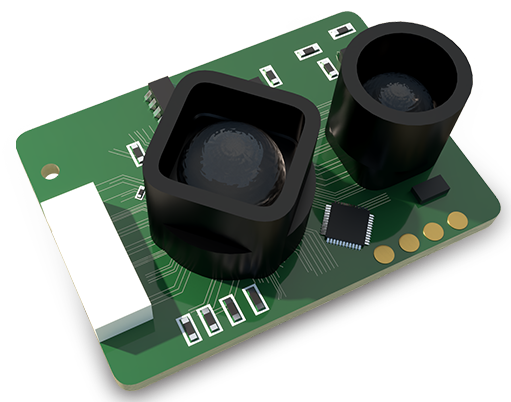
* Retro-reflective: Uses a single housing containing both emitter and receiver, along with a reflector. The sensor detects the target when it blocks the beam reflected back from the reflector.
* Diffuse (Proximity): The emitter and receiver are in one unit. Detection is based on the light reflected directly off the target object. Laser versions excel here due to the small, intense spot, allowing for precise detection of very small objects or features.
Key Advantages and Technical Merits
The adoption of laser sensors is driven by several distinct technical advantages:
1. Exceptional Precision and Small Spot Size: The laser beam's minimal divergence allows for the detection of extremely small objects, precise edge detection, and accurate positioning that is impossible with diffuse LED light.
2. Long Sensing Ranges: Laser sensors can achieve stable detection over distances that far exceed those of standard photoelectric sensors, sometimes spanning tens of meters in through-beam configurations.
3. High Resolution and Accuracy: The coherent light enables highly accurate measurement in displacement and distance measurement sensors (laser triangulation principle). They are fundamental in applications like height profiling, thickness gauging, and vibration analysis.
4. Enhanced Performance on Problematic Surfaces: The intense, focused beam provides a stronger, more consistent signal when sensing low-reflectivity, dark, or glossy surfaces, reducing false triggers.
5. Stability and Reduced Background Interference: The narrow beam is less susceptible to ambient light interference and optical crosstalk from adjacent sensors, ensuring stable operation in dense installations.
Primary Industrial Applications
Photoelectric laser sensors are indispensable across numerous sectors:
* Electronics and Semiconductor Manufacturing: For precise chip placement, wire bond inspection, wafer handling, and detecting microscopic components on PCBs.
* Automotive Assembly: Used for robot guidance, part presence verification in tight spaces, gap and flush measurement on body panels, and checking sealant application.
* Packaging and Material Handling: Precise counting of transparent bottles or thin films, label detection, fill level control, and guiding products on high-speed conveyors.
* Metrology and Quality Control: As the core component in non-contact laser micrometers, profile scanners, and surface inspection systems for dimensional verification.
* Logistics and Warehousing: For high-accuracy parcel dimensioning (DWS systems), pallet profiling, and automated guided vehicle (AGV) navigation.
Selection Guide: Critical Parameters to Consider
Choosing the right laser sensor requires a careful analysis of the application requirements:
1. Sensing Mode: Select through-beam for maximum range and reliability, retro-reflective for easier alignment where mounting both sides is impractical, or diffuse for direct reflection from the target.
2. Spot Size and Resolution: Determine the smallest feature you need to detect. A smaller spot size allows for higher resolution.
3. Sensing Distance: Consider both the operating range (the distance to the target) and the required excess gain (a measure of signal strength margin).
4. Target Characteristics: Evaluate the color, surface finish (matte, glossy, transparent), material, and size of the object. Laser sensors often handle challenging targets better, but specular surfaces may require specific angles.
5. Output Type and Connectivity: Decide between digital outputs (PNP/NPN), analog outputs (for measurement), or industrial communication protocols (IO-Link, Ethernet/IP) for data-rich applications.
6. Environmental Factors: Ensure the sensor's housing (typically IP67 or higher) and operating temperature range suit the industrial environment, which may contain dust, moisture, or vibration.
7. Safety Compliance: Always verify that the laser product complies with relevant safety standards (e.g., IEC 60825-1). Most industrial laser sensors are Class 1 or Class 2, meaning they are safe under normal operating conditions.
Conclusion
Photoelectric laser sensors represent a significant leap in sensing capability, providing the precision and reliability demanded by modern advanced manufacturing and automation. Their ability to deliver a focused, high-intensity beam translates into solutions for the most demanding detection, positioning, and measurement challenges. By thoroughly understanding the principles outlined and meticulously evaluating application parameters against sensor specifications, engineers and system integrators can effectively leverage this powerful technology to enhance system performance, improve product quality, and drive operational efficiency. As industries continue to push the boundaries of miniaturization and speed, the role of the laser sensor will only become more pivotal.