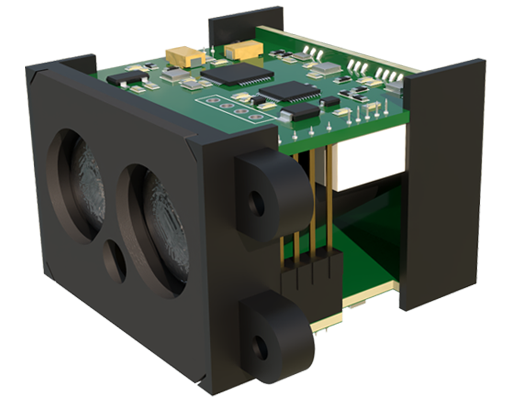
In the rapidly evolving landscape of industrial automation and precision measurement, laser inductive sensor technology stands as a cornerstone, driving efficiency, safety, and innovation. This sophisticated technology merges the principles of optical triangulation and electromagnetic induction, offering unparalleled accuracy and reliability in diverse and demanding environments. Unlike traditional contact-based sensors, laser inductive sensors provide non-contact detection, which is crucial for applications involving delicate materials, high-speed processes, or hazardous conditions.
The core operational principle involves emitting a focused laser beam towards a target. When the beam strikes the surface, its reflection is captured by a sensitive photodetector array within the sensor. By precisely calculating the angle of the reflected beam, the sensor determines the exact distance to the target with micron-level resolution. Simultaneously, the inductive component, typically based on eddy current principles, comes into play for detecting the presence, absence, or position of metallic objects. This dual-mechanism capability allows a single sensor to perform complex tasks such as precise distance measurement, thickness gauging, edge detection, and object profiling, even on reflective or uneven metallic surfaces.
Recent advancements have significantly enhanced the performance envelope of these sensors. The integration of high-power, stable Class 2 laser diodes with wavelengths commonly in the visible red (650nm) or infrared spectrum ensures high visibility for alignment and robust performance against ambient light interference. Modern digital signal processors (DSPs) and advanced algorithms enable real-time data processing, allowing for adaptive filtering, background suppression, and compensation for environmental variables like temperature fluctuations. Furthermore, the development of miniaturized housing designs, often in robust M12 or M18 threaded barrels with IP67 or IP69K ratings, ensures durability in harsh industrial settings exposed to dust, moisture, oils, and mechanical vibration.
The applications of laser inductive sensors are vast and transformative across multiple sectors. In automotive manufacturing, they are indispensable for robotic weld seam tracking, precise part positioning on assembly lines, and gap-and-flush measurement on vehicle bodies. Within the electronics industry, they facilitate the ultra-precise placement of surface-mount devices (SMDs) on printed circuit boards (PCBs) and inspect component coplanarity. In metal processing and rolling mills, these sensors provide continuous, non-contact thickness monitoring of sheets and foils, ensuring product quality and minimizing material waste. Logistics and packaging benefit from their ability to accurately detect labels, count items on high-speed conveyors, and control filling levels. Additionally, their role in safety systems, such as light curtains and area guarding for machinery, underscores their importance in protecting personnel.
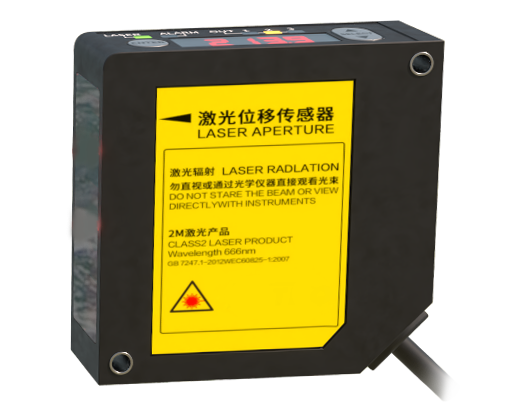
Looking forward, the convergence of Industry 4.0 and the Industrial Internet of Things (IIoT) is setting the stage for the next generation of smart laser inductive sensors. Future iterations will feature enhanced connectivity through IO-Link, Ethernet/IP, or PROFINET, enabling seamless integration into networked control systems for predictive maintenance, centralized parameterization, and data analytics. Developments in multi-point measurement and 3D profiling using laser line technology, rather than a single point, will open new frontiers in quality inspection and robotic guidance. The ongoing miniaturization and cost reduction will further democratize access, allowing smaller enterprises to leverage this high-precision technology.
In conclusion, laser inductive sensor technology is not merely an incremental improvement but a fundamental enabler of modern industrial precision and intelligence. Its ability to deliver accurate, reliable, and non-contact measurements in real-time addresses critical challenges in manufacturing and automation. As research continues to push the boundaries of speed, accuracy, and connectivity, these sensors will undoubtedly remain at the forefront, shaping smarter, more efficient, and safer industrial operations for years to come.