In the realm of industrial automation and electrical engineering, proximity switch sensors are indispensable components for non-contact detection of objects. Among the various mounting options available, sensors featuring M5 threads have gained significant popularity due to their compact design and versatile applications. This article delves into the technical aspects, selection criteria, and practical considerations for using proximity switch sensors with M5 screw threads, tailored for professionals in the electrical industry.
Proximity sensors with M5 threads are typically employed in space-constrained environments where precision and reliability are paramount. The M5 thread, with a nominal diameter of 5 millimeters, offers a balance between mechanical strength and minimal footprint, making it ideal for integration into machinery, robotic arms, and conveyor systems. These sensors operate on principles such as inductive, capacitive, or magnetic sensing, depending on the target material and application requirements. Inductive sensors, for instance, are commonly used for detecting metallic objects, while capacitive variants can sense non-metallic materials like plastics or liquids. The threaded housing, often made of stainless steel or brass, ensures robust mounting and resistance to environmental factors like vibration, moisture, and temperature fluctuations.
When selecting an M5-threaded proximity switch, engineers must consider several key parameters. Sensing range is critical; most M5 sensors offer ranges from 0.5 to 4 millimeters, suitable for close-distance detection. The choice between shielded and unshielded designs also impacts performance. Shielded sensors with M5 threads allow flush mounting in metal, reducing installation space, whereas unshielded types provide longer sensing distances but require clearance from surrounding metals. Electrical specifications, such as supply voltage (commonly 10-30V DC) and output type (PNP or NPN switching), must align with the control system. Additionally, factors like switching frequency, response time, and protection ratings (e.g., IP67 for dust and water resistance) ensure durability in harsh industrial settings.
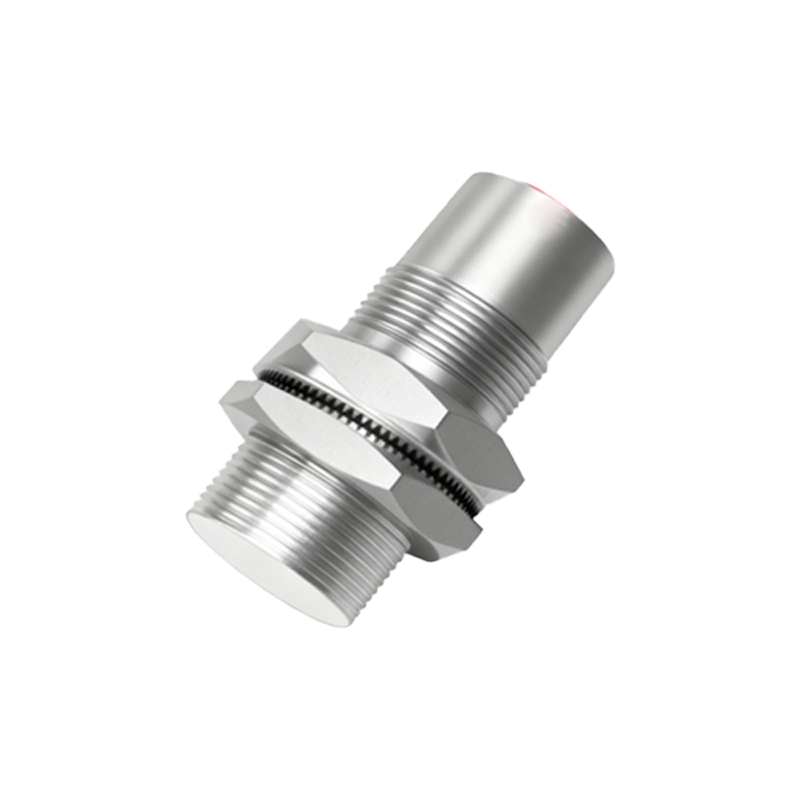
Installation and maintenance of these sensors require attention to detail. Proper torque application during mounting—typically between 0.5 to 1.5 Nm for M5 threads—prevents damage to the housing and ensures stable operation. Engineers should verify alignment with the target object to avoid false triggers or reduced sensitivity. In applications involving high-speed machinery, the fast response time of M5 proximity switches (often under 1 millisecond) enhances system efficiency. Regular testing with multimeters or oscilloscopes can diagnose issues like wiring faults or output degradation, extending the sensor's lifespan.
In practice, M5-threaded proximity sensors find use across diverse sectors. In automotive manufacturing, they monitor part positioning on assembly lines. In packaging machinery, they detect product presence for automated sorting. The compact size of M5 threads facilitates integration into modular systems, supporting trends like Industry 4.0 and IoT-enabled smart factories. As technology advances, newer models incorporate features like IO-Link communication for real-time diagnostics and parameter adjustment, adding value to traditional sensing tasks.
To optimize performance, engineers should source sensors from reputable manufacturers that provide detailed datasheets and compliance with international standards (e.g., IEC 60947-5-2). Customization options, such as extended cables or specific connector types, may be available to meet unique project needs. By understanding the nuances of M5-threaded proximity switches, electrical professionals can enhance system reliability, reduce downtime, and contribute to efficient automation solutions.
In summary, proximity switch sensors with M5 threads represent a critical tool in modern electrical engineering. Their small form factor, coupled with robust functionality, makes them a go-to choice for precision detection. With careful selection and application, these sensors can significantly improve operational outcomes in industrial environments.