In the world of industrial automation and smart devices, the ability to detect objects without physical contact is paramount. Among the various non-contact sensing technologies, capacitive proximity sensors stand out for their unique operating principle and versatile application range. Unlike their inductive counterparts that detect only metals, capacitive sensors can detect a wide array of materials, including liquids, plastics, wood, and even granular substances through non-metallic barriers.
The fundamental principle behind a capacitive proximity sensor is based on changes in capacitance. The sensor essentially forms one plate of a capacitor, with the target object acting as the other plate. The sensor's internal oscillator generates an electrostatic field. When a target enters this field, it causes a measurable change in the capacitance of the system. This change is evaluated by the sensor's circuitry, which then triggers a switching output. The detection sensitivity is often adjustable, allowing users to fine-tune the sensor to ignore certain background materials or containers and focus on the target material itself. This adjustability is crucial for applications where the sensor must detect a material inside a non-metallic container, such as monitoring liquid levels in a plastic tank.
One of the most significant advantages of capacitive sensors is their material versatility. This makes them indispensable in numerous industries. In packaging, they reliably detect plastic bottles or cardboard boxes on a conveyor. In the food and beverage sector, they are used for level detection of liquids, powders, or granules inside silos or hoppers made of glass or plastic. Woodworking applications employ them to sense wood panels, while in automotive assembly, they can detect composite materials or check for the presence of adhesive beads. Furthermore, their ability to function through non-conductive walls enables hygienic and sealed designs for sensitive environments.
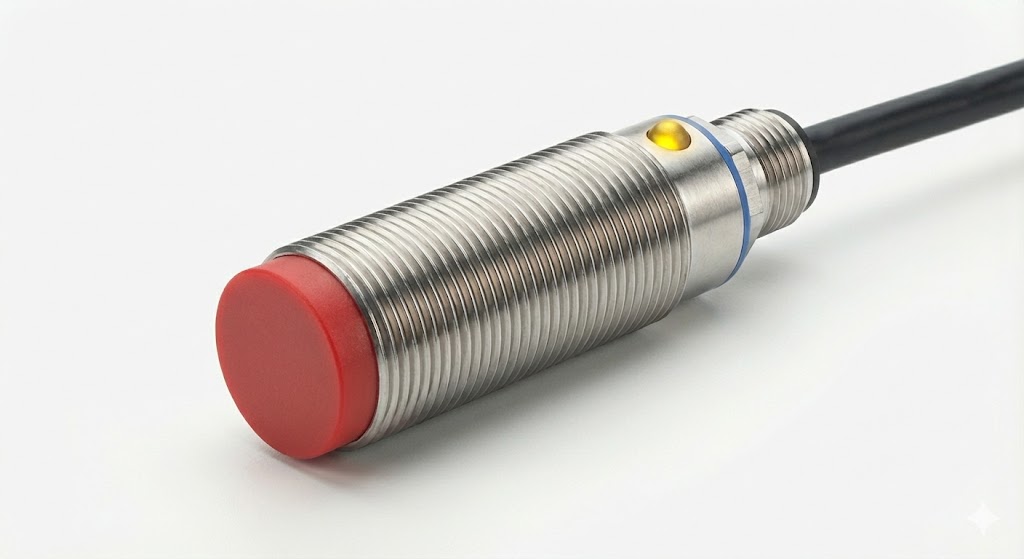
When integrating a capacitive sensor into a system, several key specifications must be considered. The sensing range, typically shorter than that of inductive sensors, is a primary factor. The sensor must be selected with a rated operating distance suitable for the application, often with a safety margin. The construction material of the sensing face is also vital; PTFE-coated faces are excellent for applications prone to adhesive buildup, such as in glue dispensing. Environmental factors like temperature fluctuations, humidity, and the presence of dust or chemicals can affect performance, necessitating sensors with appropriate ingress protection (IP) ratings. The output type, whether NPN, PNP, analog, or IO-Link, must be compatible with the control system.
Installation and setup require careful attention. A common challenge is false triggering due to the sensor detecting its mounting bracket or nearby machinery. Proper mounting, often with a specified clearance around the sensor head, mitigates this. The sensitivity potentiometer allows tuning: the sensor is adjusted while the target is present until the output activates, and then slightly backed off to ensure stability. For liquid level control, the sensor is typically mounted on the outside of the tank at the desired fill or empty point, eliminating the need for internal components that could contaminate the product.
Looking ahead, the evolution of capacitive sensing technology continues. Modern sensors are becoming smarter with integrated diagnostics and digital communication protocols like IO-Link, which enable parameter setting, condition monitoring, and easier integration into Industry 4.0 frameworks. Miniaturization is also a trend, allowing these sensors to fit into increasingly compact consumer electronics and medical devices. The core principle remains unchanged, but enhanced stability algorithms and improved shielding make them more robust and reliable than ever.
In conclusion, capacitive proximity sensors offer a flexible and powerful solution for non-contact detection across a vast spectrum of materials and challenging environments. Their operational principle, grounded in capacitance change, unlocks applications where other sensor types fall short. By understanding their capabilities, key selection parameters, and proper installation practices, engineers and technicians can effectively harness this technology to improve automation processes, ensure quality control, and enable innovative product designs. From factory floors to everyday smart appliances, the silent, reliable detection provided by capacitive sensors is a cornerstone of modern automated systems.