In the intricate landscape of industrial automation and process control, the ability to measure distance or detect the presence of an object with precision is paramount. Among the diverse array of sensing technologies, analog proximity sensors stand out as a critical component, offering a continuous output signal that provides more nuanced information than their digital counterparts. Unlike simple on/off switches, these sensors deliver a variable voltage or current signal proportional to the distance between the sensor and the target object. This capability makes them indispensable in applications requiring precise positioning, dimensional gauging, or monitoring of subtle variations.
The fundamental operating principle of an analog proximity sensor typically involves electromagnetic induction, capacitance, or ultrasonic waves. Inductive sensors, for instance, generate an oscillating electromagnetic field. When a metallic target enters this field, it induces eddy currents, which dampen the oscillation. The sensor's electronics then convert this damping effect into an analog output signal, such as 0-10V DC or 4-20mA, where the magnitude corresponds directly to the distance. Capacitive sensors operate similarly but can detect both metallic and non-metallic materials by sensing changes in capacitance. Ultrasonic sensors measure the time-of-flight of sound waves to determine distance. The continuous nature of the analog output from these sensors provides a rich data stream, enabling systems to not just know if an object is present, but exactly how far it is.
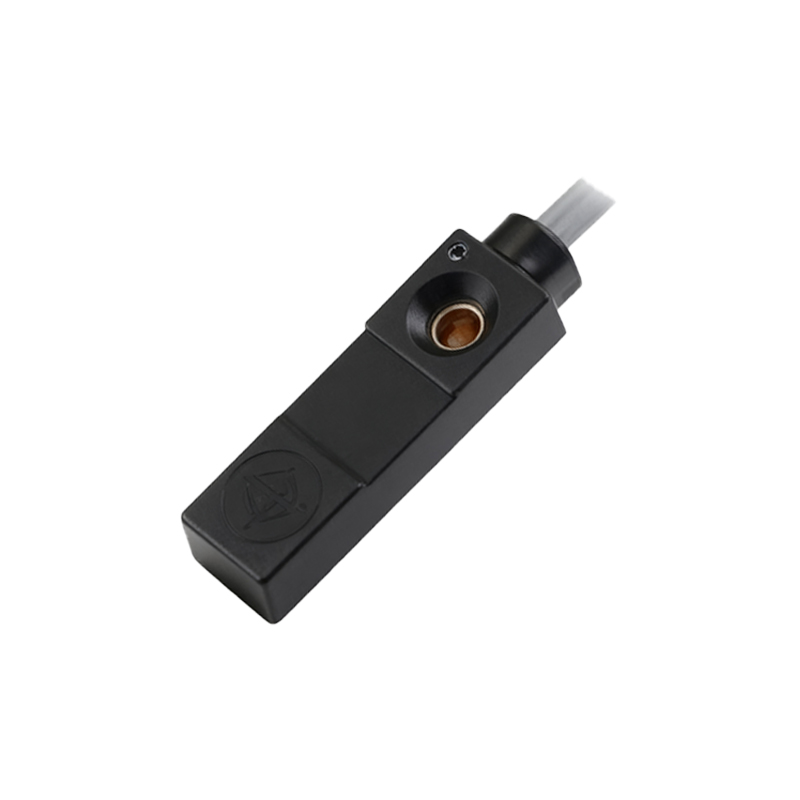
The applications for analog proximity sensors are vast and varied. In automated assembly lines, they are used for precise part positioning, ensuring robotic arms place components with exacting accuracy. In roll diameter measurement for paper, textile, or film production, an analog sensor continuously monitors the diameter as material unwinds, allowing for seamless control of tension and speed. They play a vital role in liquid level sensing in tanks, where the continuous output can indicate the exact fill level rather than just a high or low alarm point. In vibration monitoring systems on rotating machinery, analog sensors can detect minute changes in the gap between a shaft and its housing, providing early warning of potential bearing failures. This granular level of feedback is crucial for implementing predictive maintenance strategies, reducing downtime, and improving overall equipment effectiveness (OEE).
Selecting the appropriate analog proximity sensor requires careful consideration of several factors. The sensing range, defined as the nominal distance at which the sensor operates, must be suitable for the application. The target material—whether ferrous metal, non-ferrous metal, plastic, or liquid—dictates whether an inductive, capacitive, or ultrasonic sensor is needed. Environmental conditions such as temperature extremes, humidity, dust, or the presence of cutting fluids can influence the choice of housing material and protection rating (e.g., IP67). The output signal type is also a key decision. A 4-20mA current loop is often preferred for its inherent noise immunity over long cable runs, while a 0-10V signal is common in many PLC-based systems. Furthermore, the sensor's linearity—how accurately the output signal represents the true distance across its range—is a critical performance specification for high-precision tasks.
Integration of analog sensors into a control system involves connecting the output to an analog input module on a Programmable Logic Controller (PLC) or a data acquisition system. The controller then scales this raw signal into engineering units, such as millimeters or inches, for use in logic and control algorithms. This allows for sophisticated control loops where, for example, the speed of a conveyor is dynamically adjusted based on the precise position of a product, or a press is halted if a part is misaligned beyond a specific tolerance.
In conclusion, analog proximity sensors are far more than mere presence detectors. They are sophisticated measurement devices that provide the continuous, high-resolution data essential for advanced automation, quality control, and condition monitoring. By translating physical distance into a precise electrical signal, they form a fundamental link between the physical world and the digital control system, enabling smarter, more responsive, and more efficient industrial operations. As Industry 4.0 and the Industrial Internet of Things (IIoT) continue to evolve, the role of these sensors in providing actionable analog data for analytics and optimization will only become more significant.