In industrial automation and control systems, proximity switch sensors are indispensable components for non-contact detection of metallic objects. When operating within 380V power systems, these sensors present unique considerations for selection, installation, and maintenance. This article delves into the technical aspects of 380V-rated proximity sensors, providing insights for engineers and technicians working in high-voltage industrial environments.
Proximity sensors function by generating an electromagnetic field. When a metallic target enters this field, it induces eddy currents, causing a change in the sensor's oscillation amplitude. This change is detected by the internal circuitry, which then switches the output state. For 380V applications, sensors are specifically designed to interface directly or indirectly with this common industrial three-phase voltage level. It is crucial to distinguish between the sensor's own operating voltage and the load voltage it controls. Many inductive proximity sensors themselves operate on lower DC voltages (e.g., 10-30V DC) but are used in circuits controlling 380V AC loads through relays or contactors. However, robust, solid-state models are available that can directly handle switching of 380V AC loads, offering faster response times and higher reliability.
The selection of a 380V-compatible proximity sensor hinges on several key parameters. First, the sensing distance, or nominal range, must be appropriate for the application to avoid false triggers or missed detections. The housing material is another critical factor; sensors in 380V environments often require robust metal or high-grade polymer housings with high IP (Ingress Protection) ratings, such as IP67 or IP69K, to withstand dust, moisture, and harsh washdowns common in industrial settings. The output type is equally important: PNP (sourcing) or NPN (sinking) for DC models, and normally open (NO) or normally closed (NC) contacts for AC models. For direct 380V AC switching, the sensor's load current rating must exceed the inrush and steady-state current of the connected device, such as a motor coil or solenoid valve.
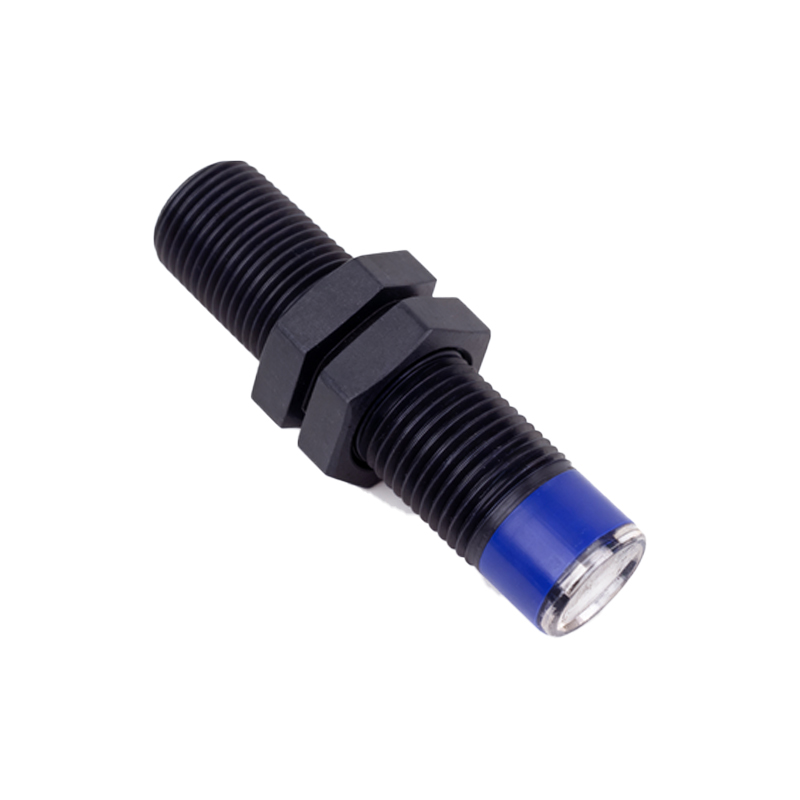
Installation and wiring demand meticulous attention to safety and electrical codes when dealing with 380V systems. Always ensure power is completely isolated and locked out before beginning installation. Proper grounding is non-negotiable to prevent electrical shock and mitigate electromagnetic interference (EMI), which can cause sensor malfunction. When wiring, use appropriately sized cables and secure connections. For sensors controlling high-voltage loads, it is standard practice to separate low-voltage sensor wiring from high-voltage power lines using separate conduits or trays to prevent inductive coupling and noise. Adhering to the manufacturer's specified mounting distances is vital; mounting a sensor too close to a metal surface other than its target (metal-to-metal mounting) can reduce its effective sensing range.
Maintenance in a 380V context prioritizes safety and predictive practices. Regular inspection for physical damage, corrosion, or loose connections is essential. Diagnostic LEDs, a common feature on modern sensors, provide immediate status indications. Performance can be verified using a target at the specified sensing distance. Remember that sensors in high-voltage circuits are subject to voltage transients and surges; therefore, incorporating protective devices like surge suppressors can significantly extend operational lifespan. When replacement is necessary, always use a sensor with identical electrical specifications and form factor to ensure system compatibility and safety.
In conclusion, proximity switch sensors for 380V applications are engineered for resilience and precision in demanding industrial landscapes. A thorough understanding of their operating principles, coupled with diligent selection, safe installation, and proactive maintenance, ensures reliable object detection, enhances machine safety, and optimizes the efficiency of automated processes. Engineers must always prioritize manufacturer documentation and relevant electrical safety standards when integrating these critical components into high-voltage control systems.