In industrial automation, safety doors serve as critical barriers between personnel and hazardous machinery. The integration of proximity switch sensors has revolutionized how these doors are monitored and controlled, ensuring compliance with international safety standards such as ISO 13849-1 and IEC 62061. Proximity sensors, known for their non-contact detection capabilities, provide reliable feedback on door position—whether fully closed, ajar, or in motion—enabling immediate machine shutdown or prevention of startup when unsafe conditions are detected.
These sensors operate by generating an electromagnetic field or using infrared beams to detect the presence of a door or its locking mechanism without physical contact. Inductive proximity sensors, for instance, are ideal for metal doors, detecting the door's position through changes in magnetic fields. Capacitive variants can sense non-metallic materials, while photoelectric sensors offer long-range detection for larger door systems. The choice of sensor depends on factors like door material, environmental conditions (e.g., dust, moisture), and required response time.
A key advantage of proximity switches in safety door applications is their fail-safe design. Modern sensors incorporate self-monitoring features that detect internal faults, such as wiring issues or sensor degradation, and trigger a safe state—typically by de-energizing the machine's control circuit. This aligns with Safety Integrity Level (SIL) and Performance Level (PL) requirements, reducing risks of accidental exposure to moving parts. Additionally, these sensors support interlocking systems, where door closure must be confirmed before machinery activates. For high-risk areas, redundant sensor configurations—using two independently operating sensors—provide enhanced reliability, ensuring that a single failure does not compromise safety.
Installation and maintenance practices are crucial for optimal performance. Sensors must be positioned to avoid false triggers from vibrations or external objects, with regular checks for alignment and contamination. In harsh environments, IP67-rated or higher housings protect against dust and water ingress. Integration with Programmable Logic Controllers (PLCs) allows for real-time monitoring and data logging, facilitating predictive maintenance and compliance audits.
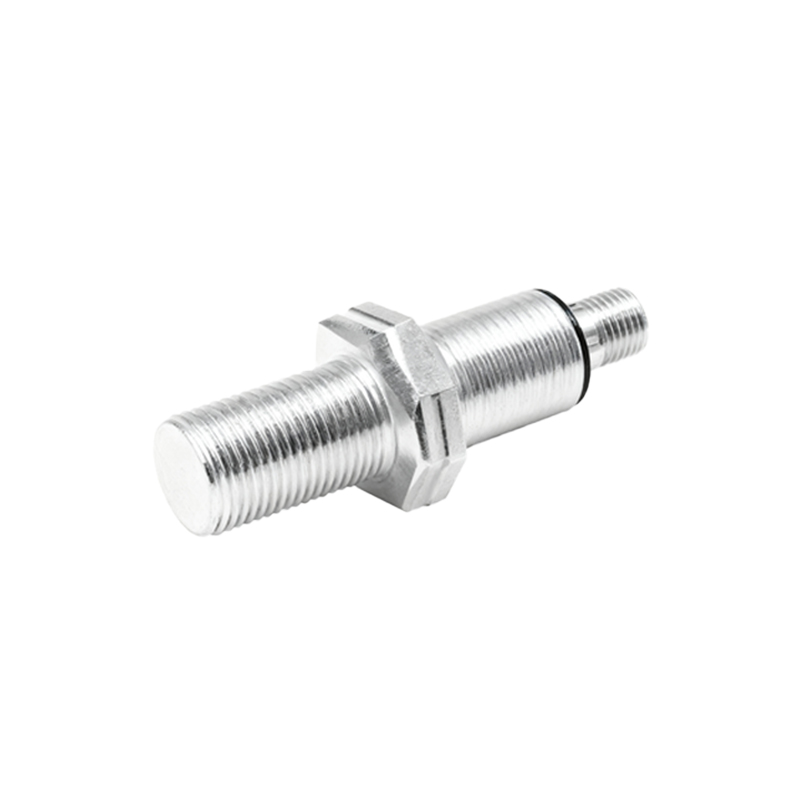
Ultimately, proximity switch sensors transform safety doors from passive barriers into active safety components. By enabling precise, real-time door status feedback, they help prevent workplace accidents, reduce downtime, and foster a culture of safety in manufacturing, automotive, and packaging industries. As technology advances, smart sensors with IoT connectivity are emerging, offering remote diagnostics and integration with broader safety networks—further elevating the role of automation in protecting human operators.