Laser sensors have revolutionized industrial measurement and detection systems, offering unparalleled precision, speed, and reliability. These devices utilize laser beams to measure distance, detect objects, monitor vibrations, and analyze surface characteristics without physical contact. The core principle involves emitting a focused laser beam toward a target and analyzing the reflected light. Variations in the reflected signal—such as time-of-flight, phase shift, or intensity changes—are processed to derive accurate measurements. This non-contact nature eliminates wear and tear, making laser sensors ideal for harsh environments where contamination, high temperatures, or mechanical stress are concerns.
In manufacturing, laser sensors are integral to quality control processes. They enable real-time inspection of component dimensions, alignment, and tolerances with micron-level accuracy. For instance, in automotive assembly lines, laser sensors verify gap widths between body panels, ensuring consistency and reducing defects. Similarly, in electronics, they measure solder paste thickness on circuit boards, preventing short circuits and enhancing product reliability. The high sampling rates of laser sensors, often exceeding thousands of measurements per second, support rapid production cycles without compromising accuracy.
Beyond manufacturing, laser sensors play a critical role in automation and robotics. They provide precise positioning data for robotic arms, enabling tasks like pick-and-place operations, welding, and painting with minimal error. LiDAR (Light Detection and Ranging) systems, a type of laser sensor, are essential for autonomous vehicles, creating detailed 3D maps of surroundings to navigate safely. In logistics, laser scanners track inventory movement in warehouses, optimizing supply chain efficiency. The adaptability of laser wavelengths—from visible to infrared—allows customization for specific materials and environments, such as detecting transparent objects or operating in low-light conditions.
Safety and environmental monitoring also benefit from laser sensor technology. In hazardous areas like chemical plants, laser-based gas detectors identify leaks by analyzing absorption spectra, preventing accidents. Structural health monitoring uses laser vibrometers to assess vibrations in bridges or turbines, predicting maintenance needs before failures occur. Additionally, agricultural applications include laser-guided soil analysis and crop health assessment, promoting sustainable farming practices.
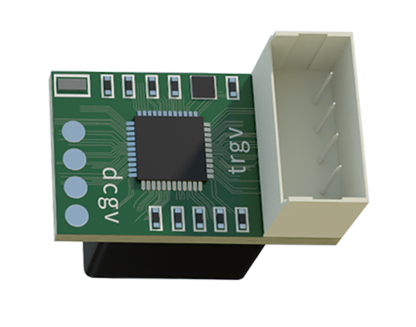
Despite their advantages, challenges like cost, sensitivity to ambient light, and calibration requirements persist. However, advancements in fiber optics, miniaturization, and AI integration are addressing these issues. Modern laser sensors now feature embedded processors for on-the-fly data analysis, reducing dependency on external systems. As industries embrace Industry 4.0, the demand for smart, interconnected laser sensors will grow, driving innovation in IoT-enabled devices and predictive analytics.
In conclusion, laser sensors represent a cornerstone of modern industrial technology, combining precision with versatility. Their ability to deliver non-contact, high-speed measurements transforms processes across sectors, from production lines to environmental safety. With ongoing research into quantum lasers and enhanced materials, future iterations promise even greater accuracy and broader applications, solidifying their role in the digital transformation of industries worldwide.