In the realm of industrial automation and precision measurement, laser sensors have become indispensable tools, offering unparalleled accuracy, speed, and non-contact operation. Their applications span from manufacturing and robotics to quality control and research. Understanding the diverse types of laser sensors is crucial for selecting the right technology for a specific task. This guide provides a detailed overview of the primary categories of laser sensors, their operating principles, and typical use cases.
1. Laser Distance Sensors (Displacement Sensors)
These sensors measure the distance between the sensor and a target object. They are primarily divided into two subtypes based on the triangulation principle and time-of-flight (ToF) principle.
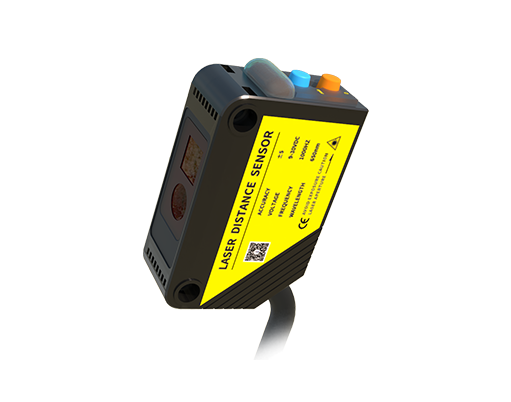
* Triangulation Sensors: A laser diode projects a spot onto the target. The reflected light is focused onto a position-sensitive detector (PSD or CMOS). The position of the light spot on the detector changes with the target's distance, allowing for precise calculation. These sensors excel in high-resolution, short to medium-range measurements (typically from a few millimeters up to about one meter). Common applications include thickness gauging, wafer inspection, and part profiling.
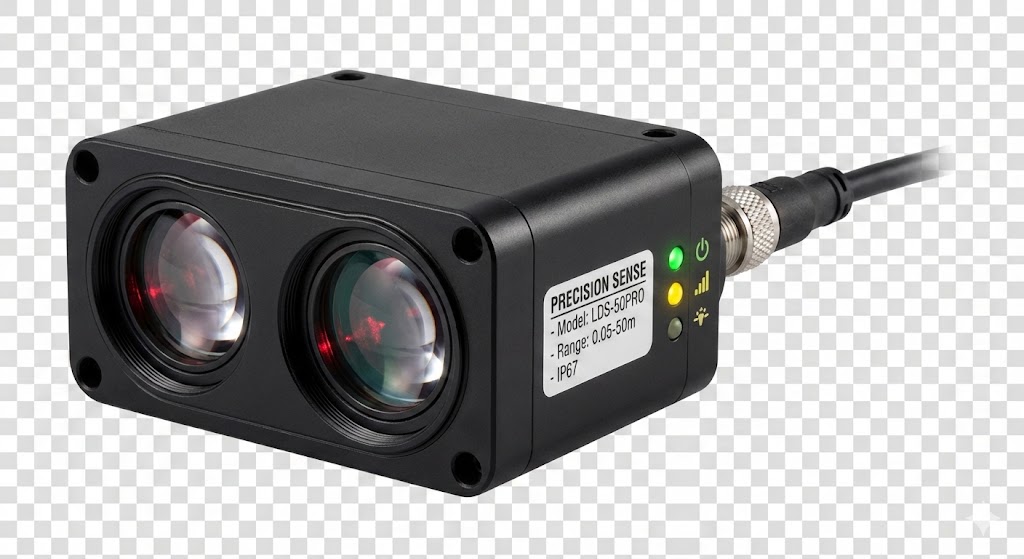
* Time-of-Flight (ToF) Sensors: These sensors calculate distance by measuring the time it takes for a laser pulse to travel to the target and back. They are suitable for longer ranges, from several centimeters up to hundreds of meters, though with generally lower resolution than triangulation sensors. ToF sensors are widely used in level monitoring, vehicle detection, and large-volume 3D scanning.
2. Laser Profile Sensors (Line Projection Sensors)
Instead of a single point, these sensors project a laser line onto an object. A camera captures the deformation of this line, enabling the extraction of a 2D cross-sectional profile. This technology is fundamental for 3D contour and shape inspection. It is extensively used for weld seam inspection, tire tread analysis, electronic component coplanarity checks, and robotic bin-picking guidance systems. The ability to capture an entire profile in one shot makes them significantly faster than single-point scanning for dimensional analysis.
3. Laser Micrometer Sensors

Designed for non-contact measurement of outer dimensions like diameter, thickness, and width, laser micrometers utilize a parallel laser beam curtain. An object passing through the beam casts a shadow, which is detected by a high-speed linear sensor array. The sensor calculates the dimension based on the shadow's size. They offer extremely high accuracy and are ideal for measuring wires, cables, fibers, and small machined parts in motion, ensuring 100% in-line quality control.
4. Laser Confocal Displacement Sensors
Operating on the principle of chromatic aberration, these sensors use a multi-wavelength (white light) laser source. Different wavelengths focus at different distances. A spectrometer analyzes the wavelength of the light reflected from the target, which corresponds to a specific distance. Their key advantage is the ability to measure on transparent, mirrored, or highly reflective surfaces—materials that challenge standard laser triangulation sensors. Applications include measuring glass thickness, film coatings, and precision semiconductor structures.
5. Laser Mark Sensors (Contrast Sensors)
These sensors detect marks, labels, or print contrasts on surfaces. They evaluate the intensity of the reflected laser light. A significant change in reflectance indicates the presence of a mark, color difference, or code. They are critical in packaging, printing, and labeling industries for tasks like registration mark detection, label position verification, and optical character recognition (OCR) systems.
6. Laser Edge Detection Sensors
Similar to mark sensors but optimized for detecting precise edges or boundaries of materials. They provide a sharp digital signal when the laser spot transitions from one material to another (e.g., from a product to a background). This is vital for precise positioning, cutting control, and web guiding in continuous process industries like paper, film, and textile manufacturing.
7. Laser Safety Sensors (Area Scanners)
While not measurement sensors per se, laser safety scanners are a critical category. They create an invisible two-dimensional protective field using rotating laser beams. If an object intrudes into a defined warning or stop zone, the scanner sends a signal to halt machinery, ensuring operator safety around robots, presses, and automated guided vehicles (AGVs).
Selection Criteria and Trends
Choosing the correct laser sensor depends on factors including required resolution, measurement range, target material properties (color, reflectivity, transparency), environmental conditions (dust, ambient light), and required speed. The ongoing trend is towards smarter sensors with integrated processors for edge computing, enhanced connectivity (IO-Link, Ethernet/IP), and multi-functional capabilities that combine measurement, inspection, and decision-making in a single compact unit.
In conclusion, the landscape of laser sensor technology is rich and varied. From micron-level displacement checks to large-scale presence detection, each type serves a distinct purpose in driving efficiency, quality, and safety in modern industrial operations. A thorough understanding of these types empowers engineers and system integrators to harness their full potential.