In the realm of industrial automation and precision engineering, proximity light sensors play a critical role in ensuring accurate detection and positioning. These sensors, often utilizing infrared or laser technology, are integral to systems requiring precise focus, such as in automated manufacturing, robotics, and optical devices. A common concern among engineers and technicians is whether a crack in the sensor's housing or optical component can impair its focusing capabilities. This article delves into the technical aspects of how cracks impact sensor performance, focusing on the principles of operation, potential issues, and practical implications.
Proximity light sensors operate by emitting a light beam—typically infrared—and measuring the reflection from a target object. The sensor calculates distance based on the time-of-flight or intensity of the returned signal, which directly influences focusing mechanisms in applications like autofocus cameras or robotic arms. The optical integrity of the sensor is paramount; any physical damage, such as a crack, can disrupt the light path. Cracks may scatter or absorb the emitted light, leading to inaccurate distance readings. For instance, if a crack is on the lens or cover glass, it can diffract the light beam, causing the sensor to misinterpret the target's position. This misalignment can result in poor focusing, where systems fail to achieve sharp images or precise movements, ultimately affecting product quality and efficiency.
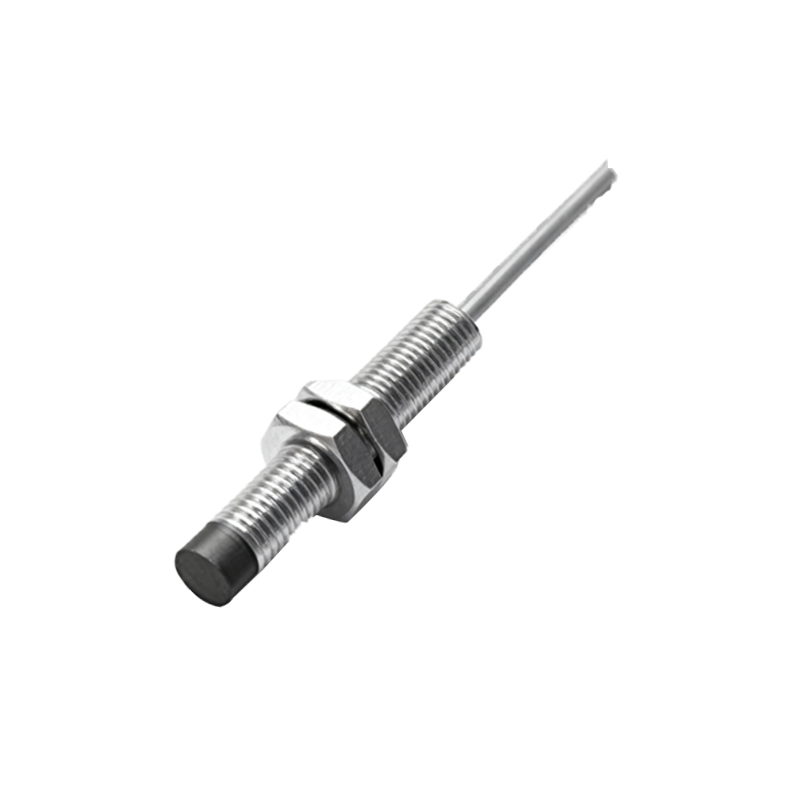
The severity of the impact depends on the crack's location and size. Minor surface cracks on non-critical parts might have negligible effects, but deeper fissures in the optical elements or near the emitter/detector can be detrimental. In focusing applications, even slight inaccuracies—such as a deviation of a few millimeters—can lead to significant errors. For example, in CNC machining or 3D printing, a compromised sensor might cause misaligned tool paths, resulting in defective parts. Moreover, cracks can allow dust or moisture ingress, further degrading performance over time. Environmental factors like temperature fluctuations or vibrations may exacerbate the damage, making the sensor unreliable.
From an engineering perspective, preventive maintenance and regular inspections are essential to mitigate risks. Using durable materials, such as hardened glass or protective coatings, can enhance sensor resilience. If a crack is detected, it's advisable to assess the sensor's calibration and output signals. In many cases, replacement is necessary to restore optimal functionality, as repairs might not guarantee long-term reliability. Industry standards, such as those from IEC or ISO, often outline tolerance levels for sensor defects, but in high-precision tasks, any damage should be addressed promptly.
In conclusion, a crack in a proximity light sensor can indeed affect focusing by altering light transmission and causing measurement errors. Engineers should prioritize sensor integrity through robust design and maintenance practices to ensure system accuracy and longevity.