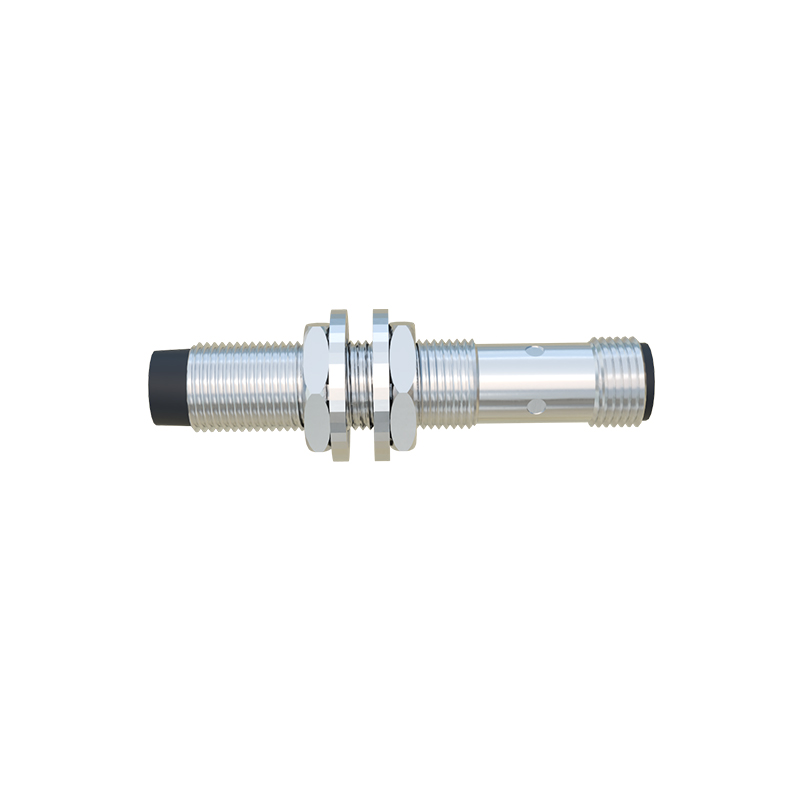
Capacitive proximity sensors are widely used in industrial automation for non-contact detection of objects, level sensing, and material analysis. Unlike inductive sensors, capacitive variants can detect both conductive and non-conductive materials, making them versatile for diverse applications such as plastic, wood, or liquid detection. This article delves into the modeling of capacitive proximity sensors, focusing on the underlying principles, mathematical representations, and practical considerations for engineers.
The fundamental operation of a capacitive proximity sensor relies on changes in capacitance between the sensor electrode and a target object. When an object enters the sensor’s electric field, it alters the dielectric properties of the space between the electrode and ground, leading to a measurable capacitance shift. This shift is typically converted into a voltage or frequency signal for processing. A basic model can be represented as a parallel-plate capacitor approximation, where capacitance \(C\) is given by:
\
C = \varepsilon_0 \varepsilon_r \frac{A}{d}
\
Here, \(\varepsilon_0\) is the permittivity of free space, \(\varepsilon_r\) is the relative permittivity of the material between the plates, \(A\) is the effective electrode area, and \(d\) is the distance to the target. In practice, the electric field is not confined to a simple parallel-plate structure, requiring more complex models to account for fringing effects, electrode geometry, and environmental factors like humidity or temperature.
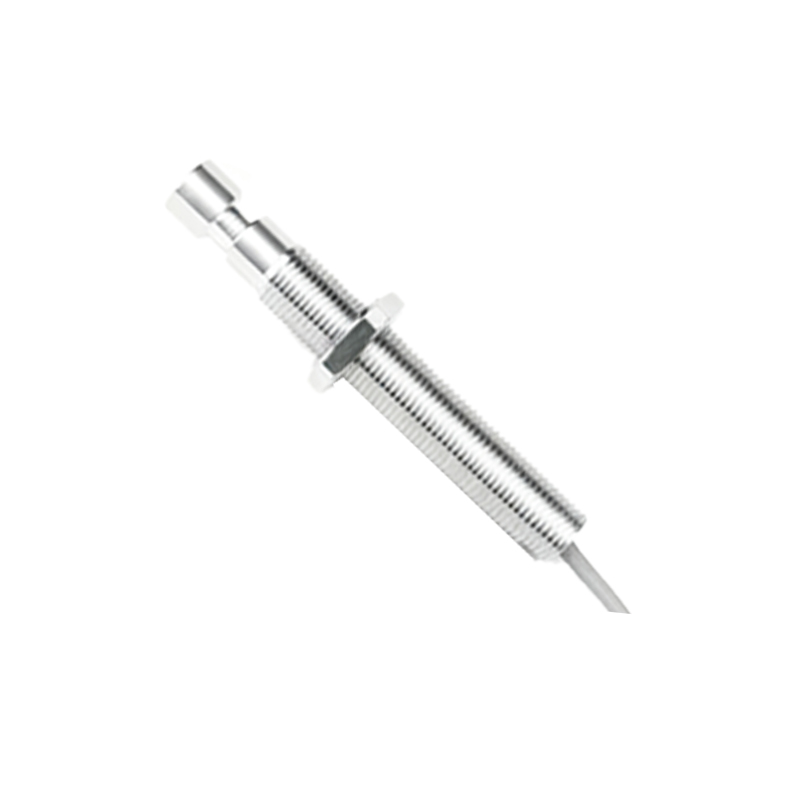
Advanced modeling often involves finite element analysis (FEA) to simulate the electric field distribution and predict sensor behavior under various conditions. For instance, FEA can help optimize electrode design to enhance sensitivity or reduce interference from adjacent objects. Additionally, equivalent circuit models are employed to integrate the sensor into electronic systems. A common approach uses an RC oscillator circuit, where the sensor capacitance forms part of the timing network. Changes in capacitance alter the oscillation frequency, which is then measured to determine proximity. The relationship can be expressed as:
\
f = \frac{1}{2\pi R C}
\
where \(R\) is a fixed resistance and \(C\) is the total capacitance including sensor and parasitic components.
In industrial settings, modeling must also address real-world challenges such as drift, noise, and material variability. For example, the dielectric constant of a target material may change with moisture content, affecting sensor accuracy. Calibration techniques, often based on lookup tables or adaptive algorithms, are integrated into models to compensate for these variations. Moreover, shielding and guard electrodes are modeled to minimize unwanted capacitive coupling to surrounding conductors, ensuring reliable operation in crowded environments.
Recent trends in capacitive sensor modeling include the use of machine learning algorithms to predict sensor responses based on historical data, improving adaptability in dynamic processes. As Industry 4.0 advances, digital twin simulations that combine sensor models with plant-wide data are becoming essential for predictive maintenance and optimization. Engineers should prioritize validating models through empirical testing, using standardized targets and conditions to ensure consistency across applications.
In summary, effective modeling of capacitive proximity sensors requires a multidisciplinary approach, blending physics-based equations with practical electronics and environmental considerations. By leveraging tools like FEA and circuit simulation, engineers can design robust sensors that meet the precision demands of modern automation, from packaging lines to robotic assembly. Future developments will likely focus on miniaturization and integration with IoT platforms, further expanding their role in smart manufacturing.