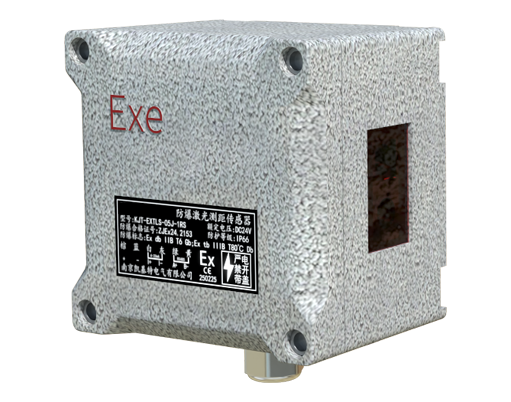
In the rapidly evolving landscape of industrial automation and precision measurement, laser sensors have become indispensable tools. Their applications span from object detection and positioning to dimensional gauging and quality control across manufacturing, logistics, and robotics. For procurement specialists, engineers, and project managers, navigating the market for these devices involves understanding the complex factors that dictate laser sensor prices. This guide delves into the key components of cost, helping you make an informed investment that balances performance with budget.
The price of a laser sensor is rarely a simple figure; it is a reflection of its underlying technology, performance specifications, and build quality. At the most fundamental level, the type of laser and sensing principle plays a significant role. Standard diffuse reflection sensors, which detect the reflection of a laser beam from an object's surface, are generally the most economical entry point. In contrast, background suppression sensors, which can ignore objects beyond a set distance, and precise time-of-flight (ToF) or triangulation-based sensors command higher prices due to their more complex optics and processing electronics. The laser class (e.g., Class 1, Class 2) also influences cost, with higher-safety-class lasers often requiring more sophisticated design.
Performance parameters are the primary drivers of price differentiation. Measurement Range and Standoff Distance: Sensors designed for long-range detection (e.g., 10m+) or those with a very short focal distance for ultra-precise micro-measurement are typically more expensive than mid-range models. Accuracy and Resolution: A sensor boasting micron-level resolution and repeatability will carry a premium over one with millimeter-level performance. The precision of the laser diode, receiver lens, and signal processing circuitry directly correlates with cost. Response Time/Switching Frequency: High-speed applications in packaging or electronics assembly require sensors with microsecond response times, a feature that increases price. Environmental Robustness: Industrial settings are harsh. Sensors with high Ingress Protection (IP) ratings (e.g., IP67, IP69K), robust housing materials (stainless steel vs. plastic), and extended operating temperature ranges (-40°C to 70°C) are engineered to withstand dust, water, vibration, and thermal extremes, adding to the manufacturing cost.
Additional features and integration capabilities further shape the price. Analog output (4-20mA, 0-10V) or advanced digital interfaces (IO-Link, Ethernet/IP, PROFINET) provide richer data and easier network integration but add complexity. Built-in intelligence, such as programmable logic, multi-point teaching, or advanced background suppression algorithms, also contributes to a higher price tag. The brand reputation and associated support—including comprehensive technical documentation, reliable warranty periods, and accessible global service networks—are intangible value factors often reflected in the price. Established manufacturers may charge more, but they offer proven reliability and support that minimizes costly downtime.

When evaluating price, it is crucial to consider the Total Cost of Ownership (TCO), not just the initial purchase order. A marginally cheaper sensor that fails prematurely or causes production errors can incur far greater costs in maintenance, rework, and line stoppages. Therefore, aligning the sensor's specifications precisely with the application's requirements is paramount. For simple presence detection, a standard diffuse sensor suffices. For measuring the exact height of components on a fast-moving conveyor, a high-accuracy triangulation sensor is a necessary investment.
The market offers a spectrum, from budget-friendly generic models to premium, application-specific solutions. Engaging with reputable suppliers or manufacturers for a detailed consultation is highly recommended. Provide them with your specific application details: target material, required accuracy, environmental conditions, and output needs. They can often recommend the most cost-effective model that ensures long-term performance and reliability. In conclusion, the price of a laser sensor is a direct function of its capability, durability, and sophistication. By thoroughly understanding the technical drivers of cost and focusing on TCO, buyers can strategically invest in laser sensor technology that delivers optimal value and drives operational efficiency for years to come.