In the high-stakes environment of modern industrial automation, material handling, and robotics, ensuring operational safety while maximizing efficiency is a paramount concern. Traditional mechanical bumpers or ultrasonic sensors often fall short in providing the precise, non-contact, and rapid detection required for dynamic applications. This is where Laser Ranging Anti-Collision Sensors have emerged as a critical technological solution, offering unparalleled accuracy and reliability for preventing costly and dangerous impacts.
At its core, a laser anti-collision sensor operates on the principle of Time-of-Flight (ToF) or phase-shift measurement. The sensor emits a focused, coherent beam of laser light—typically in the visible red or, more commonly, eye-safe infrared spectrum. This beam travels to a target object, reflects off its surface, and returns to a receiver within the sensor. By precisely measuring the time delay between emission and reception, the sensor calculates the distance to the object with exceptional resolution, often in the sub-millimeter range for short distances. This continuous stream of distance data forms the basis for collision avoidance.
The superiority of laser sensors over other technologies is multifaceted. Firstly, their precision is unmatched. Unlike ultrasonic sensors, which can be affected by temperature, humidity, and the material's acoustic properties, laser beams are largely immune to environmental noise and provide a consistent, highly accurate measurement. Secondly, the response time is extremely fast, often in the microsecond range, enabling real-time monitoring and reaction in high-speed applications like automated guided vehicles (AGVs) or robotic arms. Thirdly, the laser beam's narrow, focused profile allows for precise detection zones. This enables sophisticated applications like contour following, edge detection, and the creation of virtual safety zones or "light curtains" without physical barriers.
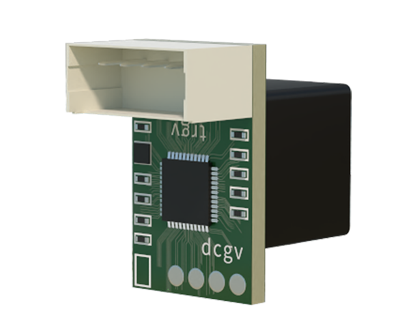
Key applications driving the adoption of laser anti-collision sensors are diverse. In automated warehousing and logistics, AGVs rely on these sensors for safe navigation in congested aisles, precise docking, and load handling. On manufacturing lines, overhead cranes and gantry systems use them to prevent collisions with infrastructure, other cranes, or personnel. In robotics, they are integral for safe human-robot collaboration (HRC), allowing robots to slow down or stop when a human enters a predefined workspace. Furthermore, in construction and mining, large vehicles are equipped with laser-based systems for blind-spot monitoring and proximity warning.
Modern laser anti-collision sensors are not just simple distance-measuring devices; they are intelligent systems. They feature robust industrial enclosures rated for IP67 or higher, ensuring resistance to dust, water, and vibration. Advanced models incorporate onboard logic and programmability, allowing users to set multiple warning and stop thresholds. Integration is seamless through standard industrial communication protocols like IO-Link, PROFINET, EtherNet/IP, or simple analog and digital outputs. Some systems even offer multi-beam or scanning (LiDAR) capabilities, creating a two-dimensional safety field for more complex protection scenarios.
When selecting a laser anti-collision sensor, engineers must consider several critical parameters. The measuring range is primary, varying from a few centimeters to several hundred meters based on the model and required application. The accuracy and repeatability specifications determine the reliability of the safety function. The response time must be compatible with the system's speed. The laser's wavelength and power classification (always ensuring Class 1 eye-safe operation for industrial use) are vital for safety compliance. Finally, the environmental rating and the type of output interface must align with the installation conditions and control architecture.

The future trajectory of this technology points towards greater intelligence and integration. The convergence of high-precision laser ranging with artificial intelligence and machine vision is enabling predictive collision avoidance, where systems can not only detect an object but also classify it and predict its trajectory. Miniaturization and cost reduction are making these sensors accessible for a broader range of applications, from small collaborative robots to consumer electronics.

In conclusion, laser ranging anti-collision sensors represent a fundamental pillar of modern industrial safety and automation strategy. Their precision, speed, and flexibility provide a non-intrusive yet highly effective means of protecting valuable assets, infrastructure, and, most importantly, personnel. As industries continue to push the boundaries of speed and complexity, the role of these advanced optical guardians will only become more central, ensuring that productivity and safety advance hand in hand.