In the intricate world of industrial automation, the reliable detection of objects without physical contact is a cornerstone of efficiency and safety. Among the diverse array of sensing solutions, the small rectangular proximity sensor stands out for its versatility, robustness, and compact design. This article delves into the technical principles, key features, and critical application considerations of these ubiquitous devices, providing a comprehensive guide for engineers and system integrators.
At its core, a proximity sensor is a device that detects the presence or absence of an object within a specified sensing range. Small rectangular variants typically employ one of two primary technologies: inductive or capacitive sensing. Inductive proximity sensors are the workhorses for detecting metallic objects. They operate by generating an oscillating electromagnetic field from a coil within the sensor. When a conductive metal target enters this field, eddy currents are induced in the target, causing a change in the oscillation amplitude. This change is detected by the sensor's internal circuitry, which subsequently triggers a solid-state output switch. The standard sensing range for these units varies, often between 1mm to 15mm for compact models, depending on the target material's properties (with steel being the reference). Ferrous metals like iron and steel typically yield the longest sensing distance, while non-ferrous metals like aluminum or copper require a reduction factor.
Capacitive proximity sensors, often housed in similar rectangular form factors, function on a different principle. They detect both metallic and non-metallic materials—liquids, plastics, wood, and granules—by sensing changes in capacitance. The sensor face and the target act as two plates of a capacitor. As a target approaches, the dielectric constant of the space between them changes, altering the capacitance. Once this change reaches a predetermined threshold, the sensor activates its output. This makes capacitive sensors ideal for applications like level detection in tanks or presence sensing of plastic or glass containers.
The defining characteristic of the "small rectangular" form factor is its space-saving design. These sensors are engineered to fit into tight machine layouts where traditional cylindrical sensors might be impractical. Their flat sides often facilitate easier mounting on brackets or machine frames. Despite their compact size, they are built to withstand harsh industrial environments. Typical ingress protection ratings are IP67 or higher, ensuring resistance to dust and temporary immersion in water. Housing materials are usually nickel-plated brass, stainless steel, or rugged PBT plastic, offering excellent resistance to chemicals, oils, and mechanical impacts.
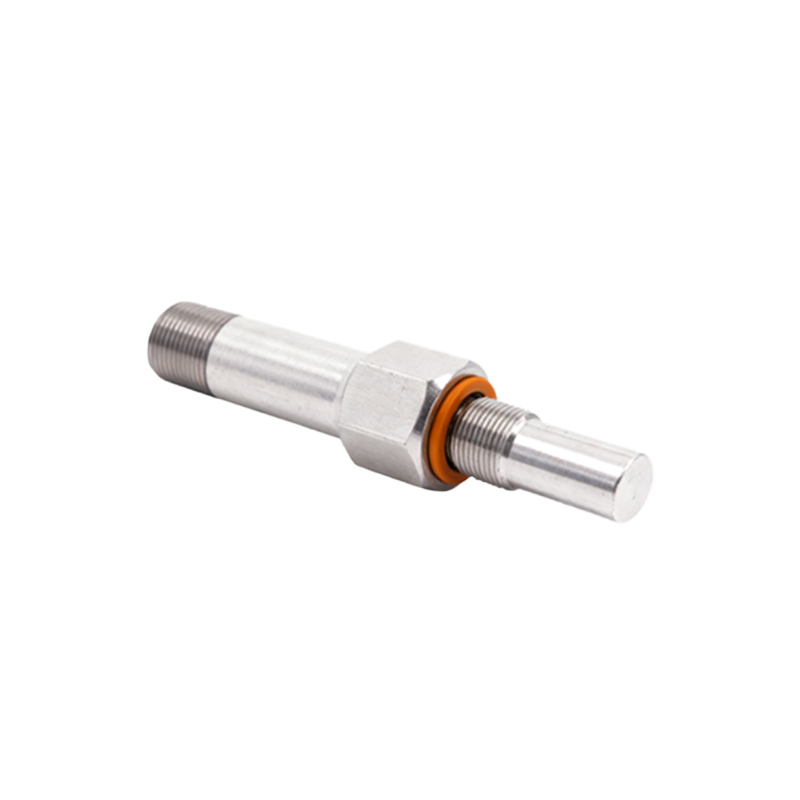
Electrical output configurations are a vital selection criterion. The most common outputs are DC 3-wire types, providing either a PNP (sourcing) or NPN (sinking) transistor switch. PNP sensors switch the positive voltage to the load, while NPN sensors switch the negative or ground side, with the choice largely dictated by the control system's PLC input module requirements. Some advanced models also offer analog (4-20mA or 0-10V) or IO-Link outputs, enabling not just binary detection but also the transmission of diagnostic data and parameter settings for Industry 4.0 applications.
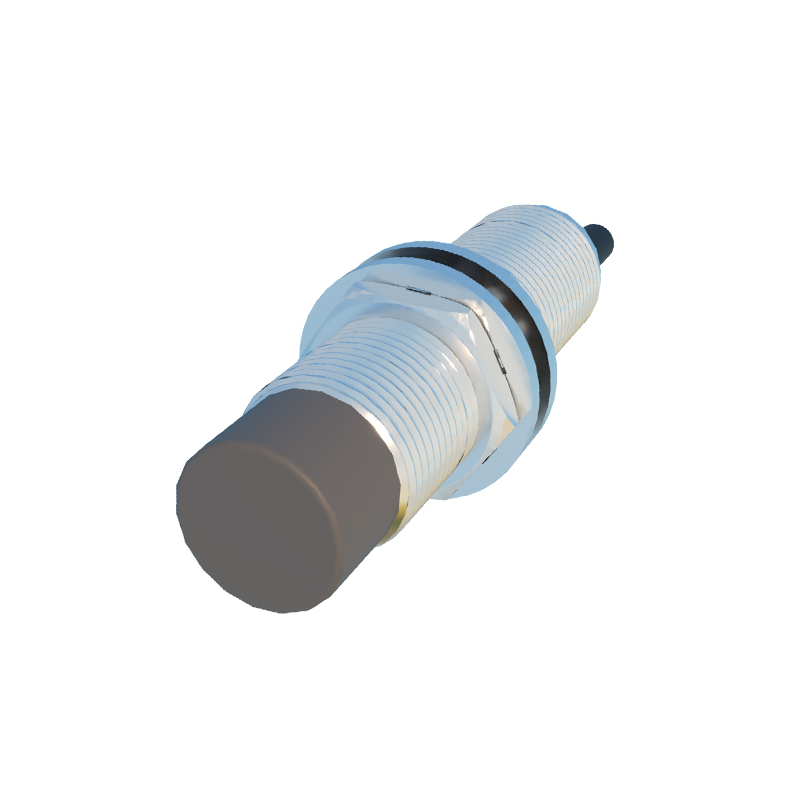
When integrating a small rectangular proximity sensor, several factors demand careful attention. First is the correct calculation of the effective sensing distance (Sn), considering the target material, size, and shape. Installation is critical; sensors must be mounted securely to prevent vibration-induced false triggers, and adequate clearance from surrounding metal (the "flush-mountable" or "non-flush" characteristic) must be observed as per the datasheet. Electrical considerations include ensuring a stable, regulated power supply within the sensor's specified voltage range (commonly 10-30V DC) and incorporating protective measures like surge suppressors for inductive loads to safeguard the sensor's output transistor.
In practice, these sensors are deployed across countless automation scenarios. They are used for precise position verification of machine parts, end-of-travel detection on linear actuators, counting metallic products on conveyors, checking for the presence of tools in CNC magazines, and ensuring safety door interlocks. Their reliability directly impacts machine uptime and product quality.
In conclusion, the small rectangular proximity sensor is a deceptively simple component that plays a monumental role in modern industrial systems. A thorough understanding of its operating principles, specifications, and installation nuances is essential for designing robust, efficient, and intelligent automated machinery. By selecting the correct type—inductive or capacitive—with appropriate ratings and outputs for the application, engineers can ensure seamless, maintenance-free operation, forming the reliable sensory foundation upon which advanced automation is built.