In the realm of precision measurement and industrial automation, the ability to accurately detect angular rotation or tilt is paramount. Laser angular displacement sensors have emerged as a critical technology for achieving this with high precision, non-contact operation, and remarkable speed. Unlike traditional mechanical encoders or potentiometers, these sensors utilize the fundamental properties of light to measure angular changes, offering significant advantages in demanding environments.
The core operating principle of most laser angular displacement sensors is based on optical triangulation or laser interferometry. In a common triangulation setup, a focused laser beam is projected onto a target surface. A position-sensitive detector, such as a CCD or PSD array, captures the reflected light spot. When the target rotates or tilts, the position of the reflected spot on the detector shifts. By precisely calculating this displacement, the sensor's internal processor can determine the angular change with high resolution. More advanced models employ laser interferometry, where the interference pattern between a reference laser beam and a beam reflected from the target is analyzed. Changes in the interference fringes correspond directly to minute angular displacements, enabling nanometer-level resolution for ultra-precise applications.
The advantages of using laser-based angular sensors are substantial. Their non-contact nature eliminates mechanical wear, ensuring long-term stability and reliability. They provide exceptionally high resolution and accuracy, often down to micro-radians or arc-seconds, which is unattainable for contact-based methods. The response time is extremely fast, limited primarily by the electronics, making them suitable for dynamic measurements and high-speed control loops. Furthermore, they can measure the angle of distant or difficult-to-access objects without physical attachment.
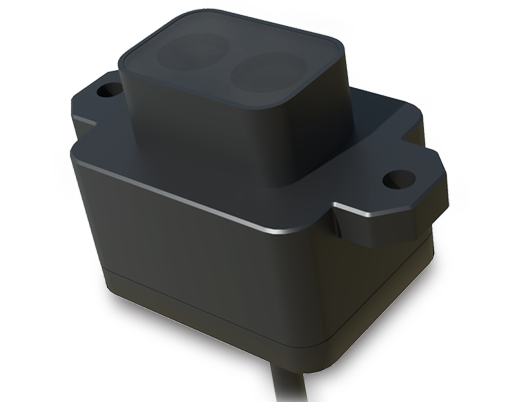
These capabilities make laser angular displacement sensors indispensable across numerous industries. In semiconductor manufacturing, they are used for wafer alignment, stage leveling, and lithography systems where nanometric precision is non-negotiable. Robotics relies on them for precise joint angle feedback and end-effector orientation control, enhancing the accuracy of automated assembly and machining. In aerospace and automotive testing, they measure the deflection of wings, fuselages, or chassis components under load. They are also crucial in optical system alignment, telescope positioning, and the calibration of rotary tables and indexing heads. Emerging applications include stabilizing platforms for satellites and medical imaging devices.
Selecting the appropriate laser angular displacement sensor requires careful consideration of several key parameters. The measurement range defines the maximum angular deviation the sensor can detect, from a few arc-seconds to several degrees. Resolution specifies the smallest detectable angle change. Accuracy indicates how close the measured value is to the true angle, often affected by linearity and environmental factors. The working distance, or stand-off distance, is the optimal range from the sensor head to the target. The target surface properties are critical; diffuse reflective surfaces work best for triangulation sensors, while specular or mirror-like surfaces may require specialized models or interferometric sensors. Environmental robustness is another factor, with industrial-grade sensors offering protection against dust, moisture, and vibration.
Integration into a control system typically involves analog voltage or current outputs, or digital interfaces like Ethernet, RS-485, or fieldbus protocols. Proper mounting and alignment are essential to avoid cosine errors and ensure the laser beam is perpendicular to the axis of rotation at the measurement point. Regular calibration against a known standard is recommended to maintain specified accuracy over time.
In conclusion, laser angular displacement sensors represent a sophisticated fusion of optics, electronics, and signal processing. They solve complex measurement challenges where contact is impossible, precision is extreme, or speeds are high. As industries continue to push the boundaries of precision engineering and automation, the role of these sensors will only grow, enabling innovations in manufacturing, scientific research, and advanced technology development. Understanding their principles and capabilities is the first step toward leveraging their full potential for enhancing quality, efficiency, and control in modern engineering systems.