In the rapidly evolving landscape of industrial automation, laser navigation sensors have emerged as a cornerstone technology, enabling unprecedented precision, reliability, and efficiency in material handling, robotics, and autonomous systems. These sensors, utilizing LiDAR (Light Detection and Ranging) or structured laser light principles, create real-time, high-resolution maps of their environment, allowing machines to navigate complex spaces with minimal human intervention. The market for these sophisticated components is driven by a handful of pioneering companies, each contributing unique innovations that push the boundaries of what's possible in smart manufacturing and logistics.
At the forefront is SICK AG, a German sensor giant with a storied history in industrial automation. SICK's portfolio of laser navigation sensors, such as the NAV series, is renowned for its robustness in harsh environments. These sensors excel in automated guided vehicle (AGV) and autonomous mobile robot (AMR) applications, offering high scanning frequencies and immunity to ambient light interference. Their technology often integrates seamlessly with fleet management software, providing end-to-end solutions for warehouse automation. SICK's commitment to R&D ensures continuous improvements in accuracy and data processing speed, making them a preferred partner for large-scale automotive and e-commerce logistics centers.
Another key player is Pepperl+Fuchs, which specializes in sensor solutions for intrinsic safety and demanding conditions. Their laser navigation systems are designed for reliability in volatile atmospheres, such as those found in chemical plants or paint shops. By focusing on explosion-proof designs and consistent performance under dust or vibration, Pepperl+Fuchs caters to niche industrial segments where failure is not an option. Their sensors facilitate precise positioning of AGVs along predefined paths, enhancing safety and throughput in specialized manufacturing settings.

From the United States, Omron Automation stands out with its holistic approach to integrated automation. Omron's laser navigation sensors are part of a broader ecosystem that includes machine vision, robotics, and control systems. This integration allows for sophisticated applications like mobile manipulators—robots that can navigate to a location and then perform a precise assembly task. Omron emphasizes user-friendly configuration software, reducing the engineering time required to deploy and recalibrate navigation systems in dynamic factories. Their focus on ease of use and interoperability accelerates the adoption of flexible automation solutions.
In Asia, Panasonic Corporation's automation division has made significant strides with compact, cost-effective laser sensors. Panasonic's offerings are particularly popular in high-volume manufacturing sectors like electronics, where space is at a premium and cost sensitivity is high. Their sensors provide reliable 2D mapping and obstacle detection, enabling smaller AMRs to operate efficiently on crowded factory floors. Panasonic's strength lies in optimizing performance for mass-market applications, driving down the total cost of ownership for small to medium enterprises venturing into automation.
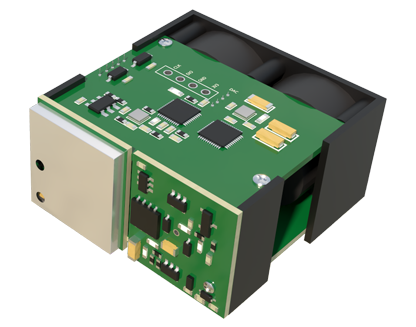
The competitive landscape also features innovative specialists like Slamtec, a Chinese company focused on core SLAM (Simultaneous Localization and Mapping) algorithms. Slamtec's RPLIDAR series provides affordable, high-performance laser scanning modules that have become a staple in research, service robots, and entry-level industrial AGVs. By offering robust development kits and open-source support, Slamtec has cultivated a vibrant developer community, fostering rapid prototyping and customization. This approach accelerates innovation in emerging applications, from hospital delivery robots to smart cleaning machines.
Looking ahead, the trajectory for laser navigation sensor companies is shaped by several key trends. The integration of artificial intelligence and edge computing is enhancing sensor intelligence, allowing for predictive navigation and adaptive path planning in unstructured environments. Furthermore, the push towards Industry 4.0 and the Industrial Internet of Things (IIoT) demands sensors that not only collect data but also communicate seamlessly with cloud platforms for analytics and optimization. Companies are investing in cybersecurity features to protect navigation data from breaches, a critical consideration as systems become more interconnected.
In conclusion, the advancement of laser navigation technology is a collaborative effort led by established industrial leaders and agile innovators. Companies like SICK, Pepperl+Fuchs, Omron, Panasonic, and Slamtec each play a vital role in refining sensor capabilities, making autonomous navigation more accessible, reliable, and intelligent. As industries worldwide strive for greater flexibility and efficiency, these sensors will remain indispensable tools, transforming factories and warehouses into smarter, more responsive ecosystems. The future promises even tighter integration with robotic systems, paving the way for fully autonomous industrial operations that redefine productivity and safety standards.