Laser diffraction sensors represent a sophisticated category of measurement devices widely utilized across industrial and scientific fields for non-contact, high-precision particle size analysis and dimensional measurement. The core operating principle is grounded in the well-established physical phenomenon of light diffraction, specifically Fraunhofer diffraction or Mie scattering theory, depending on the particle size relative to the laser wavelength. When a collimated, monochromatic laser beam encounters particles or an object edge, the light waves are scattered. This scattering pattern, known as a diffraction pattern, is captured by a dedicated detector array, typically a multi-element photodiode situated at a specific focal length from the sample.
The fundamental relationship governing this measurement is simple yet powerful: the angle of diffraction is inversely proportional to the particle size. Smaller particles cause the laser light to diffract at wider angles, creating a broader diffraction pattern on the detector. Conversely, larger particles result in narrower diffraction angles and a more concentrated pattern. The sensor's integrated microprocessor performs a rapid mathematical analysis, often using an algorithm based on Fourier optics or iterative fitting routines, to convert the captured light intensity distribution data into a precise particle size distribution or a specific dimensional value. This process occurs in real-time, enabling continuous process monitoring and control.
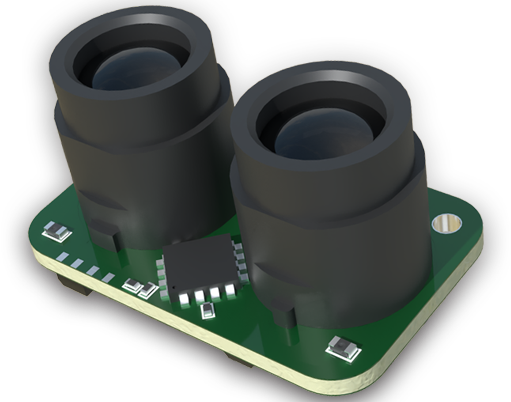
Key advantages of laser diffraction sensors include their exceptional accuracy, repeatability, and speed. They provide absolute measurements without requiring calibration against standard samples for most applications, as the principle is based on first principles of physics. Their non-contact nature eliminates risks of sample contamination or alteration, making them ideal for delicate or hazardous materials. Furthermore, they can measure a vast dynamic range, typically from sub-micron to several millimeters, within a single measurement cycle.

In industrial practice, these sensors are indispensable. In pharmaceutical manufacturing, they monitor and control the critical particle size of active ingredients and excipients during milling, blending, and spray-drying processes, directly impacting drug dissolution rates and bioavailability. In the chemical industry, they ensure consistent quality of pigments, polymers, and catalysts. Food processing plants employ them to maintain texture and consistency in products like powdered milk, chocolate, and flour. Beyond particle sizing, laser diffraction sensors are configured for precise edge detection, width measurement of moving webs (e.g., paper, metal, textiles), and even vibration analysis by detecting changes in diffraction patterns from a vibrating surface.
Modern advancements integrate these sensors with robust industrial housings (IP67 ratings are common), Ethernet or fieldbus communication protocols for Industry 4.0 integration, and sophisticated software for data logging, trend analysis, and automated feedback control loops. When selecting a laser diffraction sensor, engineers must consider parameters such as the required measurement range, laser wavelength (commonly 635nm or 780nm for optimal performance), the necessary stand-off distance, the required data rate, and the environmental conditions like temperature, dust, and ambient light. Proper optical alignment and sample presentation (e.g., ensuring an adequate particle concentration in the laser beam for sizing applications) are also critical for obtaining reliable data.
In conclusion, laser diffraction sensors are a prime example of applied optical physics solving complex industrial measurement challenges. Their ability to deliver fast, accurate, and reliable data without physical contact makes them a cornerstone technology for quality assurance and process optimization in countless manufacturing sectors, driving efficiency and product consistency.