Inductive proximity sensors are fundamental components in modern industrial automation, offering non-contact detection of metallic objects. As a core technology within the realm of factory automation, these robust and reliable devices play a critical role in ensuring precision, safety, and efficiency across countless applications. This article delves into the operating principles, key characteristics, common applications, and essential selection criteria for inductive proximity sensors.
At the heart of an inductive proximity sensor lies an oscillator circuit that generates a high-frequency electromagnetic field from a coil wound around a ferrite core. This field emanates from the active face of the sensor. When a metallic object enters this oscillating field, eddy currents are induced on the surface of the target. These eddy currents draw energy from the oscillator, resulting in a measurable reduction in the oscillation amplitude. An evaluation circuit within the sensor detects this amplitude change and triggers a solid-state output switch, signaling the presence of the object. It is crucial to note that the sensing distance, or nominal range (Sn), is defined for a standard target of mild steel. Different metals, such as aluminum, brass, or stainless steel, have different electrical conductivities and magnetic permeabilities, which affect the eddy current generation and thus the effective sensing range. Typically, a correction factor, often between 0.3 and 1.0, must be applied to the catalogued sensing distance for non-ferrous metals.
Key performance characteristics define the suitability of an inductive sensor for a given task. The sensing range is paramount, with standard cylindrical sensors available in ranges from 1mm to 40mm or more. The repeat accuracy, often a fraction of a millimeter, determines the precision of detection. Another critical specification is the switching frequency, which indicates how many on/off cycles per second the sensor can handle, a vital parameter for high-speed counting or positioning tasks. Modern inductive sensors are predominantly solid-state, featuring PNP (sourcing) or NPN (sinking) transistor outputs compatible with Programmable Logic Controllers (PLCs). They are celebrated for their exceptional durability, being inherently immune to dust, oil, moisture, and vibration when properly housed. Many are available with IP67, IP68, or IP69K ratings, making them suitable for harsh washdown environments in food and beverage or pharmaceutical industries.
The applications for inductive proximity sensors are vast and varied. Common uses include position verification of machine parts, such as confirming a cylinder is fully extended or retracted. They are indispensable for object counting on conveyor lines, detecting the presence of metal parts, cans, or fixtures. In metalworking, they serve as limit switches for tool positioning or end-of-travel detection. They are also used for monitoring rotational speed by detecting gear teeth or keyways, and for ensuring safety by confirming guards are in place before machine start-up. Their non-contact nature eliminates mechanical wear, leading to significantly longer service life compared to mechanical limit switches.
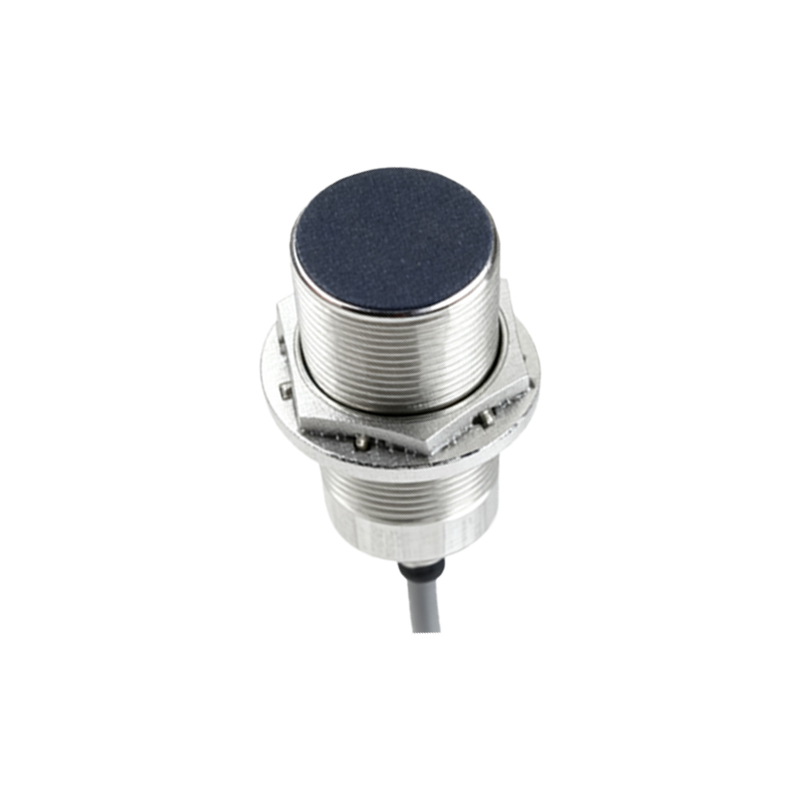
Selecting the right inductive proximity sensor requires careful consideration of several factors. First, identify the target material (steel, aluminum, etc.) and the required sensing distance, applying correction factors as needed. The sensor's physical form factor—cylindrical (threaded barrel), rectangular, or ring-shaped—must fit the mechanical constraints of the installation. The housing material, typically nickel-plated brass, stainless steel, or PBT plastic, should be chosen based on the environmental conditions (corrosive chemicals, temperature extremes). Electrical characteristics are equally important: the required operating voltage (commonly 10-30V DC), output type (PNP/NPN, normally open/closed), and connection method (pre-wired cable, quick-disconnect). For applications involving different metals, sensors with factor-1 capability or "non-ferrous" models with extended range are available. Finally, special features like weld-field immunity (for use near robotic welders), short-circuit protection, or IO-Link digital communication for advanced diagnostics and parameter setting may be necessary for sophisticated automation systems.
In conclusion, inductive proximity sensors are a mature yet continually evolving technology. Their simplicity, reliability, and versatility make them an indispensable tool for electrical engineers and automation professionals. A thorough understanding of their operating principles and specifications is key to deploying them effectively, ensuring robust machine performance, minimizing downtime, and optimizing industrial processes. As Industry 4.0 initiatives advance, the integration of smart sensors with digital communication protocols like IO-Link will further enhance their role in predictive maintenance and data-driven manufacturing.