In the intricate and dynamic world of industrial automation, the precision and safety of machinery movement are paramount. Among the myriad of components ensuring this operational excellence, the reversing proximity sensor stands out as a fundamental yet sophisticated device. Its primary function is to detect the presence or absence of an object within a specific range without physical contact, specifically signaling a machine or system to halt, reverse direction, or alter its operational sequence. This capability is not merely a convenience but a critical safety and efficiency mechanism.
The operational principle of a reversing proximity sensor is typically based on electromagnetic, capacitive, or inductive technologies. Inductive sensors, for instance, generate an oscillating electromagnetic field. When a metallic object enters this field, it induces eddy currents within the object, causing a change in the oscillation amplitude. This change is detected by the sensor's circuitry, which then triggers a solid-state output signal. For reversing applications, this signal is directly interfaced with a motor controller or a Programmable Logic Controller (PLC). Upon receiving the signal, the controller executes a pre-programmed command to reverse the motor's direction, effectively stopping forward motion and initiating a backward movement. This process is crucial in applications like automated guided vehicles (AGVs), conveyor systems, robotic arms, and elevator controls, where preventing over-travel or collisions is essential.
The importance of these sensors in safety protocols cannot be overstated. In high-speed packaging lines, for example, a sensor detecting an unexpected obstruction can instantly command a drive system to reverse, preventing jams, product damage, and potential equipment harm. Similarly, in heavy machinery like overhead cranes or milling machines, reversing sensors act as the last line of defense against catastrophic overrun, protecting both the capital investment and, more importantly, personnel. Their non-contact nature ensures reliability and longevity, as there is no mechanical wear from repeated physical impact, unlike traditional limit switches.
Beyond safety, reversing proximity sensors contribute significantly to system accuracy and repeatability. In precision assembly tasks, a robot arm might use a series of these sensors to determine the exact start and end points of a linear track, ensuring each movement cycle is identical. This repeatability is vital for maintaining product quality and throughput. Furthermore, their fast response time—often measured in milliseconds—enables high-speed operations that would be impossible with slower mechanical switches, directly impacting overall equipment effectiveness (OEE).
Integration into modern Industrial Internet of Things (IIoT) frameworks has further expanded their role. Smart sensors with IO-Link or other communication protocols can transmit not just a simple on/off signal but also diagnostic data like operating temperature, signal strength, and device health. This predictive maintenance capability allows engineers to address potential sensor failures before they cause unplanned downtime, transforming the sensor from a simple reactive component into a proactive data node within a smart factory ecosystem.
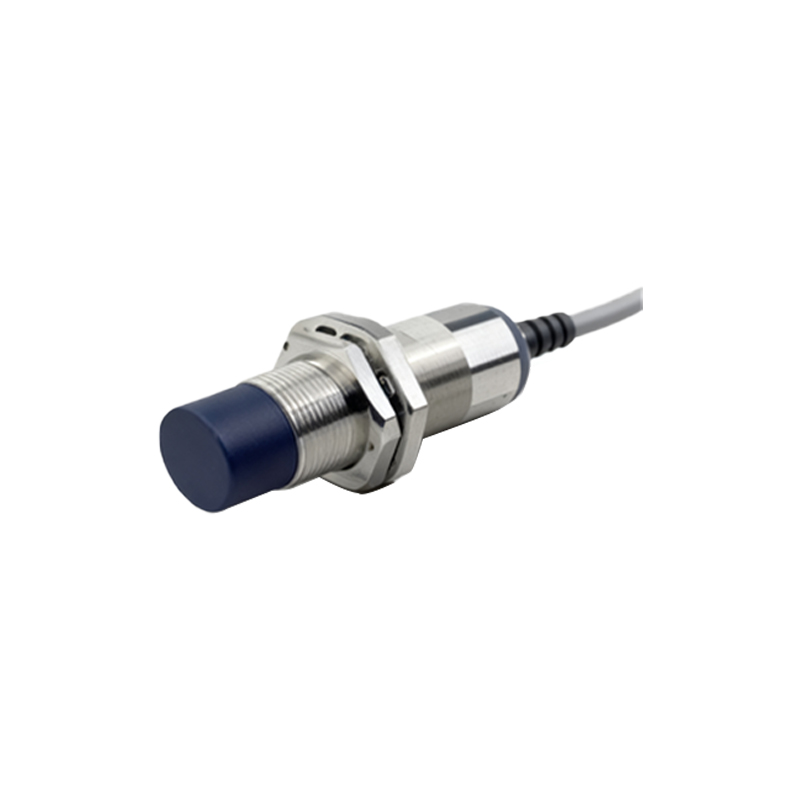
Selecting the right reversing proximity sensor requires careful consideration of several factors. The sensing range must be appropriate for the application to avoid false triggers or missed detections. The housing material, typically nickel-plated brass, stainless steel, or PBT plastic, must withstand the environmental conditions, including exposure to coolants, oils, metal chips, and temperature extremes. The output type (PNP/NPN) must be compatible with the control system's input card. Additionally, factors like switching frequency, voltage supply, and protection ratings (IP67/IP69K) are critical for reliable operation in harsh industrial environments.
In conclusion, the reversing proximity sensor is a deceptively simple component that performs a vital, complex function. It is the silent guardian of automated systems, seamlessly blending safety, precision, and intelligence. From preventing simple jams to enabling complex coordinated motion in advanced robotics, its role is indispensable. As automation continues to evolve towards greater autonomy and interconnectedness, the humble reversing proximity sensor will undoubtedly continue to be a cornerstone of efficient, safe, and intelligent industrial operations, proving that sometimes the most critical components are those that work unnoticed in the background.