In the rapidly evolving landscape of industrial automation and electrical engineering, the integration of laser sensors into motor starting systems represents a significant leap forward. Traditional motor starting methods, often reliant on electromechanical relays or basic proximity sensors, have long been plagued by issues such as mechanical wear, delayed response times, and limited precision. The advent of laser sensor technology addresses these challenges head-on, offering unparalleled accuracy, reliability, and efficiency in initiating and controlling electric motors across various applications, from manufacturing assembly lines to complex HVAC systems.
Laser sensors operate on the principle of emitting a focused beam of light and detecting its reflection from a target object. When applied to motor starting, these sensors can be configured to monitor specific parameters such as rotational position, alignment, or the presence of a component with extreme precision. For instance, in a conveyor system, a laser sensor can detect the exact position of a product or pallet, sending a signal to start a motor only when the item is perfectly aligned. This eliminates false starts and reduces mechanical stress on the motor and driven equipment, thereby extending operational lifespan and reducing maintenance costs. The non-contact nature of laser sensing is a key advantage, as it avoids physical degradation over time—a common drawback in tactile or mechanical switches.

The core mechanism involves the sensor's ability to measure distance or detect presence with micron-level accuracy. Modern laser sensors, often equipped with advanced photoelectric receivers and microprocessors, can differentiate between subtle variations in the target's surface or position. This high resolution allows for the implementation of soft-start protocols, where the motor is gradually brought up to speed based on real-time feedback from the sensor. Such controlled starting minimizes inrush current, a major concern in electrical systems that can lead to voltage dips, overheating, and increased energy consumption. By optimizing the start-up phase, laser sensors contribute to overall energy efficiency and grid stability, aligning with global sustainability goals in industrial operations.
Furthermore, the integration of laser sensors with Programmable Logic Controllers (PLCs) and Industrial Internet of Things (IIoT) platforms enables sophisticated motor management. Data from the sensors can be continuously analyzed to predict maintenance needs, detect anomalies like misalignment or imbalance before they cause failure, and even adjust starting parameters dynamically based on environmental conditions or load requirements. This predictive capability transforms motor starting from a reactive to a proactive process, enhancing system uptime and safety. In hazardous environments, such as those with explosive dust or vapors, intrinsically safe laser sensors provide a reliable starting solution without spark risk, adhering to stringent safety standards like ATEX or IECEx.
Despite the higher initial investment compared to conventional sensors, the long-term return on investment (ROI) is compelling. Reduced downtime, lower energy bills, decreased wear-and-tear on motors, and minimized unscheduled maintenance all contribute to a favorable cost-benefit analysis. As industries increasingly prioritize smart manufacturing and Industry 4.0 initiatives, the role of laser sensors in motor starting systems is set to expand, driving innovations in efficiency, reliability, and automation. Engineers and system designers are encouraged to consider this technology not merely as an upgrade but as a foundational component for future-proof electrical systems, where precision and data-driven control are paramount.
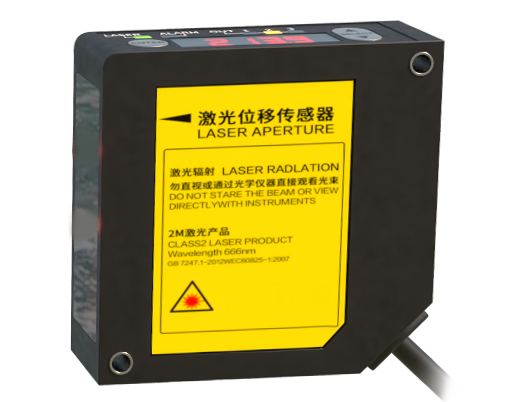
In conclusion, laser sensors are redefining the paradigms of motor starting by infusing electrical engineering with cutting-edge optical technology. Their ability to deliver precise, non-contact detection and seamless integration with digital control systems makes them indispensable in modern industrial applications. As research continues to enhance their affordability and adaptability, laser sensors will undoubtedly become a standard in motor starting solutions, powering the next generation of automated and efficient machinery worldwide.