In the realm of industrial automation, the evolution of sensor technology has been pivotal in enhancing efficiency, safety, and flexibility. Among these advancements, wireless proximity sensors, often referred to as "non-contact" or "cable-free" sensors, represent a significant leap forward. This article delves into the fundamental principles behind their operation, exploring how they function without the traditional physical wiring constraints.
At its core, a proximity sensor is a device that detects the presence or absence of an object within a specified range without any physical contact. Traditional inductive, capacitive, or photoelectric sensors require hardwired connections to a power source and a control system (like a PLC) to transmit their detection signal. The "wireless" or "cable-free" aspect fundamentally changes this data and power transmission paradigm.
The principle of operation for a wireless proximity sensor can be broken down into two main, often independent, challenges: power supply and data communication. The most common and robust solution for eliminating power wiring is energy harvesting, specifically through the use of an integrated energy converter. For inductive proximity sensors, this is typically achieved via an electrodynamic energy harvesting system. Here's how it works: The sensor unit contains a moving permanent magnet and a fixed coil. When an actuating target (usually a metal object) approaches the sensor, it mechanically triggers the movement of the internal magnet. This motion relative to the coil induces an electrical voltage—a principle based on Faraday's Law of electromagnetic induction. This harvested electrical energy is sufficient to power the sensor's internal microelectronics, perform the detection logic, and generate a wireless signal. This makes the sensor truly self-powered, requiring no batteries or external power cables.
For data transmission, these sensors employ low-power wireless communication protocols. Common technologies include Bluetooth Low Energy (BLE), IO-Link Wireless, or proprietary sub-GHz radio protocols. Once the sensor detects an object and is powered by the harvested energy, its microcontroller formats a data packet containing its unique identification, status (object present/absent), and potentially other diagnostic information. This packet is then modulated and transmitted via an integrated radio frequency (RF) transmitter and a small antenna. A corresponding wireless receiver, connected to the central control system, picks up this signal, decodes it, and passes the information to the PLC or controller. The communication is often bidirectional, allowing for parameter configuration and diagnostic queries from the control side.
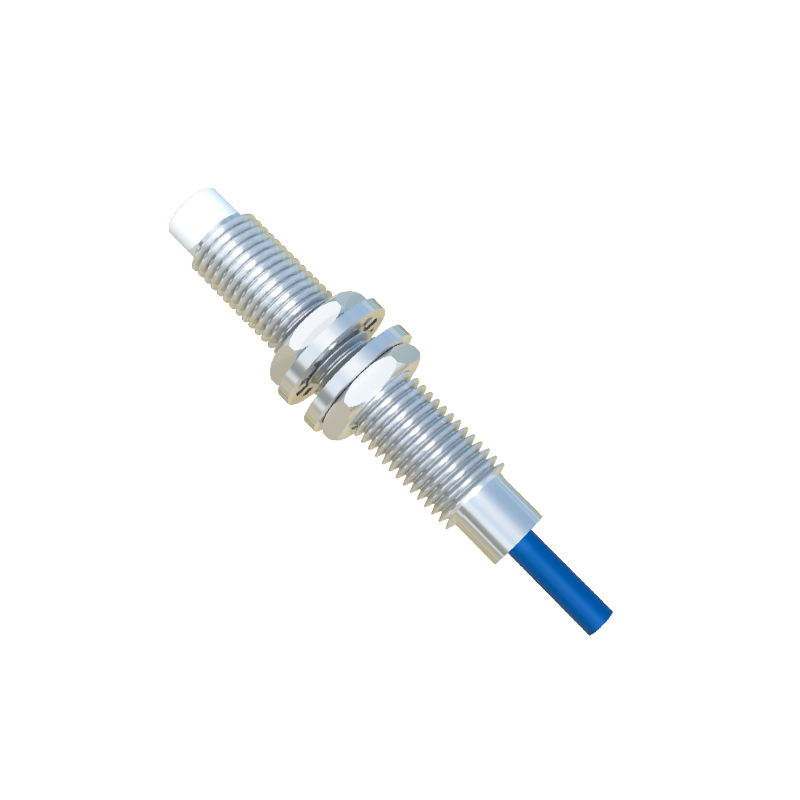
The benefits of this wireless, self-powered principle are substantial. Installation time and costs are drastically reduced as there is no need to run conduit and cables over long distances. This enables sensor placement in previously inaccessible or rotating parts of machinery, such as on crane hooks, automated guided vehicles (AGVs), or rotating tool changers. Maintenance becomes simpler, and system design gains immense flexibility. Furthermore, the absence of cables eliminates common failure points like cable breakage, connector corrosion, and electromagnetic interference (EMI) picked up by long wire runs.
However, understanding the limitations is crucial for proper application. The operating range is defined by both the sensing distance (for energy harvesting) and the wireless communication range. The energy harvested from a single actuation is finite, often limiting the data transmission rate to event-driven communication rather than continuous polling. Environmental factors like heavy metal surroundings can attenuate RF signals, and the presence of multiple wireless devices requires careful network management to avoid interference.
In conclusion, the principle behind wireless, cable-free proximity sensors is a sophisticated integration of electromagnetic energy harvesting and robust, low-power wireless communication. By converting the mechanical energy of the target's approach into electrical power and leveraging modern RF technology for data exchange, these sensors break free from the traditional wired tether. They embody a key trend in Industry 4.0 towards flexible, smart, and decentralized automation systems. For engineers designing modern production lines, logistics systems, or mobile equipment, a deep understanding of this principle is essential for leveraging their full potential to create more adaptive and efficient automated solutions.