In the realm of industrial automation and control systems, proximity sensors are indispensable components for non-contact detection of objects. Among the various configurations available, the 2-wire proximity sensor stands out for its simplicity and widespread application. This article delves into the operational principles, key characteristics, wiring considerations, and practical applications of these fundamental devices.
At its core, a 2-wire proximity sensor functions as a switch within the main power circuit. Unlike its 3-wire or 4-wire counterparts, which have separate power, ground, and signal lines, a 2-wire sensor integrates the load directly in series with its power supply. It requires only two connections: one for the supply voltage (typically labeled as brown wire for +V) and one for the load (typically labeled as blue wire, which connects to the load and then to the common or negative side of the supply). When a target object enters the sensor's detection field, the internal switching element (often a solid-state device) changes state, allowing current to flow through the sensor and to the connected load, such as a PLC input, relay coil, or indicator lamp.
The primary advantage of the 2-wire design is its straightforward installation and wiring, which reduces complexity, saves space in control cabinets, and lowers initial material costs. It is often seen as a direct replacement for mechanical limit switches. These sensors are commonly available for both AC and DC voltage supplies. AC versions are prevalent in standard industrial power environments (e.g., 120VAC, 240VAC), while DC versions are used in low-voltage control circuits.
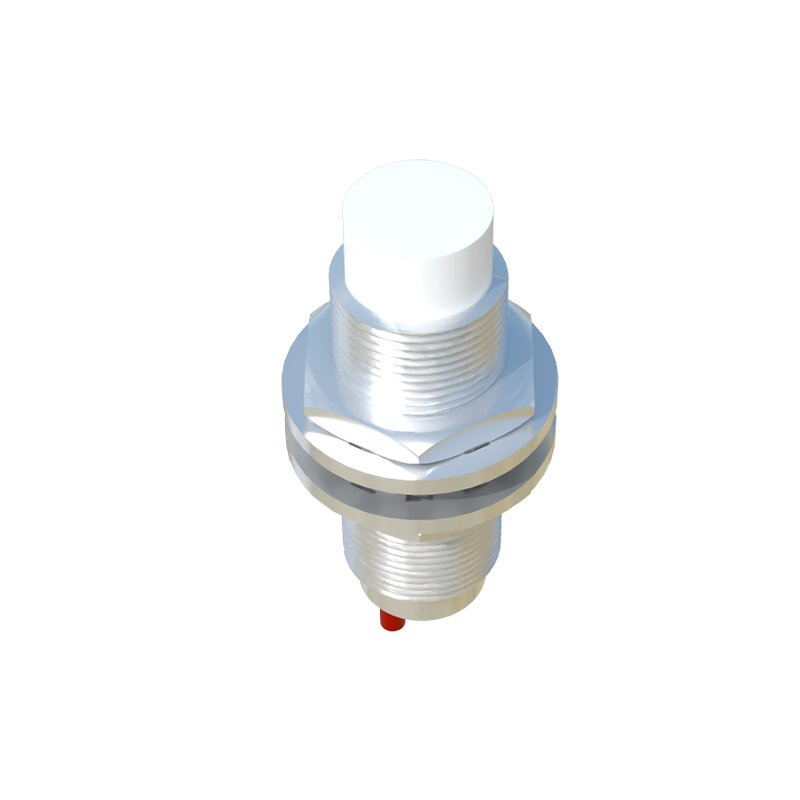
However, engineers must be acutely aware of several critical parameters. The first is the voltage drop or residual current. When in the "ON" state, a 2-wire sensor does not act as a perfect conductor; it exhibits a small voltage drop (typically 2-5V for DC, higher for AC) and allows a small leakage current (often 1-3 mA) to flow even in the "OFF" state. This residual current is a fundamental characteristic of its solid-state design. This necessitates careful consideration of the minimum load current. The sensor requires a minimum current flow to power its internal electronics. If the connected load (e.g., a high-impedance PLC input) draws less current than this specified minimum, the sensor may not function correctly, potentially failing to turn off completely or behaving erratically. Conversely, the maximum load current must not be exceeded to avoid damaging the internal switch.
Wiring practices are crucial for reliable operation. Proper polarity must be observed for DC sensors. A critical rule is that the load must always be connected in series with the sensor. For a sinking (NPN-type equivalent) 2-wire DC sensor, the blue wire connects to the load, and the other side of the load connects to the positive supply (+V). For a sourcing (PNP-type equivalent) version, the configuration is reversed. For AC sensors, polarity is generally not a concern. Shielding and proper routing away from high-power cables are recommended to minimize electrical noise interference, which can be more pronounced in 2-wire systems due to the shared power/signal path.
In application, 2-wire proximity sensors are workhorses in numerous scenarios. They are extensively used for basic presence/absence detection of metal parts on conveyors, position sensing of machine tool slides, end-of-travel detection, and as inputs for programmable logic controllers (PLCs) in simpler control schemes. Their robust construction makes them suitable for harsh environments where oil, coolant, or vibration is present.
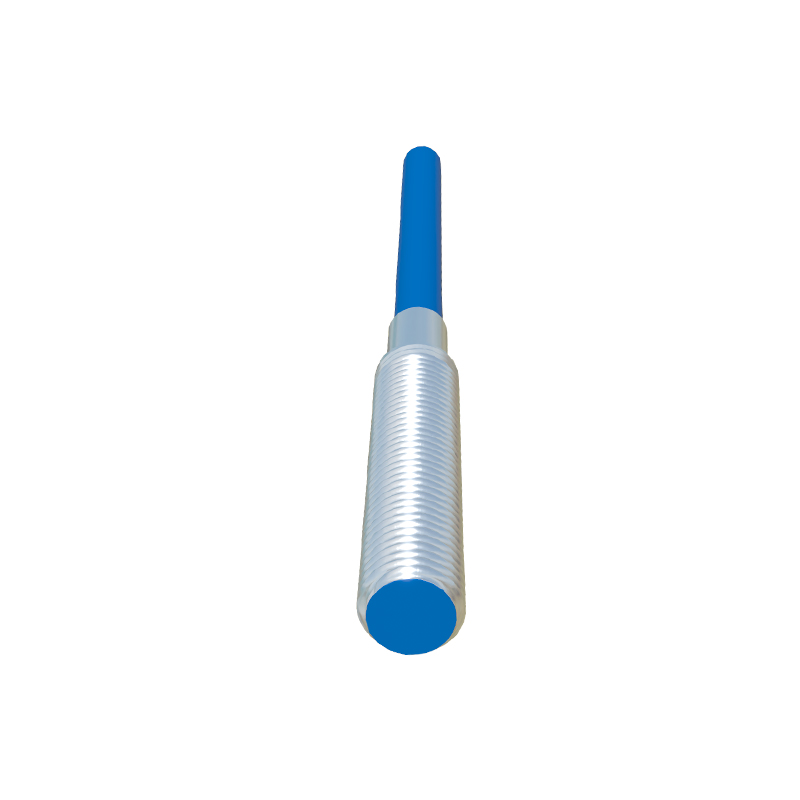
When selecting a 2-wire sensor, an engineer must specify:
1. Sensing Type (Inductive for metals, Capacitive for non-metals).
2. Operating Voltage Range (AC or DC, and the specific voltage).
3. Output Configuration (Normally Open (NO) or Normally Closed (NC)).
4. Sensing Distance.
5. Electrical Specifications: Minimum and Maximum Load Current, Voltage Drop, and Leakage Current.
6. Housing Material and Environmental Protection (IP rating).
In conclusion, the 2-wire proximity sensor remains a vital, cost-effective solution for countless automation tasks. Its simplicity is its strength, but successful implementation hinges on a thorough understanding of its electrical behavior, particularly regarding load current requirements and voltage drop. By meticulously matching the sensor's specifications to the application's demands, engineers can ensure reliable, long-lasting performance in their control systems.