Inductive proximity sensors are fundamental components in modern industrial automation, offering non-contact detection of metallic objects. Among the various product lines available, the LN series inductive proximity sensors, often referred to in industry shorthand as "LN three AR" type models, have established a reputation for reliability and versatility in challenging environments. This article delves into their operating principle, key features, typical applications, and selection criteria.
The core technology behind all inductive proximity sensors, including the LN series, is based on electromagnetic induction. The sensor generates a high-frequency oscillating electromagnetic field from its active face. When a metallic target enters this field, eddy currents are induced on the target's surface. This causes a change in the oscillation amplitude within the sensor's internal LC tank circuit. The sensor's electronics detect this change and trigger a solid-state switching output, signaling the presence of the object. This non-contact principle ensures long operational life, as there is no mechanical wear from physical touch.
LN series sensors are specifically engineered for robustness. A standout feature is their all-welded, stainless-steel housing, which provides exceptional resistance to corrosion, chemicals, and physical impacts. This makes them ideal for harsh applications in industries like metalworking, automotive manufacturing, and food processing, where exposure to coolants, oils, or frequent washdowns is common. Many models in this series carry high ingress protection ratings, such as IP67 or IP69K, guaranteeing performance in dusty or wet conditions.
Another critical characteristic is their sensing range. While inductive sensors typically have shorter ranges compared to capacitive or ultrasonic types, the LN series offers optimized ranges for detecting various metals. It is crucial to note that the nominal sensing distance, often specified for mild steel, is reduced for non-ferrous metals like aluminum, brass, or copper. Engineers must consult the manufacturer's correction factors when designing a system. These sensors are predominantly available in a tubular form factor (e.g., M8, M12, M18, M30 threaded barrels), allowing for easy installation in standard mounting fixtures.
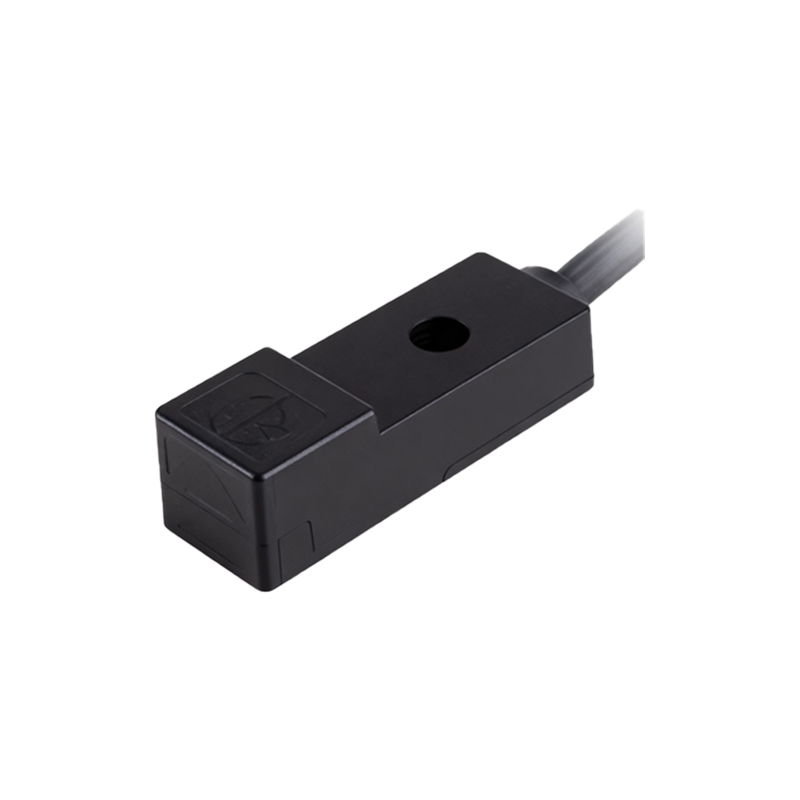
The output configuration is a vital selection parameter. LN sensors commonly provide either a digital PNP (sourcing) or NPN (sinking) DC output, compatible with standard programmable logic controllers (PLCs). Some advanced versions offer analog current (4-20 mA) or voltage (0-10 V) outputs, providing continuous distance measurement for positioning tasks. Additionally, models with IO-Link digital communication are increasingly available, enabling detailed parameter setting, condition monitoring, and seamless integration into Industry 4.0 data networks.
Application examples are widespread across factory floors. They are routinely used for simple object detection on conveyor lines, such as confirming the presence of a metal part before a robotic pick operation. In machine tools, they serve as end-of-travel limit switches for slides or as tool presence detectors. Their robustness allows them to function reliably as rotary speed sensors by detecting gear teeth or encoder marks. In automated assembly, they verify if a metal component, like a screw or a bracket, has been correctly placed.
When selecting an LN series proximity sensor, several factors must be evaluated beyond just the sensing distance. The target material and size must be compatible. The required switching frequency (response speed) must match the application's cycle time. The operating voltage (commonly 10-30 V DC) must align with the plant's electrical system. Environmental conditions, including temperature extremes and potential exposure to strong magnetic fields, must also be considered. Finally, the electrical connection style—pre-wired cable, quick-disconnect connector, or terminal chamber—should be chosen for maintenance convenience.
In conclusion, the LN series of inductive proximity sensors represents a robust and proven solution for metallic object detection. Their durable construction, consistent performance, and adaptability to various industrial communication protocols make them a cornerstone of automated systems. By understanding their operating principles and carefully matching their specifications to the application requirements, engineers and maintenance personnel can ensure reliable, long-term operation, thereby enhancing overall equipment effectiveness and production line uptime. For precise specifications, installation guidelines, and safety information, always refer to the official technical data sheet provided by the manufacturer.