In the demanding world of industrial automation, reliable and robust sensing solutions are paramount. Among the various technologies available, the 380V inductive proximity switch sensor stands as a cornerstone for countless applications, particularly in heavy-duty environments. Operating directly on a three-phase 380V AC supply, common in industrial settings worldwide, these sensors eliminate the need for additional power conversion modules, simplifying system design and enhancing overall reliability. This article delves into the operational principles, key characteristics, application areas, and critical selection criteria for these powerful industrial components.
At its core, an inductive proximity sensor is a non-contact electronic device. It generates an oscillating electromagnetic field from its active face. When a metallic object—typically ferrous metals like steel or iron, though certain models can detect non-ferrous metals—enters this field, eddy currents are induced on the surface of the target. This causes a change in the oscillation amplitude within the sensor's internal LC circuit. The sensor's electronics detect this damping effect and subsequently trigger a switching action in its output stage. For 380V AC models, this output is typically a solid-state switch (like a triac) capable of directly interfacing with high-voltage control circuits, PLC input modules, contactor coils, or indicator lamps rated for the same voltage.
The primary advantage of the 380V inductive proximity switch is its direct compatibility with industrial power systems. This integration offers significant benefits. It reduces wiring complexity by removing the requirement for separate 24V DC power supplies for sensors, leading to lower installation costs and a cleaner control cabinet. Furthermore, it often provides enhanced noise immunity against electromagnetic interference (EMI) prevalent in factories with large motors and variable frequency drives. The robust housing, usually made of nickel-plated brass, stainless steel, or PBT plastic, ensures high resistance to mechanical impact, vibrations, and harsh environmental conditions such as coolants, oils, and metal chips.
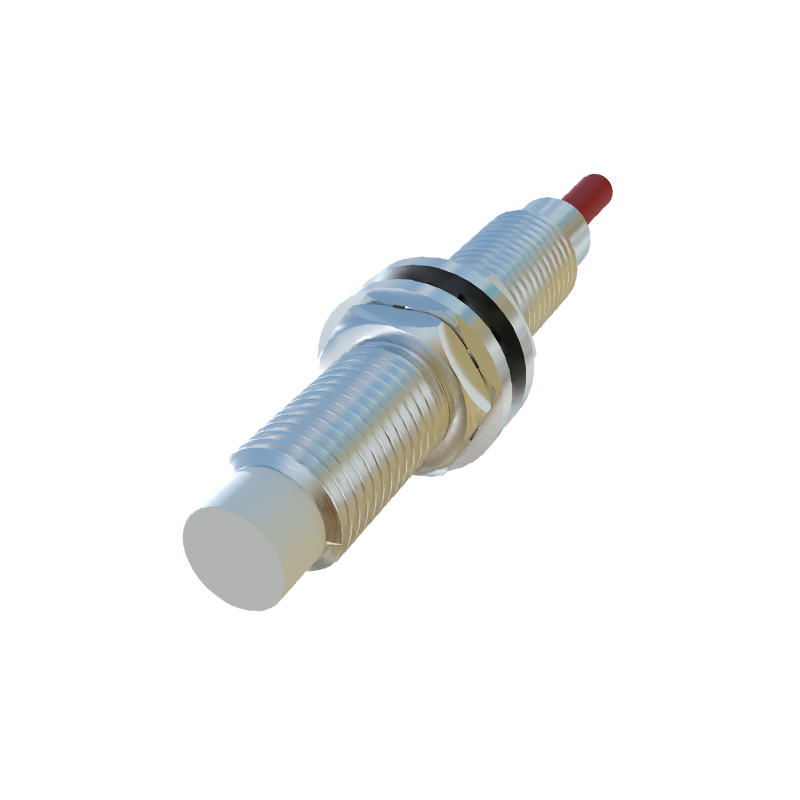
Key specifications define the performance of a 380V inductive sensor. The sensing distance, or nominal range (Sn), is crucial and is specified for a standard mild steel target. It is important to note that this effective range can be reduced for non-ferrous metals. Factors like the target's shape, size, and material must be considered. The switching frequency defines how quickly the sensor can detect objects passing by, a critical parameter for high-speed counting or positioning tasks. Another vital specification is the hysteresis, the difference between the switch-on and switch-off points, which prevents output chattering when a target is at the edge of the sensing range. Protection ratings, denoted by IP (Ingress Protection) codes like IP67 or IP69K, indicate the level of protection against dust and water, ensuring reliable operation in washdown or outdoor environments.
Application areas for these sensors are vast across industrial sectors. They are indispensable in machine tools for tool positioning, part presence verification, and end-of-travel limit switching. In material handling, including conveyor systems and automated storage, they detect the presence of pallets, boxes, or products. They monitor the position of cylinders in pneumatic and hydraulic systems. In the automotive and metalworking industries, they are used for robotic arm positioning, weld seam tracking, and part counting. Their ruggedness makes them suitable for heavy machinery, crane systems, and primary industries like mining and steel production.
Selecting the right 380V inductive proximity sensor requires careful analysis of the application parameters. First, determine the required sensing distance and the target material. Next, choose the appropriate housing shape (cylindrical, rectangular, or ring-shaped) and size to fit the mechanical constraints. The electrical connection type (pre-wired cable or quick-disconnect) must be selected based on maintenance needs. The output configuration is critical: 2-wire AC sensors are simple but have a residual leakage current, while 3-wire models (with separate power, ground, and signal wires) offer more precise switching, though 3-wire 380V AC models are less common than their DC counterparts. Always verify the load current capacity of the sensor's output against the requirements of the connected device. Finally, consider any special requirements such as high-temperature tolerance, weld-field immunity (for use near welding equipment), or chemical resistance.
In conclusion, the 380V inductive proximity switch sensor is a vital, workhorse component in modern industrial automation. Its direct high-voltage operation, inherent durability, and non-contact sensing principle provide a reliable and maintenance-free solution for detecting metallic objects in challenging conditions. By understanding their working principles and meticulously matching their specifications to the application needs, engineers and technicians can ensure optimal performance, enhanced safety, and increased productivity on the factory floor. As automation evolves, these sensors continue to be a fundamental element in building resilient and efficient industrial systems.