In industrial automation and control systems, proximity sensors are indispensable components for detecting the presence or absence of objects without physical contact. A common operational issue encountered by maintenance engineers and system integrators is an unexpected or gradual increase in the sensor's count value. This phenomenon, where the sensor registers more detection events than physically occur, can lead to production inaccuracies, data corruption, and process failures. Understanding the root causes is essential for effective troubleshooting and ensuring system integrity. This article delves into the primary technical reasons behind proximity sensor counts increasing and provides practical insights for resolution.
One of the most frequent culprits is electrical noise or electromagnetic interference (EMI). Industrial environments are rife with sources of EMI, such as variable frequency drives (VFDs), welding equipment, large motors, and power lines. This interference can induce false voltage spikes in the sensor's output circuit or its signal cable, tricking the controller into registering a detection event. For instance, a capacitive or inductive proximity sensor might interpret electrical noise as a valid object signal. Mitigation strategies include using shielded cables, ensuring proper grounding (earthing) practices, installing ferrite cores on cables near noise sources, and physically routing sensor cables away from high-power lines. Selecting sensors with high noise immunity ratings is also a proactive measure.
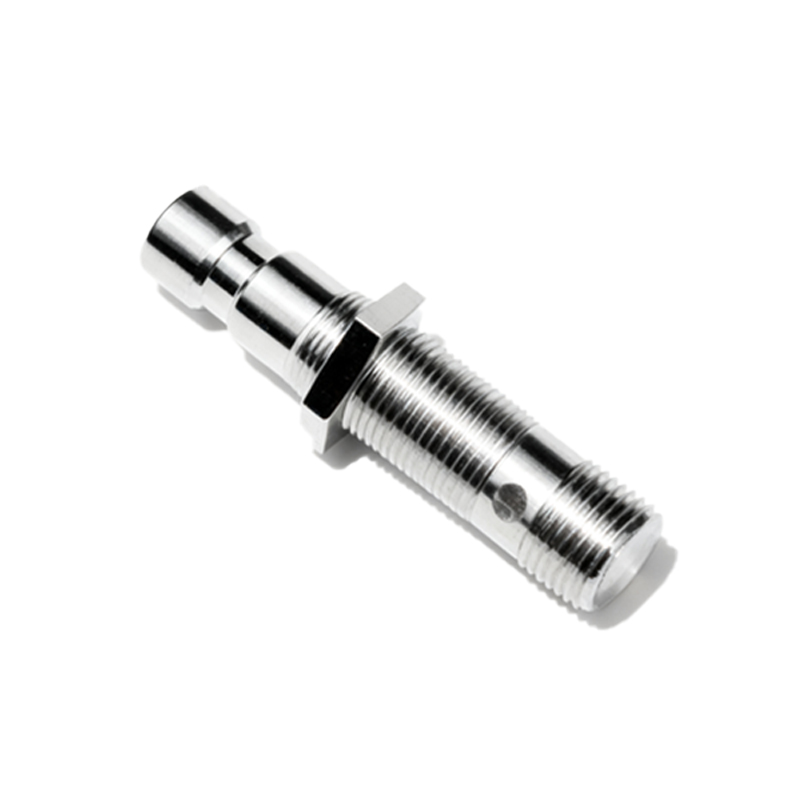
Mechanical vibration and shock present another significant cause. When a machine or the sensor itself is subjected to excessive vibration, the internal components of the sensor, including the oscillator coil in inductive models, can resonate. This mechanical movement may be misinterpreted as a change in the sensing field, leading to false triggering. Furthermore, vibration can cause the target object to momentarily oscillate in and out of the sensor's detection range, generating multiple counts for a single object. Solutions involve using sensors specifically designed for high-vibration environments, employing robust mounting brackets to dampen vibrations, and adjusting the sensor's installation position to a less turbulent area. Adjusting the hysteresis or switching differential of the sensor, if available, can also help by making it less sensitive to minor fluctuations.
Environmental contaminants are a persistent challenge. Dust, metallic chips, coolant, oil, or other conductive or non-conductive materials can accumulate on the sensor's face. For inductive sensors, metallic dust adhering to the sensing surface can effectively shrink the nominal sensing distance or create a false "always-on" condition, leading to erratic counts. For capacitive sensors, any change in the dielectric constant near the face (like oil film buildup) can alter its sensitivity. Regular, scheduled cleaning of the sensor face using appropriate methods is critical. In harsh environments, selecting sensors with higher IP (Ingress Protection) ratings, such as IP67 or IP69K, and using protective boots or coatings can prevent contamination.
Improper installation and setup errors are often overlooked root causes. If the sensor is mounted too close to the target or to a metal background (for inductive sensors), it can operate in the saturation zone. This can cause unstable output signals during the target's approach or departure, resulting in multiple pulses. Incorrect alignment between the sensor and the target can also create a scenario where the edge of the target "grazes" the detection field, causing intermittent and repeated triggers. Adhering strictly to the manufacturer's specifications for mounting distances, sensing ranges, and alignment is paramount. Utilizing sensors with teach-in functionality or precise potentiometers for sensitivity adjustment can fine-tune the installation.
Sensor degradation and component failure over time inevitably lead to performance issues. The oscillator circuit in an inductive proximity sensor can drift due to aging components or thermal stress. A weakened oscillator may have a less stable field, making it susceptible to false triggering from smaller or more distant objects. Similarly, output transistors or integrated circuits can develop faults, causing erratic switching. In such cases, diagnostic tools like an oscilloscope can reveal an unstable output signal waveform. Preventive maintenance includes periodic performance checks and replacement of sensors that have exceeded their operational lifecycle, especially in critical applications.
Finally, issues with the load or the controller's input circuit can manifest as increased counts. If the sensor's load (e.g., a PLC input) has an incorrect impedance or if there is leakage current in the wiring, it can hold the input in an indeterminate state, causing the controller to count noise on the line. Verifying the compatibility between the sensor's output type (PNP/NPN) and the controller input, checking for wiring integrity, and ensuring the use of correct pull-up or pull-down resistors are essential diagnostic steps.
In conclusion, an increase in proximity sensor counts is a symptom with multiple potential diagnoses, ranging from environmental factors to electrical and mechanical issues. A systematic approach to troubleshooting—starting with a visual inspection for contamination and installation errors, then checking for electrical noise and vibration, and finally assessing the sensor's health and load compatibility—is the most effective path to a solution. Proactive design considerations, correct sensor selection for the application,