Inductive proximity sensors are fundamental components in modern industrial automation, offering non-contact detection of metallic objects with remarkable reliability and precision. These robust devices operate on the principle of electromagnetic induction, a concept first described by Michael Faraday. Their ability to function in harsh environments—resistant to dust, oil, and moisture—makes them indispensable in manufacturing, packaging, material handling, and automotive assembly lines.
At the core of an inductive proximity sensor lies a coil wound around a ferrite core, which forms part of an oscillator circuit. When energized with an alternating current, this coil generates a high-frequency electromagnetic field that radiates from the active face of the sensor. This oscillating field is contained within a defined sensing range. In the absence of a target, the oscillator operates at a constant amplitude. The critical operation occurs when a conductive metal object enters this dynamic field. The electromagnetic field induces small circulating currents, known as eddy currents, on the surface of the target object. These eddy currents, governed by Lenz's Law, create their own opposing magnetic field, which interacts with the field generated by the sensor's coil.
This interaction results in a measurable energy loss or a "loading effect" on the oscillator circuit. The amplitude of the oscillations decreases. An integrated evaluation circuit within the sensor continuously monitors this amplitude. Once the energy loss surpasses a predefined threshold—indicating the target is within the nominal sensing distance—the circuit triggers a state change in the sensor's output. This output is typically a solid-state switch (PNP or NPN transistor) that changes from an OFF to an ON state (or vice versa, depending on the configuration), sending a clear signal to a programmable logic controller (PLC) or other control system. The target object can then move away, the oscillator amplitude recovers, and the output returns to its original state, completing the detection cycle.
Several key factors influence the performance and selection of these sensors. The sensing distance, or "sn," is specified for a standard target of mild steel. Different metals affect the sensing range due to their varying electrical conductivity and magnetic permeability. For instance, stainless steel may reduce the effective range by 10-30%, while copper or aluminum can reduce it by up to 50% or more. Ferrous metals (like iron and steel) are typically detected at the full rated distance, while non-ferrous metals have a reduced range. The sensor's housing style (cylindrical, rectangular, or ring-shaped), size, output type (DC 2-wire, 3-wire, or 4-wire; AC), and connection method (pre-wired cable or quick-disconnect) are selected based on the application.
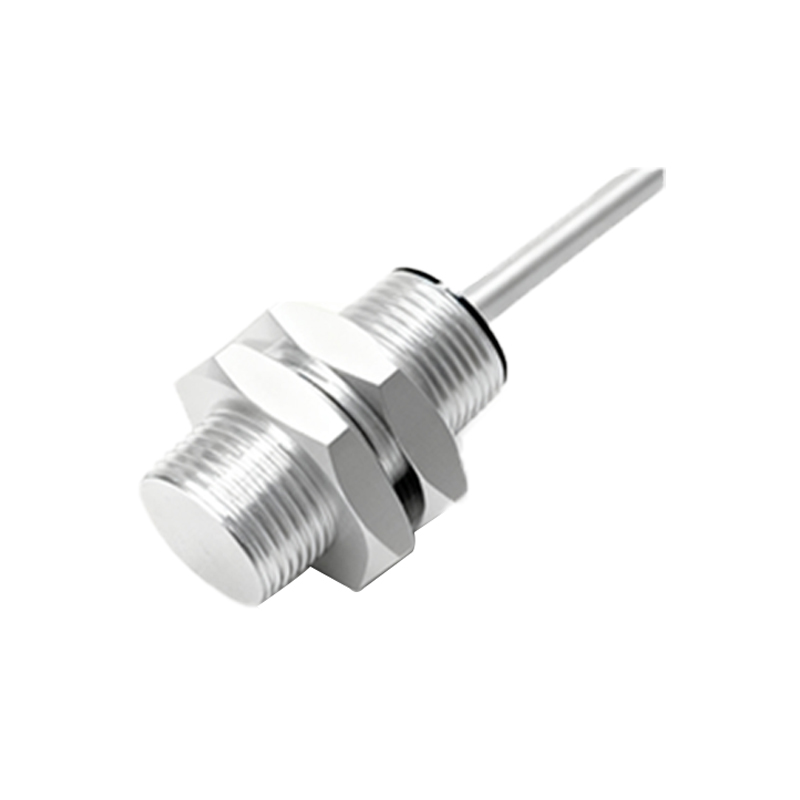
Modern advancements have led to specialized variants. Factor-1 sensors are designed to detect all metals at the same range, simplifying setup in applications with mixed metal types. Analog output sensors provide a continuous signal proportional to the distance to the target, useful for precision positioning. High-temperature models and weld-field immune sensors withstand extreme industrial conditions. Furthermore, the development of miniaturized sensors has enabled their use in tight spaces and on small machinery.
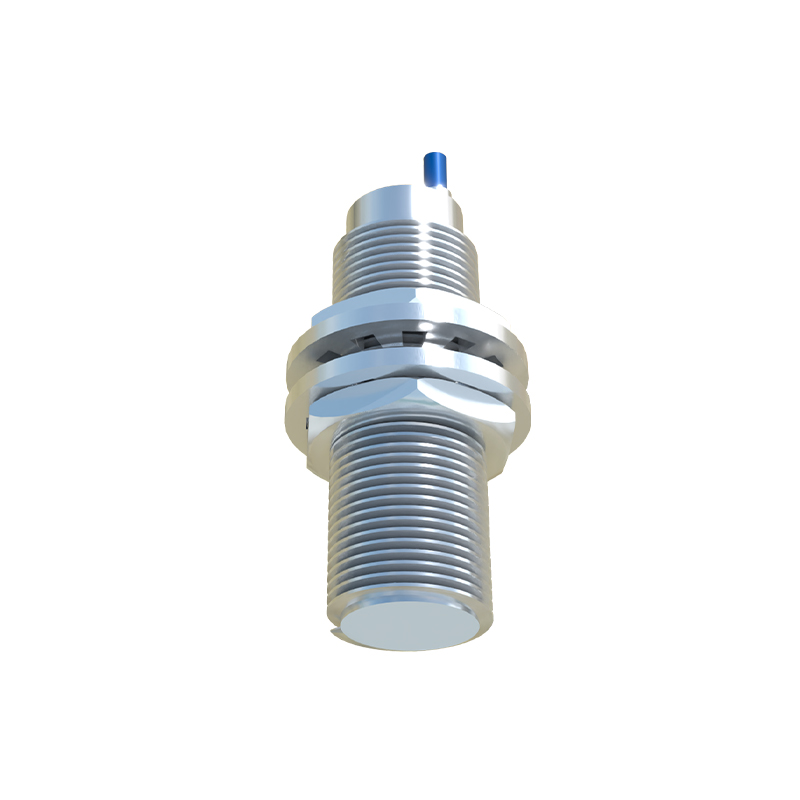
The applications are vast and critical. They are used for simple object presence detection (e.g., confirming a part is in a fixture), counting (e.g., bottles on a conveyor), position verification (e.g., cylinder end-of-stroke), and as safety interlock devices. In high-speed packaging, they detect metallic components on production lines. In metalworking, they monitor tool breakage or part positioning on CNC machines. Their solid-state design, lack of moving parts, and high switching frequencies (often up to several kHz) ensure long service life and fast response times, which are crucial for modern high-speed automation.
In summary, inductive proximity sensors provide a robust, maintenance-free solution for metallic object detection. Their operation, rooted in the generation of an electromagnetic field and the detection of eddy current losses, translates into a highly reliable binary signal for control systems. Understanding the underlying physics, along with factors like target material and environmental conditions, is essential for engineers and technicians to correctly select, install, and troubleshoot these sensors, thereby ensuring optimal performance and reliability in automated industrial processes.