In the realm of industrial automation and control systems, proximity sensors play a pivotal role in detecting the presence or absence of objects without physical contact. Among the diverse types available, all-metal proximity sensors stand out for their robustness, reliability, and versatility in harsh environments. This article delves into the technology, advantages, applications, and selection criteria for these essential components.
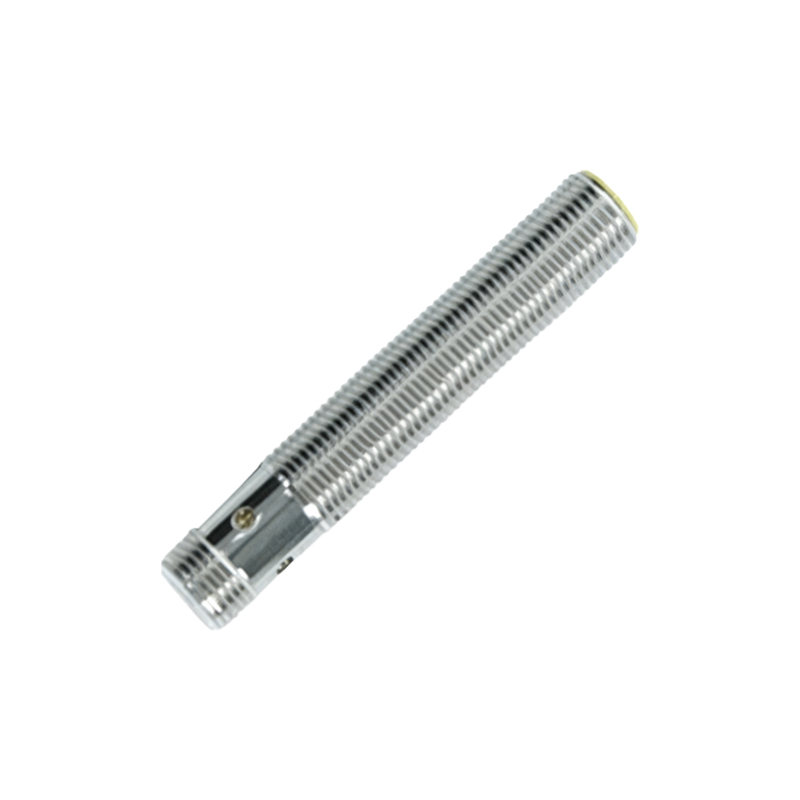
All-metal proximity sensors operate on the principle of electromagnetic induction. They generate an oscillating electromagnetic field from a coil within the sensor head. When a metallic target enters this field, eddy currents are induced in the target, causing a change in the oscillation amplitude or frequency. The sensor's electronic circuitry detects this change and triggers an output signal, typically a switch or analog output. Unlike shielded or non-shielded variants that may use plastic or composite housings, all-metal sensors feature housings entirely constructed from metals like stainless steel, brass, or nickel-plated brass. This construction provides exceptional durability against mechanical stress, corrosion, and extreme temperatures.
The primary advantage of all-metal proximity sensors lies in their resilience. They are inherently resistant to impacts, vibrations, and abrasion, making them ideal for heavy-duty applications in industries such as automotive manufacturing, metalworking, material handling, and machinery. Their sealed metal bodies offer high ingress protection ratings (e.g., IP67, IP69K), safeguarding against dust, water, oils, and chemicals. Additionally, these sensors exhibit stable performance across a wide temperature range, often from -25°C to +85°C or beyond, ensuring consistent operation in both freezing cold and scorching hot conditions. Another key benefit is their immunity to electromagnetic interference (EMI), thanks to the metal housing that acts as a Faraday cage, shielding internal electronics from external noise.
When selecting an all-metal proximity sensor, several factors must be considered. First, the sensing distance, which varies based on the sensor size and target material (e.g., steel, aluminum, copper). It is crucial to account for reduction factors for non-ferrous metals. Second, the output type: digital (e.g., PNP, NPN) or analog (e.g., 4-20 mA, 0-10 V) outputs cater to different control system requirements. Third, the electrical connection style, such as cable exits, connectors, or terminal boxes, should match installation needs. Fourth, environmental conditions like temperature extremes, humidity, and exposure to corrosive substances dictate the choice of housing material and sealing. Lastly, compliance with industry standards (e.g., IEC, UL, CE) ensures safety and interoperability.
In practice, all-metal proximity sensors are deployed in numerous scenarios. In automotive assembly lines, they detect metal components on conveyor belts or verify part positioning in robotic welding cells. In food and beverage processing, stainless steel sensors withstand frequent washdowns with caustic cleaners. In mining and construction equipment, they monitor hydraulic cylinder positions or detect metal debris to prevent damage. Their versatility extends to packaging machinery, where they count metal cans or control filling levels, and in aerospace, where they ensure precise alignment of aircraft parts.
Maintenance of all-metal sensors is generally minimal due to their rugged design. However, regular inspections for physical damage, buildup of contaminants, and proper alignment with targets are recommended to prolong service life. Calibration checks may be necessary in precision applications to maintain accuracy.
In conclusion, all-metal proximity sensors represent a cornerstone of modern industrial sensing technology. Their durability, environmental resistance, and reliable performance under demanding conditions make them indispensable for automation engineers and system integrators. By understanding their operational principles and selection parameters, professionals can optimize sensor deployment to enhance efficiency, safety, and productivity in diverse industrial settings. As industries evolve toward smarter factories and IoT integration, the role of these robust sensors will only grow, driving innovation in detection and control systems.